Affiliate Disclosure: Some of the links in this post are affiliate links. This means we may earn a small commission if you make a purchase through these links—at no extra cost to you. We only recommend products and tools that we genuinely believe will help you with your Doberman.
- Introduction
- Why Dobermans Excel at Recall Training
- Before You Start: Foundation Requirements
- Stage 1: Foundation Recall Training
- Stage 2: Distraction Proofing
- Stage 3: Advanced Distance and Duration
- Stage 4: Off-Leash Transition
- E-Collar Training: Should You Use One?
- Troubleshooting: Common Recall Problems and Solutions
- Make It Fun: Recall Training Games
- The Emergency Recall: A Life-Saving Command
- Frequently Asked Questions
- Conclusion: Building a Recall You Can Trust
Introduction
Picture this: You’re at the dog park, and your Doberman spots a squirrel on the other side of the fence. Before you can blink, they’re off—running full speed, completely ignoring your desperate calls of “Come back!”
Sound familiar?
Here’s the good news: teaching your Doberman a rock-solid recall is completely possible. In fact, Dobermans are actually one of the BEST breeds for recall training. Their natural loyalty and desire to be near you gives you a huge advantage that owners of independent breeds would kill for.
But there’s a catch. You need the right method, the right timing, and a lot of consistency.
A strong recall isn’t just about convenience. It can literally save your Doberman’s life. One reliable recall can stop them from running into traffic, chasing dangerous wildlife, or getting into fights with other dogs. It’s the difference between a dog you can trust off-leash and one who has to stay tethered forever.
What You’ll Learn in This Guide
This complete guide will walk you through everything you need to know:
- Why Dobermans are naturally great at recall (and what challenges to expect)
- The exact step-by-step training method from beginner to advanced
- What equipment you need (long lines, treats, e-collars)
- How to fix common problems like selective hearing and distraction issues
- Safe ways to transition to off-leash freedom
By the end, you’ll have a clear action plan to teach your Doberman to come every single time you call—no matter what’s going on around them.
Let’s get started.
Why Dobermans Excel at Recall Training
Before we dive into training methods, let’s talk about why you’re actually starting with a major advantage.
The Velcro Dog Advantage
You’ve probably heard Dobermans called “velcro dogs.” That’s because they stick to their owners like glue. This isn’t just cute—it’s a massive training advantage.
Dobermans were originally bred as personal protection dogs. Their job was to stay close to one specific person and protect them. That instinct is still hardwired into your dog today. Even without training, your Doberman probably follows you from room to room, lies at your feet, and keeps you in sight at all times.
This natural desire to be near you means they’re already motivated to come back to you. You’re not fighting against independence like you would with a Husky or a Beagle. You’re working WITH your dog’s natural instincts.
Intelligence and Trainability
Dobermans are ranked as the 5th most intelligent dog breed in the world. They’re quick learners who pick up patterns fast. Once they understand what you want, they remember it.
This intelligence works in your favor during recall training. Your Doberman will quickly figure out that “come” means good things happen. They’ll also learn to read your body language and tone of voice, which makes communication easier.
But here’s the flip side: smart dogs also figure out when they DON’T have to listen. If you’re inconsistent or give commands you can’t enforce, your clever Doberman will learn to ignore you.
People-Pleasing Nature
Unlike some stubborn breeds, Dobermans genuinely want to make you happy. They’re emotionally tuned into their owners and care deeply about your approval.
This means praise and excitement from you can be just as rewarding as treats. When you jump up and down, clap your hands, and act thrilled that your dog came back, they feel amazing. That emotional connection is powerful motivation.
Potential Challenges to Prepare For
Now let’s be real. Dobermans aren’t perfect. Here are the challenges you might face:
High prey drive: Squirrels, rabbits, and birds are extremely tempting. Your Doberman might “forget” their training when a critter runs by.
Adolescence regression: Between 6 and 18 months old, your Doberman will go through a teenage phase. Suddenly, they’ll act like they’ve never heard the word “come” before in their life. This is normal but frustrating.
Over-excitement: Dobermans get VERY excited, especially around other dogs or during play. When they’re amped up, their brain goes offline and recall becomes harder.
Sensitivity to correction: Harsh punishments backfire with this breed. Dobermans shut down emotionally if you’re too rough. Positive training works much better.
Understanding these challenges helps you train smarter, not harder.
Before You Start: Foundation Requirements
Let’s make sure you’re set up for success before jumping into training.
Age to Begin Training
You can start recall training as early as 8 weeks old. In fact, puppies are the EASIEST to train because they naturally follow you everywhere. They haven’t learned selective hearing yet.
If you have an older Doberman, don’t worry. Adult dogs can absolutely learn recall. It just takes a bit more time and patience.
What Your Doberman Should Already Know
Before working on recall, your dog should have these basics down:
- Name recognition: They look at you when you say their name
- Basic attention: They can focus on you for 3-5 seconds
- Comfortable with equipment: Wearing a collar or harness doesn’t bother them
That’s it. You don’t need perfect obedience before starting recall training.
Choosing Your Recall Command
Pick ONE word and stick with it. Here are your best options:
- “Come” – Most common, simple and clear
- “Here” – Good alternative if you’ve already poisoned “come”
- “Front” – Used in competition obedience training
- Whistle – Works great for distance work
Pro tip from experienced trainers: Many people teach TWO recalls:
- Regular recall: “Come” for everyday use
- Emergency recall: A special word like “NOW!” or a whistle blast that means “drop everything and sprint to me immediately”
The emergency recall is ONLY used in life-or-death situations and always gets a massive reward. This keeps it powerful.
Essential Equipment You’ll Need
Here’s what to have on hand:
| Equipment | When to Use | Why You Need It |
|---|---|---|
| 6-foot leash | Foundation training | Basic control and safety |
| 15-foot long line | Intermediate practice | Lets dog move freely while you keep control |
| 30-50 foot long line | Advanced training | Long-distance practice in open areas |
| Back-clip harness | All stages | Prevents neck strain from pulling |
| High-value treats | All stages | Primary motivation (cheese, hot dogs, chicken) |
| Treat pouch | All stages | Quick access to rewards |
| Whistle (optional) | Advanced stages | Alternative recall cue for distance |
You don’t need everything right away. Start with a 6-foot leash, harness, and good treats. Add the long lines as you progress.
Stage 1: Foundation Recall Training
This is where everything begins. Get this right, and the rest becomes much easier.
The Goal
By the end of this stage, your Doberman should come immediately when called from 10-20 feet away indoors with zero distractions. You want a 90% or better success rate.
Step-by-Step Foundation Method
Step 1: Name Association Game (Days 1-3)
Before teaching “come,” make sure your dog loves hearing their name.
- Say your dog’s name
- The INSTANT they look at you, give a treat
- Repeat 10-15 times per day
- Don’t ask for anything else—just name = treat
After a few days, your Doberman should whip their head around excitedly every time they hear their name. That’s when you’re ready for Step 2.
Step 2: Introduce the Recall Command (Days 4-7)
Now we add the actual command.
- Have your dog 5 feet away from you (toss a treat away so they move, or have someone gently hold them)
- Say your dog’s name to get their attention
- Say “COME!” in a happy, exciting voice
- Clap your hands, pat your legs, make kissy noises—be SUPER exciting
- The second your dog takes one step toward you, start praising (“Good boy! Yes! Come on!”)
- When they reach you, throw a praise party and give 3-5 treats in a row (this is called a “jackpot”)
- Repeat 5-10 times per session, 3 sessions per day
Step 3: Add Distance Gradually (Days 8-21)
Once your dog is coming reliably from 5 feet, slowly increase the distance.
- Practice at 10 feet for 2-3 days (90% success before moving on)
- Then 15 feet for 2-3 days
- Then 20 feet for 2-3 days
- Always indoors or in your fenced backyard
If your dog’s success rate drops below 80%, you moved too fast. Go back to the previous distance.
Foundation Stage Pro Tips
Always reward EVERY recall, even slow ones. If your dog takes their sweet time coming, still reward them when they arrive. Never punish a slow recall or you’ll teach them not to come at all.
Use the best treats you can find. This is not the time for boring kibble. Use cheddar cheese cubes, small pieces of hot dog, cooked chicken, or liverwurst. Make it irresistible.
Keep training sessions short. 5-10 minutes maximum. Always end on a success so your dog stays excited about training.
Practice before meals. A hungry Doberman is a motivated Doberman. Do a quick training session right before breakfast or dinner.
Make yourself exciting. Crouch down to their level, run away from them, act like a crazy person. Your energy matters. Boring owners get ignored.
Foundation Stage Mistakes to Avoid
| Mistake | Why It Ruins Progress | What to Do Instead |
|---|---|---|
| Repeating “come” multiple times | Teaches dog to ignore the first command | Say “come” ONCE. If ignored, go get your dog |
| Calling for unpleasant things | Dog learns recall = bad things happen | Never recall for baths, nail trims, or crating—just go get them |
| Skipping rewards | Dog learns recall is optional | Treat EVERY single recall during training |
| Moving too fast | Dog fails, loses confidence | Stay at each distance until 90% success |
| Recalling to end playtime | Dog learns recall = fun ends | Recall 5-10 times during play, then release back to fun |
Stage 2: Distraction Proofing
Now things get harder. Your dog needs to learn that “come” means come even when interesting stuff is happening.
The Goal
Your Doberman should come reliably despite mild to moderate distractions like toys, people walking by, birds in the yard, and smells on the ground.
Introducing Distractions Gradually
Start small and build up slowly. Here’s the progression:
Level 1: Indoor Distractions
- Toys scattered on the floor
- Family members walking around
- TV or music playing
Level 2: Outdoor Distractions
- Birds flying by
- Interesting smells in the grass
- Wind and outdoor sounds
Level 3: Moving Distractions
- Person jogging past
- Squirrel in the distance (far enough that dog isn’t lunging)
- Bike riding by
Level 4: High-Value Distractions
- Other dogs at a distance
- Food dropped on the ground
- Wildlife (squirrels, rabbits) closer up
How to practice:
- Start at Level 1 with your dog 20 feet away on a long line
- Call your dog
- If they come despite the distraction: JACKPOT reward (this is a 10/10 response!)
- If they ignore you: Move farther from the distraction OR use even better treats
- Practice until 90% success, then move to next distraction level
The Long Line: Your Safety Net
A long line (15-30 feet) is your best friend during this stage. Here’s how to use it:
- Attach to a back-clip harness (NEVER a collar—pulling can injure their neck)
- Let the line drag on the ground (don’t hold it)
- Call your dog
- If they ignore you, calmly pick up the line and gently reel them in (no yanking!)
- When they reach you, reward as if they came on their own
The goal is to use the long line less and less as your dog gets more reliable. Eventually, they’ll come without you ever needing to touch the line.
Adding the “Sit” at the End (Optional but Smart)
Once your dog is coming reliably, teach them to sit when they reach you. This does two important things:
- Prevents them from stopping 5 feet away (just out of reach)
- Makes grabbing their collar easy for off-leash safety
How to teach it:
- Call your dog
- As they approach, say “Sit”
- Reward when they sit in front of you
- Practice until it becomes automatic
Stage 3: Advanced Distance and Duration
You’re getting close to off-leash reliability now. This stage is about pushing distance and making the behavior rock-solid.
The Goal
Your Doberman should:
- Recall from 50+ feet away
- Come on the first command 95% of the time
- Work in moderately distracting environments (parks, trails)
Long-Distance Practice Protocol
Find an open field or large fenced area. Use a 50-foot long line for safety.
- Let your dog wander and sniff with the line dragging
- Wait until they’re distracted by something
- Call ONCE in a clear, happy voice
- If they come: Throw the biggest praise party of their life + jackpot treats
- If they ignore you: Calmly reel in the line (no anger or frustration)
- When they reach you, give a smaller reward (they still get rewarded, but not a jackpot)
Repeat 5-10 recalls per session. Over time, your dog will learn that coming on the first call gets the best rewards.
Fading Food Rewards (Making It Real-World Reliable)
Eventually, you won’t always have treats in your pocket. Here’s how to transition to unpredictable rewards:
Weeks 1-4: Treat EVERY recall (100%)
Weeks 5-8: Treat 80% of recalls, praise only for 20%
Weeks 9-12: Treat 60% of recalls (jackpot the really fast ones)
Weeks 13-16: Treat 40% of recalls (random schedule)
Week 17+: Treat randomly (surprise rewards keep it exciting)
Alternative rewards besides treats:
- Favorite toy + quick tug game
- Chase game (you run away, dog chases you)
- Release to go back to what they were doing (“Go play!”)
- Petting and enthusiastic praise
Variety keeps your Doberman guessing and eager to come back.
Stage 4: Off-Leash Transition
This is the moment you’ve been working toward—freedom. But let’s do it safely.
The Goal
Reliable recall with no leash or line in safe, controlled environments.
Safety First: Risk Assessment Checklist
Before removing the long line, your Doberman MUST:
- ✅ Have 95%+ success rate on the long line
- ✅ Recall reliably around other dogs (tested on long line first)
- ✅ Come back during play, running, and zoomies (tested on long line)
- ✅ Recall despite squirrels, rabbits, and birds (tested on long line)
- ✅ Have practiced in this specific location multiple times on-leash
Safe places to start:
- Fully fenced dog parks (during quiet hours)
- Fenced tennis courts or baseball fields
- Your large fenced backyard
- Private fenced fields (with permission)
NEVER practice off-leash:
- Near roads, parking lots, or traffic
- In unfenced parks or hiking trails
- Areas with wildlife that triggers prey drive
- Anywhere it’s illegal (check local leash laws)
Your First Off-Leash Session
Follow this protocol exactly:
- Choose a fenced area with minimal distractions
- Tire your dog out FIRST with a 30-minute walk
- Remove the long line
- IMMEDIATELY recall your dog within 10 seconds (This first recall is the most important—make it a HUGE reward!)
- Let them play for 2-3 minutes
- Recall again, reward, release back to play
- Repeat 5-10 recalls during a 20-minute session
- End on a great recall, then leave while they’re wanting more
Why the first recall matters so much: It sets the tone for how rewarding recalls will be that day. If the first one gets an amazing reward, your dog will be eager to come all session long.
Advanced Off-Leash Practice
As your dog gets reliable, practice recalling in these challenging situations:
- From playing with other dogs (hardest distraction of all!)
- During zoomies (when they’re running full speed)
- When sniffing something super interesting
- Right before they reach something exciting (builds frustration tolerance)
Each success makes your recall more reliable in the real world.
E-Collar Training: Should You Use One?
This is a controversial topic in the Doberman community. Let’s break it down honestly.
What Is an E-Collar?
An electronic collar (also called a remote training collar) delivers a mild stimulation through two contact points on the collar. Modern e-collars have adjustable levels—most dogs work on very low settings that feel like a gentle tap.
Important: This is NOT the same as old-style shock collars. Quality e-collars use muscle stimulation, not pain.
When E-Collars Make Sense
Consider an e-collar if:
- Your dog has life-threatening recall failures (runs toward roads)
- You need off-leash reliability beyond long line range (hiking, hunting)
- Your Doberman has extremely high prey drive that puts them at risk
- You need an “insurance policy” for emergency situations
Many professional trainers use e-collars successfully with Dobermans.
When to AVOID E-Collars
Don’t use an e-collar if:
- Your dog is under 6 months old
- Your Doberman is fearful or anxious
- You haven’t built a positive recall foundation first
- You haven’t learned proper conditioning techniques
- You’re using it as your primary training method (should be backup only)
If You Choose This Route
Critical: Hire a professional e-collar trainer or follow a comprehensive video course. Improper use causes fear, anxiety, and aggression.
Basic conditioning overview (simplified):
- Find the lowest level your dog can feel (they might twitch their ear)
- Pair that feeling with treats 20-30 times (stimulation = treat)
- Your dog should look happy when they feel the stimulation (they expect a treat)
- Use for recall: Feel stimulation → hear “Come!” → get reward
- Only use higher levels if dog completely ignores the command
Recommended brands:
- Mini Educator (adjustable, good for sensitive dogs)
- Dogtra 280C or 1900S (reliable, waterproof)
- Garmin Sport PRO (long range, great for hunting/hiking)
Troubleshooting: Common Recall Problems and Solutions
Let’s fix the most frustrating issues Doberman owners face.
Problem #1: “My Doberman Completely Ignores Me”
Likely causes:
- Environment too distracting (need easier setting)
- Treats not good enough
- Dog learned recall is optional (not enforced consistently)
- “Come” command is poisoned (overused)
Solutions:
- Go back to foundation training indoors with zero distractions
- Upgrade to MUCH better treats (real meat, cheese, liverwurst—not kibble)
- Stop saying “come” completely—retrain with a NEW word like “here”
- Never call your dog unless you can enforce it (always use long line in distracting areas)
- Reward EVERY recall for 2 straight weeks to rebuild the behavior
Problem #2: “Dog Comes Halfway, Then Runs Away”
Why this happens:
- Testing boundaries (common in adolescent dogs)
- Recall has become a game of chase
- Not rewarding for coming all the way
Solutions:
- Use a long line—gently reel them in if they stop mid-recall
- Run AWAY from your dog when you call (makes you interesting to chase)
- Never, ever chase your dog (this makes it a game)
- Only reward when they come ALL the way to you
- Teach “sit in front” so they have a clear end behavior
Problem #3: “Only Works at Home, Nowhere Else”
This is called “failure to generalize”—your dog thinks “come” only applies at home.
Solutions:
- Practice in at least 10 different locations on a long line
- Start each new location at close distance (10 feet), then gradually increase
- Practice at different times of day
- Do recalls while walking, not just standing still
- Make new locations exciting by using extra-good treats
Problem #4: “Dog Only Comes for Treats, Not Praise”
Honestly? This isn’t always a problem. Carrying treats is no big deal.
But if you want to fade treats:
- Always pair praise WITH treats (say “good boy” as you give the treat)
- Use variable rewards (sometimes treat, sometimes just praise)
- Add toy rewards and play (not just food)
- Jackpot exceptionally fast recalls with multiple treats
- Accept that some dogs are food-motivated—that’s okay!
Problem #5: “Fine Until They See Another Dog”
Other dogs are the ultimate distraction for most Dobermans.
Solutions:
- Practice at dog parks during off-hours (only 1-2 dogs present)
- Recall your dog BEFORE they reach the other dog (builds impulse control)
- Use the other dog as a reward: Come → treat → “Go play!”
- Increase distance from other dogs until success rate improves
- Consider group training classes for controlled practice
Make It Fun: Recall Training Games
Training doesn’t have to be boring. These games make recall exciting for both of you.
Game #1: Catch Me
- Start walking normally
- Suddenly say “COME!” and RUN away from your dog
- Your dog chases you (taps into prey drive in a positive way)
- When they catch you, huge reward + quick play session
This makes YOU the most exciting thing to chase.
Game #2: Hide and Seek
- Have someone hold your dog (or tell them to stay)
- Go hide somewhere in the house or yard
- Call your dog from your hiding spot
- When they find you, throw a celebration
Dogs LOVE this game. It makes recall feel like a treasure hunt.
Game #3: Hot Potato (Family Game)
- Get 2-3 family members to stand 20 feet apart
- Each person has treats
- Take turns calling the dog between people
- Whoever calls the dog rewards them when they arrive
This teaches your Doberman to come to anyone in the family, not just one person.
Game #4: Restrained Recall
- Have someone gently hold your dog’s collar
- Walk 20 feet away
- Get your dog super excited (call their name, crouch down, act crazy)
- Say “COME!” and have the helper release them
- Your dog explodes toward you at full speed
This builds a fast, enthusiastic recall response.
The Emergency Recall: A Life-Saving Command
Every dog should have one of these.
What Is It?
An emergency recall is a special command you ONLY use when your dog’s life is in danger. Examples:
- Dog running toward a busy road
- Dog approaching aggressive dog
- Dog about to eat something poisonous
- Dog chasing deer toward a cliff
This command must work 100% of the time, no matter what’s happening.
How to Train It
Pick a unique command your dog has never heard before:
- “NOW!”
- “COME NOW!”
- Three short whistle blasts
- Any phrase you’ll remember in a panic
Training protocol:
- Use the emergency word only 1-2 times per week (keeps it special)
- Every single time you use it, give a MASSIVE jackpot (entire handful of treats + favorite toy + praise party for 30 seconds)
- Practice in non-emergency situations so your dog learns the pattern
- Never use it casually—only for real emergencies
- Always have the most amazing reward possible when you use it
Your emergency recall should work even if:
- Your dog is chasing a squirrel at full speed
- They’re greeting another dog
- They’re eating something disgusting
- They’re 100 feet away and can barely hear you
This command can save your dog’s life. Take it seriously.
Frequently Asked Questions
At what age should I start recall training?
Start as early as 8 weeks old if you have a puppy. Puppies are easiest to train because they naturally follow you everywhere. But older dogs can absolutely learn recall too—it just requires more patience and repetitions.
How long does it take to train reliable recall?
- Basic indoor recall: 3-4 weeks
- Distraction-proofed recall: 3-4 months
- Off-leash reliable in most situations: 6-12 months
This varies based on your dog’s age, training consistency, and natural temperament. Adolescent dogs (6-18 months) take longer due to their “selective hearing” phase.
Should I use an e-collar for recall training?
Not necessary for most Dobermans. Only consider it if: 1) Your dog has life-threatening recall failures, 2) You’ve tried everything else consistently for months, 3) You work with a professional trainer who can teach proper conditioning. Never use as punishment.
My Doberman is 2 years old with no recall training. Is it too late?
Never too late! Adult dogs can learn recall—they just need more repetitions than puppies. Expect 4-6 months of consistent daily training. Use extremely high-value rewards and start with the foundation stage indoors. Many rescue Dobermans learn excellent recall as adults.
Can Dobermans really be trusted off-leash?
Yes, with proper training. But it requires: 1) At least 6 months of consistent training, 2) Practice in fenced areas first, 3) 95%+ success rate before removing the leash, 4) Ongoing maintenance practice for life, 5) Honest assessment of your dog’s prey drive and impulse control. Always consider environmental risks.
What if my Doberman only comes sometimes?
This is called “intermittent recall” and means training isn’t finished. Go back to using a long line in all distracting environments. Reward EVERY recall for 2-4 weeks straight. Don’t attempt off-leash again until you have 95%+ success rate on the long line. Consistency is everything.
Conclusion: Building a Recall You Can Trust
Teaching your Doberman a reliable recall is one of the most important things you’ll ever do as a dog owner.
Let’s review the key points:
Dobermans are naturally GOOD at recall. Their velcro dog nature, intelligence, and desire to please give you a massive advantage. You’re not fighting against independence—you’re working with their instincts.
Training is a process, not a quick fix. Foundation → distraction-proofing → distance → off-leash. Each stage builds on the last. Rushing leads to failure.
The long line is your best friend. It gives your dog freedom while keeping them safe during training. Use it longer than you think you need to.
E-collars are optional, not required. Most Dobermans do great with positive reinforcement alone. Only consider an e-collar for specific situations with proper training.
Common problems are fixable. Selective hearing, distraction issues, and slow recalls can all be solved with the troubleshooting methods in this guide.
The emergency recall can save your dog’s life. Take the time to train this separately from your regular recall.
Your Action Plan Starting Today
Here’s what to do right now:
- Order a 15-30 foot long line (you’ll need it for stage 2)
- Stock up on high-value treats (cheese, hot dogs, chicken—not kibble)
- Start with 5 minutes of foundation training (even one session counts)
- Practice every single day (consistency matters more than long sessions)
- Join a Doberman training group for support and accountability
Remember: Every single Doberman can learn reliable recall with consistency and the right methods. It takes time, but the payoff is enormous.
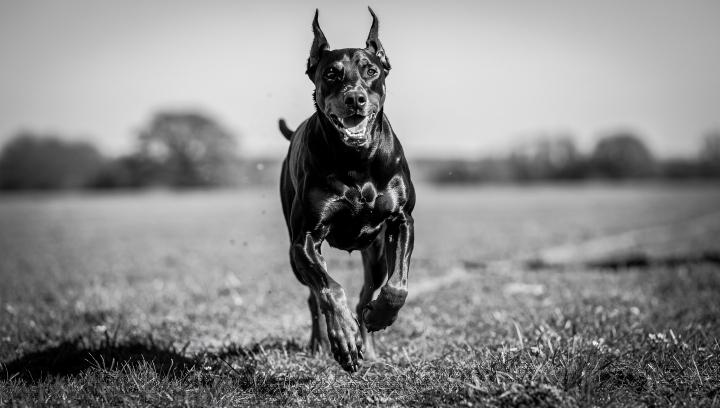
Imagine your Doberman running full speed toward you with pure joy when you call. Imagine hiking together off-leash through beautiful trails. Imagine the peace of mind knowing you can stop your dog from danger with one word.
That’s what you’re working toward. And it’s absolutely worth the effort.
Your Doberman is waiting to learn. Start today.