Affiliate Disclosure: Some of the links in this post are affiliate links. This means we may earn a small commission if you make a purchase through these links—at no extra cost to you. We only recommend products and tools that we genuinely believe will help you with your Doberman.
- Introduction
- The History of Doberman Loyalty: Bred to Protect One Person
- The Science Behind Doberman Bonding
- Why Dobermans Are Called “Velcro Dogs”
- One-Person Dog vs. Family Dog: How Dobermans Choose
- How to Build a Strong Bond with Your Doberman: 9 Proven Methods
- Signs Your Doberman Has Bonded with You
- The Dark Side: Over-Attachment and Separation Anxiety
- Doberman Loyalty Myths vs. Reality
- Frequently Asked Questions
- Conclusion: Cherish the Bond
Introduction
Have you ever wondered what it feels like to have a dog who chooses you above everything else in the world? A dog who reads your emotions before you even speak, follows you from room to room, and watches over you like a devoted guardian?
That’s the Doberman difference.
Doberman Pinschers aren’t just loyal dogs—they’re exceptionally loyal. Their devotion runs deeper than most breeds. They form intense, emotional bonds with their families that can feel almost human in their depth. You’ll hear Doberman owners say things like, “My dog knows when I’m having a bad day before I even do,” or “I can’t even use the bathroom alone anymore!”
This isn’t just owner bias. It’s a real, measurable trait that makes Dobermans one of the most bonded breeds in the canine world. But this incredible loyalty comes with responsibilities. Understanding how and why Dobermans bond the way they do will help you build the strongest possible relationship with your dog—and avoid common pitfalls like over-attachment and separation anxiety.
Why Doberman Loyalty Is Unique
Not all dog breeds bond the same way. Some dogs are independent. Some are friendly with everyone. But Dobermans? They’re laser-focused on their people.
Here’s what makes their loyalty different:
- Selective bonding: Dobermans don’t give their loyalty to just anyone. They choose their person (or family) and commit fully.
- Emotional intelligence: They read human emotions with scary accuracy. Your Doberman knows when you’re stressed, sad, or happy—and adjusts their behavior accordingly.
- Protective instinct: Their loyalty isn’t passive. They actively watch over you, positioning themselves between you and potential threats.
- Physical closeness: Dobermans are “Velcro dogs.” They want to be touching you, near you, or at least in the same room as you at all times.
This combination of traits creates a bond that’s deeper than what most dog owners experience. It’s why Doberman owners often say, “Once you’ve had a Doberman, no other breed compares.”
What This Guide Covers
In this complete guide, you’ll learn:
- Where Doberman loyalty came from (their history as protection dogs)
- The science behind their bonding behavior
- Why they’re called “Velcro dogs” and what that means for daily life
- Whether Dobermans bond with one person or the whole family (and how to influence this)
- 9 proven ways to strengthen your bond with your Doberman
- Signs your Doberman has bonded with you
- How to manage over-attachment and separation anxiety
- Common myths about Doberman loyalty (and the truth)
By the end, you’ll understand exactly how to build an unbreakable bond with your Doberman—one that lasts a lifetime.
The History of Doberman Loyalty: Bred to Protect One Person
To understand why Dobermans are so loyal, you need to know where they came from.
Karl Friedrich Louis Dobermann’s Vision
The Doberman breed was created in the 1890s by a German tax collector named Karl Friedrich Louis Dobermann. His job required him to walk through dangerous neighborhoods collecting money from people who didn’t want to pay. He needed a dog that was:
- Fiercely loyal to him specifically
- Protective without being unnecessarily aggressive
- Smart enough to assess threats independently
- Athletic and alert to react quickly
So he bred one. He combined Rottweilers, German Pinschers, Greyhounds, Weimaraners, and possibly other breeds to create the perfect personal protection dog.
Personal Protection vs. Guard Dog
Here’s an important distinction: Dobermans were bred as personal protection dogs, not general guard dogs.
What’s the difference?
- Guard dogs (like livestock guardians) protect property, territory, or herds. They work independently and bond with the area they’re guarding.
- Personal protection dogs bond with one person and follow that person’s commands exclusively. Their loyalty is to the handler, not the location.
Dobermans fall into the second category. This is why they’re so focused on their owner. It’s literally what they were designed to do.
How Modern Breeding Changed (and Didn’t Change) Loyalty
Today’s Dobermans are much gentler than their ancestors. Modern breeders have worked hard to reduce unnecessary aggression while keeping the breed’s intelligence, trainability, and loyalty intact.
But here’s what hasn’t changed: that deep, single-minded devotion to their person.
Modern Dobermans are still “one-person dogs” at heart, even if they love the whole family. They still have that protective instinct. They still want to be by your side 24/7. That core loyalty trait? It’s as strong as ever.
The Science Behind Doberman Bonding
Why do Dobermans bond so intensely? The answer lies in biology, genetics, and brain chemistry.
Oxytocin: The “Love Hormone”
When you make eye contact with your dog, both of your brains release oxytocin—the same hormone that bonds mothers to their babies. This creates a positive feedback loop: the more you interact, the stronger the bond becomes.
Research shows that dogs with higher oxytocin levels are more attentive to their owners and more likely to seek physical closeness. Dobermans, with their intense focus on their people, likely produce higher-than-average oxytocin levels during bonding interactions.
Genetics: Selective Breeding for Loyalty
Dobermans were selectively bred for loyalty over multiple generations. Dogs that showed the strongest attachment to their handlers were chosen to reproduce. This means the tendency to bond intensely is hardwired into the breed’s genetics.
You can’t train a dog to be loyal the way a Doberman is loyal. It’s part of their DNA.
Pack Mentality and Hierarchy
In the wild, canines form tight-knit packs with clear social hierarchies. Domestic dogs retain this instinct, and Dobermans take it to the next level.
Your Doberman sees your family as their pack. They instinctively look to you (the pack leader) for guidance, protection, and approval. This is why they’re so eager to please you—and why they get anxious when separated from you. Being apart from the pack goes against their deepest instincts.
Early Socialization and Critical Periods
The first 3-4 months of a puppy’s life are called the critical socialization period. During this time, their brain is like a sponge, forming permanent associations about who and what is safe.
If your Doberman puppy bonds with you during this period, that bond becomes deeply ingrained. This is why early positive experiences are so important—and why rescue Dobermans who missed this window may take longer to bond fully.
Why Dobermans Are Called “Velcro Dogs”
If you own a Doberman, you know this struggle: you can’t go to the bathroom without an audience.
What “Velcro Dog” Really Means
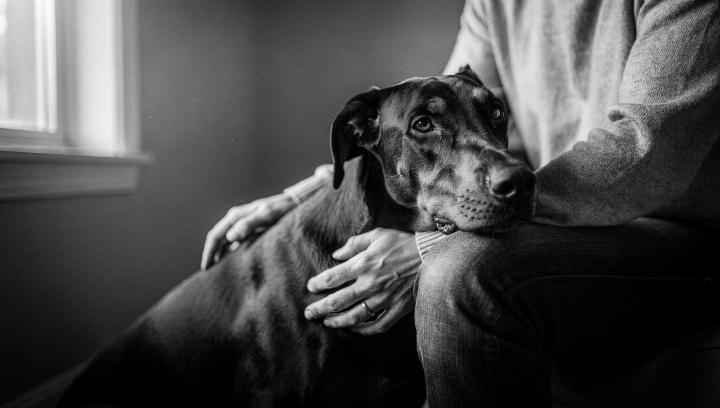
A “Velcro dog” is a breed that sticks to their owner like, well, Velcro. They follow you from room to room, lean against your legs, sleep touching you, and generally act like they can’t stand to be more than three feet away.
Dobermans are the definition of Velcro dogs.
Why Dobermans Follow You Everywhere
This behavior isn’t random. It comes from their protective instinct combined with their intense bonding drive.
Think about it: if your job is to protect someone, you need to stay close to them at all times. You can’t guard someone from two rooms away. So your Doberman follows you because, in their mind, they’re on duty.
Even when there’s no real threat, that instinct remains. Your Doberman just wants to be near you because that’s where they feel they belong.
Daily Life with a Shadow
Living with a Velcro dog can be… intense. Here’s what to expect:
- No alone time: Shower? Your Doberman will lie on the bathroom rug. Cooking? They’re right behind you in the kitchen. Working from home? They’re under your desk.
- The “three-foot rule”: Most Dobermans won’t voluntarily go more than a few feet away from their favorite person when they’re home.
- Lean and touch: Dobermans love to lean their full body weight against your legs or sit with their back pressed against you.
- Separation whining: Even being in a different room can trigger stress whining in some Dobermans.
Is This Healthy?
In moderation, yes! This closeness is part of what makes the Doberman-owner bond so special. It’s one of the joys of owning the breed.
But it can become a problem if it turns into separation anxiety (which we’ll cover later). The key is teaching your Doberman that being apart sometimes is okay, while still maintaining that close bond.
One-Person Dog vs. Family Dog: How Dobermans Choose
One of the most common questions new Doberman owners ask is: “Will my Doberman bond with the whole family, or just one person?”
The answer? It depends.
The Primary Bond Tendency
Dobermans naturally gravitate toward forming one primary bond—a single person they’re most attached to. This is the person they’ll:
- Follow most consistently
- Obey most reliably
- Protect most intensely
- Seek comfort from first
This doesn’t mean they don’t love the rest of the family. They do! But there’s usually one person who’s “their person.”
What Determines Who They Choose?
Several factors influence who becomes your Doberman’s primary person:
| Factor | How It Affects Bonding |
|---|---|
| Primary caretaker | Whoever feeds, walks, trains, and spends the most time with the dog usually becomes the primary bond. |
| Training involvement | The person who trains the dog most consistently often forms the strongest bond (training = teamwork = trust). |
| Energy match | Dobermans often bond most strongly with the person whose energy level matches theirs. |
| Gender preference | Some Dobermans prefer men or women based on early socialization experiences. |
| Who arrived first | If you bring a Doberman into a relationship, they may bond most with whoever was there “first” in their eyes. |
Can Dobermans Bond with Multiple People?
Absolutely! While they’ll likely have a primary person, Dobermans can and do bond with entire families. The key is shared positive experiences.
If every family member participates in training, playtime, feeding, and affection, your Doberman will develop strong bonds with everyone. They might still have a favorite, but they’ll love and protect the whole pack.
How to Encourage Whole-Family Bonding
Want your Doberman to bond equally with everyone? Here’s how:
- Rotate responsibilities: Different family members should handle feeding, walks, and training sessions.
- Individual quality time: Each person should spend one-on-one time with the dog daily.
- Consistent rules: Everyone should enforce the same rules and use the same commands.
- Group activities: Family walks, play sessions, and training classes strengthen the pack bond.
- No favoritism: Avoid having one person do everything for the dog, even if it’s more convenient.
How to Build a Strong Bond with Your Doberman: 9 Proven Methods
Ready to create an unbreakable bond with your Doberman? These nine methods are backed by behavioral science and real-world experience.
1. Sleep Close to Each Other
Physical proximity during rest builds deep bonds. Why? Because sleeping is when both humans and dogs are most vulnerable. When your Doberman sleeps near you, it reinforces trust and pack bonding.
How to implement:
- Let your Doberman sleep in your bedroom (crate or dog bed next to your bed).
- Gradually allow them onto the bed if you’re comfortable with it.
- Even if they sleep in another room, make sure they have a worn piece of your clothing in their bed (your scent comforts them).
2. Involve Them in Daily Life
Don’t leave your Doberman outside or in a crate for extended periods. They bond through participation.
How to implement:
- Take them on car rides (even short errands).
- Let them be in the room while you work, cook, or watch TV.
- Include them in family activities (walks to the park, outdoor BBQs, etc.).
- Talk to them throughout the day (yes, even if they don’t understand every word—they understand your tone).
3. Play Engaging Games Together
Play isn’t just fun—it’s bonding. Games teach your Doberman to trust you, work with you, and enjoy your company.
Best bonding games:
- Tug-of-war: Great for building confidence and trust (let them win sometimes!).
- Hide and seek: Strengthens recall and makes you the most exciting thing in their world.
- Fetch: Classic energy burn that reinforces returning to you.
- Puzzle toys: Work together to solve food puzzles (you guide, they solve).
4. Experience New Things Together
Shared novel experiences create powerful bonding memories. Your Doberman will associate you with adventure, excitement, and safety in unfamiliar situations.
Ideas:
- Visit new hiking trails
- Try a dog-friendly beach or lake
- Explore different neighborhoods on walks
- Attend dog-friendly events
- Take a road trip together
5. Increase Physical Touch
Dobermans crave physical affection. Regular touch releases oxytocin (the bonding hormone) in both of you.
Daily touch rituals:
- Morning greeting: Big pets and praise when you wake up
- Grooming sessions: Brushing isn’t just maintenance—it’s bonding time
- Massage: 5-10 minutes of gentle massage daily (chest, shoulders, back)
- Cuddle time: End the day with couch or bed cuddles
6. Dedicated Training Sessions
Training is one of the most powerful bonding tools available. Why? Because it requires communication, teamwork, and trust.
Training tips for bonding:
- Keep sessions short and fun (10-15 minutes).
- Use positive reinforcement only (treats, praise, play).
- Teach practical skills and fun tricks (variety keeps it interesting).
- End each session on a success.
- Make it a daily ritual (consistency builds bonds).
7. Accomplish Tasks Together
Dobermans were bred to work. Giving them a “job” alongside you creates purpose and strengthens your partnership.
Task ideas:
- Fetch the newspaper (teach them to retrieve it)
- Carry their own gear (use a dog backpack on hikes)
- Help with chores (teach them to carry light items, close doors, etc.)
- Advanced obedience (work toward titles in competition obedience or rally)
- Nose work or tracking (scent-based games tap into their natural abilities)
8. Develop a Predictable Routine
Dogs thrive on routine. A predictable schedule makes your Doberman feel safe and secure—which deepens their bond with you.
Key routine elements:
- Same wake-up and bedtime
- Regular meal times
- Daily walk schedule
- Consistent training time
- Predictable play sessions
When your Doberman knows what to expect, they’re calmer and more confident. They trust that you’ll meet their needs every single day.
9. Communicate Constantly
Dobermans are incredibly attuned to human communication. The more you “talk” to them—verbally and non-verbally—the stronger your bond becomes.
Communication methods:
- Talk to them: Narrate your day, explain what you’re doing, use their name often.
- Eye contact: Make gentle eye contact during calm moments (this releases bonding hormones).
- Body language: Learn to read their signals (ear position, tail, posture) and respond appropriately.
- Consistent cues: Use the same words and hand signals for commands.
Signs Your Doberman Has Bonded with You
How can you tell if your Doberman has truly bonded? Look for these 12 telltale signs:
Emotional Indicators
- They greet you enthusiastically: Every time you come home—even if you were only gone 5 minutes—your Doberman acts like you’ve returned from war.
- They check on you: Your Doberman regularly looks at you to make sure you’re still there, especially in new environments.
- They lean on you: Physical leaning is a Doberman’s way of saying, “I trust you completely.”
- They bring you toys: Sharing their prized possessions is a sign of affection and trust.
Behavioral Indicators
- They follow you everywhere: Classic Velcro dog behavior—you’re never alone.
- They sleep touching you: Or at least in the same room, preferably within arm’s reach.
- They make eye contact: Sustained, soft eye contact (not staring) shows love and trust.
- They obey you reliably: A bonded Doberman is eager to please their person.
Protective Indicators
- They position themselves strategically: Bonded Dobermans often place themselves between you and strangers, or near doorways/windows.
- They alert you to unusual things: They’ll bark or come get you if something seems off.
- They’re calmer when you’re present: Your presence is their security blanket.
- They show jealousy: If another person or pet gets your attention, your Doberman might gently push their way in.
If your Doberman shows most of these signs, congratulations! You’ve built a strong bond.
The Dark Side: Over-Attachment and Separation Anxiety
The same intense loyalty that makes Dobermans amazing can become a problem if it crosses into over-attachment.
What Is Over-Attachment?
Over-attachment happens when your Doberman becomes so dependent on your presence that they can’t function normally when you’re gone. This often manifests as separation anxiety.
Symptoms of Separation Anxiety
| Symptom | What It Looks Like |
|---|---|
| Destructive behavior | Chewing furniture, destroying doors/windows, tearing up belongings (especially items that smell like you). |
| Excessive vocalization | Howling, barking, or whining continuously while you’re gone. |
| House soiling | Urinating or defecating indoors even though they’re house-trained. |
| Escape attempts | Trying to break out of crates, rooms, or even the house to find you. |
| Depression | Loss of appetite, lethargy, or refusal to engage when you’re gone. |
| Pre-departure anxiety | Getting stressed as soon as they notice you’re preparing to leave (putting on shoes, grabbing keys). |
Why Dobermans Are Prone to Separation Anxiety
Three factors make Dobermans especially vulnerable:
- Intense bonding drive: Their genetics push them toward strong attachment.
- High intelligence: They notice patterns (your pre-departure routine) and anticipate being left alone.
- Velcro dog tendency: They’re used to being with you 24/7, so separation feels unnatural.
How to Prevent and Manage Separation Anxiety
Prevention (Start Early):
- Gradual alone time: Even when you’re home, practice leaving your Doberman alone in a room for short periods.
- Crate training: Properly introduce a crate as a safe space (never use it as punishment).
- Desensitization to departure cues: Put on your shoes, grab your keys, but don’t leave. Repeat until these actions no longer trigger anxiety.
- No dramatic goodbyes: Keep departures low-key and emotionless.
Management (For Existing Anxiety):
- Desensitization exercises: Gradually increase the time you’re away, starting with literally 30 seconds.
- Counter-conditioning: Pair your departure with something positive (a special treat or puzzle toy they only get when you leave).
- Exercise before departure: A tired dog is a calmer dog. Wear them out before you leave.
- Background noise: Leave TV or radio on to reduce environmental triggers.
- Doggy daycare or pet sitter: For severe cases, having someone else present can help.
- Consult a professional: A certified dog behaviorist or veterinarian can help with severe cases (sometimes medication is necessary).
Finding the Balance
The goal isn’t to reduce your Doberman’s love for you. It’s to teach them that being apart is temporary and safe. A healthy bond includes:
- Confidence: Your Doberman trusts you’ll return.
- Independence: They can self-soothe for short periods.
- Security: They know their routine and environment are stable.
Doberman Loyalty Myths vs. Reality
Let’s bust some common myths about Doberman loyalty.
Myth #1: Dobermans Are Aggressive
Reality: Dobermans are protective, not aggressive. There’s a big difference.
An aggressive dog attacks unprovoked. A protective dog assesses threats and intervenes when their family is in danger. Properly socialized Dobermans are gentle, friendly, and excellent with children. Their loyalty makes them watchful, not violent.
Myth #2: Dobermans Can Only Bond with One Person Ever
Reality: Dobermans can bond with new people, even as adults.
Yes, they form a primary bond, but they’re adaptable. Rescue Dobermans regularly bond deeply with their new families. It might take longer than with a puppy, but it absolutely happens with patience and consistency.
Myth #3: Their Brains Outgrow Their Skulls, Making Them Dangerous
Reality: This is 100% false and has been scientifically debunked.
Doberman skulls are proportional to their brain size, just like any other breed. This myth likely originated from breed-specific discrimination. There is zero truth to it.
Myth #4: Male Dobermans Are More Loyal Than Females
Reality: Both genders are equally loyal; they just express it differently.
Males tend to be slightly more physically affectionate and openly protective. Females tend to be more subtle in their protection and slightly more independent. But loyalty level? Identical.
Myth #5: Dobermans Turn on Their Owners
Reality: Stable, well-bred Dobermans from reputable breeders do not “turn” on their owners.
Any aggression issues in Dobermans almost always stem from:
- Poor breeding (puppy mills, backyard breeders)
- Abuse or neglect
- Lack of socialization
- Medical issues (pain, neurological problems)
A properly bred, well-raised Doberman is steadfastly loyal for life.
Frequently Asked Questions
Do Dobermans get along with other pets if they’re bonded to me?
Yes, if properly socialized! Dobermans can live peacefully with cats, other dogs, and even smaller pets. The key is early introduction and teaching them that other pets are part of the family pack. They’ll often extend their protective loyalty to include other household pets.
Can I build a strong bond with a rescue Doberman?
Absolutely. Rescue Dobermans are incredibly grateful and often bond more intensely once they realize they’re safe. It might take 3-6 months for a rescue to fully settle in and trust you, but patience and consistency work wonders. Many rescue Doberman owners say their dog is the most loyal companion they’ve ever had.
Will my Doberman be loyal if I work full-time?
Yes, but you need to be intentional. Maximize the time you do have together: morning walks, evening training, weekend adventures. Consider doggy daycare a few days a week or hiring a dog walker. Quality matters more than quantity—focused bonding time beats all-day passive presence.
Are Dobermans good for first-time dog owners?
They can be, but they’re challenging. Dobermans need experienced, confident handling. If you’re a first-time owner, commit to:
- Professional obedience training
- Extensive research on the breed
- Daily exercise (at least 1-2 hours)
- Consistent leadership
If you’re willing to put in the work, a Doberman’s loyalty will reward you for life.
How do I know if my Doberman is over-attached?
Watch for signs of separation anxiety: destructiveness, excessive vocalization, or house soiling when you’re gone. If your Doberman seems unable to relax unless you’re in the same room, or if they panic when you leave, that’s over-attachment. Address it with gradual desensitization before it becomes a serious behavioral issue.
Can Dobermans bond with children?
Yes! When raised with kids and properly socialized, Dobermans are excellent family dogs. They’re patient, gentle, and protective with children. Supervise interactions with toddlers (Dobermans are large and can accidentally knock over small kids), but many Dobermans become devoted “nanny dogs” for the children in their family.
Conclusion: Cherish the Bond
Doberman loyalty isn’t just a trait—it’s a gift.
Not every dog will choose you the way a Doberman does. Not every dog will read your emotions with such precision, follow you with such devotion, or protect you with such unwavering courage.
This bond is special. It’s deep. It’s intense. And it requires care.
To build and maintain this incredible relationship:
- Spend quality time together daily (training, play, affection)
- Meet their physical and mental needs (exercise, stimulation, purpose)
- Be a calm, confident leader (Dobermans need structure and guidance)
- Socialize them early and often (to balance protectiveness with friendliness)
- Manage over-attachment (teach independence without sacrificing closeness)
If you do these things, your Doberman will give you a level of loyalty most people only dream about. They’ll be your shadow, your protector, your best friend, and your most devoted companion.
That’s the Doberman difference. And once you experience it? No other breed will ever compare.
Your Doberman chose you. Now it’s your turn to be worthy of that choice.