Affiliate Disclosure: Some of the links in this post are affiliate links. This means we may earn a small commission if you make a purchase through these links—at no extra cost to you. We only recommend products and tools that we genuinely believe will help you with your Doberman.
Have you ever wondered what your Doberman is trying to tell you with that intense stare? Or why they whine so much when you’re getting ready to leave? Maybe you’ve misread a wagging tail and been surprised by your dog’s reaction. You’re not alone—understanding doberman communication signals is one of the most important skills you can develop as an owner.
Dobermans are incredibly intelligent and emotionally perceptive dogs. They’re constantly talking to us through body language, vocal sounds, and subtle signals. The problem? Most of us miss these messages or misinterpret them completely. This guide will teach you how to read your Doberman’s communication like a pro, helping you build a stronger bond and prevent misunderstandings before they become problems.
Whether you’re a new Doberman owner or you’ve lived with these amazing dogs for years, learning their language will transform your relationship. Let’s dive in.
- Understanding the Doberman Communication Style
- Reading Your Doberman’s Body Language
- Understanding Your Doberman’s Vocal Language
- Recognizing Stress and Calming Signals
- How to Read Signals in Context
- How to “Speak” Doberman
- Avoiding Communication Mistakes
- How Communication Changes with Age
- Real-Life Communication Scenarios
- Improving Your Ability to Read Your Doberman
- The Language of Trust
- Frequently Asked Questions About Doberman Communication
Understanding the Doberman Communication Style
Before we break down specific signals, you need to know what makes Dobermans different from other breeds.
High Intelligence Equals Complex Signals
Dobermans were bred as working dogs who needed to communicate clearly with their handlers. They’re one of the smartest dog breeds in the world, ranking in the top five for intelligence. This means their communication is more nuanced and sophisticated than many other breeds.
Think of it this way: a Doberman doesn’t just bark—they have different barks for different situations. They don’t just wag their tail—the speed, height, and stiffness all mean different things. Their working dog heritage gave them a rich vocabulary of signals.
Everything Is Turned Up to Eleven
If you’ve spent any time with Dobermans, you know they do everything with intensity. They don’t just love—they adore. They don’t just protect—they guard fiercely. And they don’t just communicate—they express themselves dramatically.
This intensity shows up in their body language. A Doberman’s alert posture is more rigid than a Golden Retriever’s. Their play bow is more energetic. Their stress signals can be more obvious. Understanding this intensity level helps you read the situation accurately.
Emotional Mirrors
Here’s something fascinating about Dobermans: they’re incredibly sensitive to human emotions. If you’re anxious, your Doberman picks up on it immediately. If you’re calm and confident, they mirror that energy.
This emotional sensitivity means your dog is constantly reading YOUR body language too. It’s a two-way conversation. The tension in your shoulders, the tone of your voice, even your breathing pattern—your Doberman notices all of it.
Why Listening Matters
Ignoring your Doberman’s communication breaks trust. When your dog tells you they’re uncomfortable and you push them anyway, you’re teaching them that their voice doesn’t matter. Over time, this can lead to bigger behavior problems.
But when you listen and respond appropriately? You build a partnership based on mutual respect. Your Doberman learns to trust you, knowing you’ll protect them when they’re scared and give them space when they need it.
Reading Your Doberman’s Body Language
Now let’s get into the specific signals your Doberman uses every single day. Body language is the foundation of canine communication—it’s how dogs naturally talk to each other and to us.
Tail Signals: More Than Just Happy Wagging
Your Doberman’s tail is like a mood ring, constantly broadcasting their emotional state. But it’s not as simple as “wagging equals happy.”
Tail Position Meanings:
When your Doberman holds their tail high and stiff, they’re alert and aroused. This could mean they’ve spotted something interesting, or it could signal potential aggression. The dog is essentially saying, “I’m confident and ready to engage.”
A neutral tail position (which varies by dog, especially with docking) shows your Doberman is relaxed and comfortable. This is their baseline—learn what normal looks like for your dog.
A low or tucked tail tells you your dog is fearful, anxious, or feeling submissive. They’re making themselves appear smaller and less threatening. If you see this, your Doberman needs reassurance or removal from whatever’s causing stress.
Tail Movement Patterns:
Fast wagging combined with hip wiggling? That’s genuine happiness and friendliness. Your Doberman is excited to see you or another dog they like.
A slow, wide side-to-side wag indicates cautious friendliness. Your dog is interested but not entirely sure yet. Give them time to assess the situation.
Here’s where it gets tricky: a stiff, quick wag with high tail position signals high arousal that could tip into aggression. The dog is intensely focused and possibly ready to react. This is NOT a friendly wag.
And if you’re lucky enough to see the helicopter wag—where the tail spins in complete circles—that’s pure joy. You’ll usually see this when your Doberman greets you after being apart.
A Note About Docked Tails:
Many Dobermans have docked tails, which makes reading these signals harder. You’ll need to pay closer attention to the base of the tail and rely more heavily on overall body posture. The principle is the same—it’s just less obvious.
Ear Position: Windows to Their Mind
Doberman ears are incredibly expressive, whether they’re natural or cropped.
Natural ears hang forward and are easier to read. Cropped ears stand upright, so you’ll focus more on the direction and tension.
When your Doberman’s ears are forward and erect, they’re alert, interested, or excited about something. They’re gathering information and focusing intently.
Pulled back against the head means fear, submission, or anxiety. Your dog is trying to appear non-threatening or is genuinely scared. This is especially common at the vet or in stressful situations.
Relaxed in a neutral position indicates comfort and calm. Your Doberman is at ease with no particular concerns.
If you notice one ear forward and one back, your dog is conflicted or uncertain. Part of them is curious, part of them is worried. Give them time to make a decision.
Swiveling or twitching ears show your Doberman is tracking sounds and assessing their environment. This is normal vigilance, especially in new places.
Eye Contact and Expression: The Truth Tellers
Your Doberman’s eyes reveal their true emotional state—if you know what to look for.
Soft, squinting eyes are the gold standard. This expression shows your dog is relaxed, happy, and trusting. It’s often called “soft eyes” and it’s what you want to see most of the time.
A hard stare is completely different. When your Doberman locks eyes with something and stares intensely, especially for a long time, they’re issuing a challenge or threat. This is serious guarding behavior or a precursor to aggression.
Wide eyes with visible whites—called “whale eye”—indicate stress and anxiety. Your dog is uncomfortable and possibly considering flight. You’ll often see this at the vet or when someone your dog doesn’t trust gets too close.
Dilated pupils mean high arousal, but context matters. Your dog could be excited (seeing you grab the leash) or fearful (hearing thunder). Look at the rest of their body language.
When your Doberman avoids eye contact by turning their head or looking away, they’re sending a calming signal. They’re saying, “I’m not a threat, please don’t be a threat to me.” This is submission and respect, not rudeness.
Mouth and Facial Expressions: Speaking Without Words
Your Doberman’s mouth tells you a lot about how they’re feeling.
An open mouth with tongue hanging out is the classic relaxed, happy expression. If you see this, your dog is comfortable and content.
A closed, tight mouth indicates alertness or tension. Your dog is focused and possibly uneasy about something.
Lip licking when there’s no food around is a stress signal. Your Doberman is feeling anxious or uncomfortable. You’ll see this a lot during training sessions that are too intense or in overwhelming environments.
Yawning when they’re not tired might look like boredom, but it’s actually a stress-relief mechanism. Your dog is trying to calm themselves down. It’s also a calming signal sent to others to defuse tension.
If your Doberman is showing teeth with a growl, take it seriously. This is a warning that they’re defensive and need space. Never punish growling—it’s valuable communication.
Here’s a unique one: the submissive grin. Some Dobermans pull their lips back in what looks like a toothy smile. But unlike an aggressive snarl, this comes with a wiggly body, soft eyes, and friendly energy. It’s a goofy “I’m so happy and non-threatening!” expression.
Panting when it’s not hot and your dog hasn’t been exercising signals stress or anxiety. Combined with other stress signals, this tells you your dog needs a break.
Overall Body Posture: The Big Picture
Never look at just one body part—you need to see the whole dog.
Relaxed Stance: Your Doberman’s body is loose and wiggly, weight is evenly distributed, and movements are casual and fluid. This is a happy, comfortable dog.
Alert and Interested: Standing tall with weight slightly forward, the dog is focused and still. They’re gathering information but not necessarily stressed. This is normal vigilance.
Play Bow: Front end down with rear end up—this is the universal invitation to play. When you see this, your Doberman wants to have fun.
Fearful or Submissive: A lowered body with weight shifted to the back legs shows fear or submission. Your dog might crouch low or even roll onto their back. They’re making themselves appear smaller and non-threatening.
Aggressive or Defensive: A stiff, rigid body with weight forward means your dog is ready to engage. They’re making themselves appear larger and more intimidating. Raised hackles often accompany this posture.
Raised Hackles: Not Always Aggression
When the hair along your Doberman’s back stands up—technically called piloerection—it means arousal. But arousal doesn’t always mean aggression.
Your dog could be excited (seeing another dog they want to play with), scared (encountering something unfamiliar), or aggressive (perceiving a threat). The hackles just tell you your dog is emotionally activated. Check the rest of their body language to understand which emotion it is.
Doberman-Specific Body Language Quirks
Every breed has unique behaviors, and Dobermans are no exception.
The Doberman Lean: This is when your dog leans their full weight against you—usually while you’re sitting or standing. It’s pure affection. Your Doberman is seeking closeness and physical contact. It’s their way of saying, “You’re mine and I love you.”
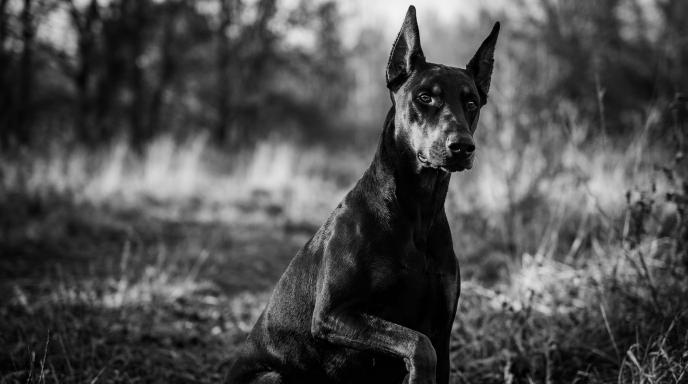
Paw Raising: When your Doberman lifts one front paw, it usually indicates uncertainty or insecurity. They’re not quite sure about the situation. In pointing breeds, this signals nearby prey, but in Dobermans, it’s more about emotional state. Think of it as them saying, “I’m not sure about this…”
Boxing with Front Paws: Dobermans often “box” with their front paws during play. They’ll bounce on their back legs and swat playfully with their front paws. This is a play invitation and pure excitement.
Freezing with Hard Stare: This intense focus is your Doberman’s hunting and guarding instinct kicking in. They’ve spotted something that demands their full attention. It’s impressive to watch but can be concerning if directed at people or other dogs inappropriately.
Understanding Your Doberman’s Vocal Language
Now let’s talk about sounds—because Dobermans are surprisingly vocal dogs.
Types of Barking: Not All Barks Are Equal
Your Doberman has different barks for different situations. Learning to distinguish them helps you respond appropriately.
Alert Bark: This is sharp, repetitive, and urgent. Your Doberman is saying, “Something’s here! Pay attention!” It might be the mailman, a squirrel, or a genuine concern. The appropriate response is to acknowledge it—go look, say “thank you,” and praise your dog for alerting you. Don’t ignore alert barking completely or your dog will escalate.
Play Bark: Higher-pitched and mixed with body wiggles, play barks express excitement and invitation. Your Doberman is having fun and wants you or another dog to join in. This is normal and healthy.
Demand Bark: This bark says, “I want something NOW!” It’s attention-seeking behavior. Your dog wants food, play, or your focus. The key here is NOT to reward it. Wait until your dog is quiet, then give attention. Otherwise, you’re teaching that barking gets results.
Aggressive or Warning Bark: Deep, intense, and paired with stiff body language, this bark is serious. Your Doberman is perceiving a genuine threat and warning it to stay away. Take this seriously and assess the situation. Is your dog overreacting, or is there a real concern?
Whining and Whimpering: The Doberman Specialty
If you own a Doberman, you know they’re champion whiners. Why so much whining?
Because Dobermans are highly communicative and expressive. They have a close bond with their owners and want to tell you EVERYTHING. Whining is their go-to communication tool.
Excitement Whine: This happens when your Doberman anticipates something wonderful—a walk, dinner, playtime. It’s high-pitched, often accompanied by wiggles and bouncing. Your dog can barely contain their joy.
Stress or Anxiety Whine: Lower in pitch and accompanied by stress signals like whale eye, pacing, or panting. Your dog is uncertain or afraid. Offer reassurance and address the cause.
Attention-Seeking Whine: Your Doberman wants your focus and is using whining to get it. The tone is insistent and demanding. Don’t reward this—wait for quiet before giving attention.
Pain Whine: Sharp and different from other whines, a pain whine signals discomfort or injury. If your dog suddenly starts whining in a new way, especially when touched or moving, check for health issues.
“Talking” Whine: This is a Doberman quirk—conversational whining where your dog seems to be having a discussion with you. It’s not demanding or distressed; they’re just chatting. Many Doberman owners find this endearing.
How should you respond to whining? Don’t reward attention-seeking behavior. Do address genuine needs like potty breaks or discomfort. Stay calm when your dog whines from stress—your anxiety will make it worse.
Growling: Valuable Communication
Here’s something critical: never punish your dog for growling.
Growling is your dog’s way of saying, “I’m uncomfortable, and I need this to stop.” If you punish growling, you don’t eliminate the discomfort—you just remove the warning system. Your dog may then skip straight to biting without warning.
Play Growl: Loose body language, game context, and often mixed with play bows. This is harmless fun—your dog is enjoying rough play.
Warning Growl: Paired with stiff body, hard stare, or defensive posture. Your dog is saying, “Back off or I’ll escalate.” Respect this boundary.
Fear Growl: Accompanies fearful body language like crouching or backing away. Your dog feels threatened and is using sound to create distance. Give space immediately.
Possession Growl: Your dog is guarding a resource—food, toy, space. This needs training to address, but in the moment, don’t challenge them. Create distance and work on resource guarding separately.
The proper response to growling? Identify what’s causing it, remove the trigger if possible, never approach a growling dog threateningly, and address the underlying issue through training.
Other Vocalizations Worth Knowing
Howling: Dobermans sometimes howl to communicate over distance, express loneliness, or because it’s part of their breed tendency. Some Dobermans are more vocal than others.
Sighing: This can mean contentment (like when they settle into their bed) or mild frustration (when you stop petting them). Context tells you which.
Grunting and Huffing: These sounds indicate settling in and getting comfortable, or mild annoyance. It’s like a human hmmmph.
“Talking”: Some Dobermans make mouth movements and soft sounds that seem like they’re trying to speak. It’s breed-specific and absolutely adorable. They’re engaging with you conversationally.
Recognizing Stress and Calming Signals
Let’s talk about the subtle signals that prevent situations from escalating.
What Are Calming Signals?
Turid Rugaas, a renowned dog behaviorist, identified “calming signals”—behaviors dogs use to self-soothe and communicate peaceful intentions. These signals say, “I come in peace” or “Please calm down.”
Dobermans use these signals constantly, but most owners miss them.
Ten Key Calming Signals
1. Yawning (when not tired): Your dog is trying to calm themselves or defuse tension in the environment.
2. Lip Licking (no food present): A sign of stress or discomfort. Very common during training or vet visits.
3. Turning Head or Body Away: Your dog is avoiding confrontation and showing respect. This is NOT ignoring you.
4. Sniffing the Ground: When this happens suddenly in a tense situation, it’s a distraction behavior and negotiation tactic. “Let’s both calm down and check out this interesting smell.”
5. Moving Slowly: Deliberate slow movement signals non-threatening intentions. You’ll see this when dogs approach each other cautiously.
6. Play Bow: Besides inviting play, this can diffuse tension between dogs.
7. Sitting or Lying Down: When done in a tense situation, it’s a calming signal to others.
8. Blinking and Soft Eyes: The opposite of a hard stare—this is a peaceful, non-threatening expression.
9. Curved Approach: Dogs rarely approach each other in a straight line. A curved approach is polite and non-confrontational.
10. Shaking Off: After a stressful event, dogs shake their bodies as if they’re wet. This releases tension and resets their emotional state.
Stress Signs You Might Miss
Beyond calming signals, watch for these stress indicators:
- Excessive shedding (stress causes hair loss)
- Sweaty paw prints (anxious dogs sweat through their paws)
- Refusal to take treats (high stress overrides food motivation)
- Hypervigilance (constant scanning, unable to relax)
- Displacement behaviors (scratching, excessive grooming when not itchy/dirty)
- Whale eye
- Repetitive lip licking
- Pinned-back ears with tense body
When you see multiple stress signals together, intervene. Remove your dog from the situation, provide calm reassurance, and give them space to decompress.
How to Read Signals in Context
Here’s the truth: one signal doesn’t tell the full story. You need context.
Consider the Full Picture
Look at your dog’s entire body, not just the tail or ears. A wagging tail with a stiff body means something very different than a wagging tail with a loose, wiggly body.
Think about the environment. Is your dog at home where they’re comfortable? At a dog park with high stimulation? At the vet where stress is expected? Location matters.
Consider recent events. What just happened? Did a stranger approach? Did another dog bark? Did you raise your voice? The trigger helps you interpret the response.
Know your dog’s individual personality. What’s normal for YOUR Doberman? Some are naturally more reserved, others are social butterflies. Compare current behavior to baseline.
Check health status. Pain changes communication dramatically. A dog who’s usually friendly might growl when touched if they’re hurting.
Common Contexts and What to Watch For
At Home: Your Doberman is most relaxed here. Their true personality shows. You’ll see subtle signals more easily because the baseline is calm.
In Public: Arousal levels are higher. Even relaxed dogs are more alert in public. You’ll see more alert body language—this is normal vigilance, not necessarily stress.
With Other Dogs: Dog-to-dog language is slightly different from dog-to-human language. Play can look rough. Learn the difference between play fighting (loose bodies, role reversal, breaks) and real fighting (intense, sustained, yelping).
During Training: If you see stress signals, back off. Your training is too intense or your dog doesn’t understand. If you see engagement signals (focus, loose body, eager participation), continue.
At the Vet: Expect stress signals—this is normal. Your job is to support your dog with calm energy and advocate for gentle handling.
How to “Speak” Doberman
Communication is a two-way street. Let’s talk about how YOU can communicate clearly with your Doberman.
Your Body Language Matters
Your Doberman reads your body language constantly.
Your posture broadcasts confidence or uncertainty. Stand tall and relaxed when you want your dog to feel secure. Hunched, tense posture signals that YOU’RE worried—which makes your dog worried.
Tension in your body travels right down the leash. Tight shoulders, clenched jaw, held breath—your dog feels all of it.
Eye contact varies in meaning. A soft gaze builds connection. A hard stare is confrontational and can be threatening to your dog.
Movement speed and direction matter. Fast, direct approaches can be intimidating. Slow, curved approaches are friendlier.
Best Practices for Clear Communication
Stay calm and confident. Your energy sets the tone for your dog’s response.
Avoid looming over your dog. Bending over a dog, especially when they’re already nervous, is threatening. Crouch to the side instead.
Use slow, deliberate movements. Sudden movements startle dogs and can trigger defensive reactions.
Soft eyes, not hard stares. Look at your dog with love, not intensity.
Turn slightly sideways. A full frontal approach is more confrontational than angling your body slightly.
Breathe calmly. Dogs are incredibly sensitive to breathing patterns. Slow, deep breaths calm both you and your dog.
Clear Verbal Communication
Use consistent commands—same word, same tone, every time. If you say “down” one day and “lie down” the next, your dog gets confused.
Speak in a calm, firm voice. Yelling doesn’t make you more clear; it just adds stress.
Praise with warmth. Use a high, happy tone when your dog does something right. They’ll love it.
Warnings with depth. When you need to say “no” or interrupt unwanted behavior, use a low, serious tone—not angry, just firm.
Hand Signals: The Secret Weapon
Dogs read visual cues better than verbal ones. That’s why hand signals are so effective.
Pair hand signals with verbal commands. Say “sit” while making a hand motion. Eventually, your dog responds to either one.
Stay consistent. The same gesture must always mean the same thing.
Common hand signals include: flat palm for stay, finger pointing down for sit, sweeping motion for come, palm out for leave it.
Avoiding Communication Mistakes
Let’s correct some common misunderstandings.
Mistake #1: “Wagging Tail = Happy Dog”
Reality: A wagging tail just means arousal. It CAN indicate happiness, but it can also signal overstimulation or even aggression.
Fix: Look at tail position, wagging speed, and overall body language. High, stiff, fast wag ≠ friendly.
Mistake #2: “Direct Eye Contact Shows Love”
Reality: Prolonged direct eye contact can be challenging or threatening to dogs.
Fix: Use soft eyes and look away occasionally. Let your dog break eye contact when they need to.
Mistake #3: “Punishing Growling”
Reality: Punishing growling removes your dog’s warning system. They may skip straight to biting.
Fix: Thank your dog for the warning (seriously—say “good boy/girl for telling me”). Then address the cause of their discomfort.
Mistake #4: “Yawning Means Bored”
Reality: Yawning in dogs is a stress signal, not boredom.
Fix: Reduce pressure, give your dog space, or end the stressful activity.
Mistake #5: “My Dog Is Stubborn (Avoiding Eye Contact)”
Reality: Your dog is showing discomfort or submission, not defiance.
Fix: Check your training methods. Are you being too harsh? Too confusing? Address the cause of discomfort.
Mistake #6: “Aggressive Because Hackles Are Up”
Reality: Raised hackles just mean arousal—could be excitement, fear, OR aggression.
Fix: Check the full body language and context before deciding what the arousal means.
How Communication Changes with Age
Your Doberman’s communication style evolves throughout their life.
Puppy Communication (8 Weeks – 6 Months)
Puppies use more submissive signals as they learn social skills. Their expressions are exaggerated—everything is BIG and dramatic. They vocalize more because they’re still learning. Be patient—they’re figuring out how to speak dog.
Adolescent (6 Months – 2 Years)
Teenagers test boundaries. You’ll see more confident body language and increased reactivity. This is the “selective hearing” phase where they know what you want but choose to ignore it. Stay consistent with training.
Adult (2-7 Years)
Mature Dobermans communicate with clarity and confidence. They’ve established their patterns and you know each other well. Most are less vocal than when they were younger (though exceptions exist). This is peak communication.
Senior (7+ Years)
Older dogs may have reduced hearing or vision, which affects communication. Their expressions are less energetic. Pain can cause grumpiness—a previously tolerant dog might growl more. Be patient and adapt to their changing needs.
Real-Life Communication Scenarios
Let’s apply this knowledge to everyday situations.
Scenario 1: Dog Parks
Signals to watch: Stiff body and hard stare? Leave before conflict erupts. Loose, wiggly body? Safe play. Whale eye and tucked tail? Your dog is fearful and needs rescue.
Action: Stay vigilant. Remove your dog if you see stress or pre-aggression signals. Don’t wait for a fight.
Scenario 2: Meeting New People
Signals to watch: Forward, confident approach? Friendly interest. Hiding behind you? Needs reassurance. Growling or rigid body? Protect their space.
Action: Let your dog set the pace. Never force interaction. Teach visitors to ignore your dog until the dog approaches them.
Scenario 3: Vet Visits
Signals to watch: Yawning, lip licking? Normal stress. Trembling, whale eye? High fear. Growling? Serious distress.
Action: Use a calm voice, offer high-value treats, and advocate for your dog. Ask the vet to work slowly and gently.
Scenario 4: Multi-Dog Household
Signals to watch: Resource guarding body language, play versus fighting cues, tension indicators.
Action: Manage resources (feed separately, provide multiple toys), intervene before escalation, ensure each dog has their own space.
Scenario 5: Training Sessions
Signals to watch: Avoidance behaviors? Too much pressure. Engagement (focus, loose body)? Good session. Stress yawns? Time for a break.
Action: Keep sessions positive, short, and rewarding. End on success.
Improving Your Ability to Read Your Doberman
Like any skill, reading dog body language improves with practice.
1. Spend quiet observation time. Just watch your dog without interacting. Notice how they move through their day.
2. Video your dog. You’ll catch signals you missed in real-time. Review the footage to see patterns.
3. Study body language resources. Read Turid Rugaas’s “On Talking Terms with Dogs: Calming Signals.” Watch videos from dog communication experts.
4. Practice with your dog. Respond to subtle signals and notice what changes their behavior. You’re learning their specific dialect.
5. Ask for help. Professional trainers and behavior consultants can point out things you’re missing. Join breed-specific groups and learn from experienced owners.
The Language of Trust
Understanding doberman communication signals isn’t just about preventing problems—though it absolutely does that. It’s about building a relationship based on mutual respect and trust.
When you listen to your Doberman’s body language and vocal cues, you’re telling them, “Your voice matters. I hear you. I’ll protect you.” That creates a bond deeper than any training technique.
Your Doberman is constantly talking to you. Every tail wag, every ear position, every whine and yawn—they’re all messages. The question is: are you listening?
Start today. Pick one signal from this guide and focus on it this week. Notice when your Doberman uses it and in what context. Respond appropriately. Then add another signal next week.
Over time, you’ll develop an almost intuitive understanding of your dog’s emotional state. You’ll know when they’re happy, stressed, playful, or worried—often before they even act on those feelings.
This is the partnership Dobermans were bred for. They’re working dogs who need a partner they can communicate with clearly. When you learn their language, you become that partner.
Your Doberman is already an expert at reading you. Now it’s your turn to become an expert at reading them.
Frequently Asked Questions About Doberman Communication
Q: Why does my Doberman whine so much?
Dobermans are naturally vocal and communicative—it’s a breed characteristic. Your dog is trying to tell you something: excitement about a walk, stress about being alone, or just conversational engagement. Address the underlying cause rather than punishing the whining. If it’s attention-seeking, wait for quiet before rewarding with attention.
Q: Is my Doberman smiling or showing aggression?
Look at the full picture. A submissive grin comes with loose body language, soft eyes, and happy wiggles—it’s friendly. Aggression includes a stiff body, hard eyes, raised hackles, and often growling. Context and overall body language tell you which it is.
Q: Why does my Doberman lean on me?
The “Doberman lean” is pure affection and bonding behavior. It’s breed-specific quirk where your dog seeks closeness and physical contact with you. They’re essentially hugging you. Enjoy it—it means your dog loves and trusts you completely.
Q: Should I stare into my Doberman’s eyes?
Soft gazing builds bonding and connection. But hard, prolonged staring is challenging and can be threatening. Look at your dog with soft, loving eyes, and allow them to look away when they need to. Forced eye contact creates stress.
Q: What does it mean when my Doberman raises one paw?
Paw raising typically indicates uncertainty or insecurity. Your dog is saying, “I’m not quite sure about this situation.” In pointing breeds, it signals nearby prey, but in Dobermans it’s more about their emotional state. Offer reassurance if appropriate.
Q: Why does my Doberman turn away from me?
This is a calming signal, not disrespect. Your dog is showing submission, avoiding confrontation, or trying to diffuse tension. It’s actually a sign of respect and good manners in dog language. They’re NOT ignoring you—they’re communicating peacefully.
Q: How can I tell if my Doberman is stressed or just tired?
Stressed dogs show tension throughout their body—yawning combined with whale eye, tight muscles, panting, pacing, and inability to settle. Tired dogs have relaxed body language, soft eyes, and willingly choose to rest. The overall body tension is the key difference.