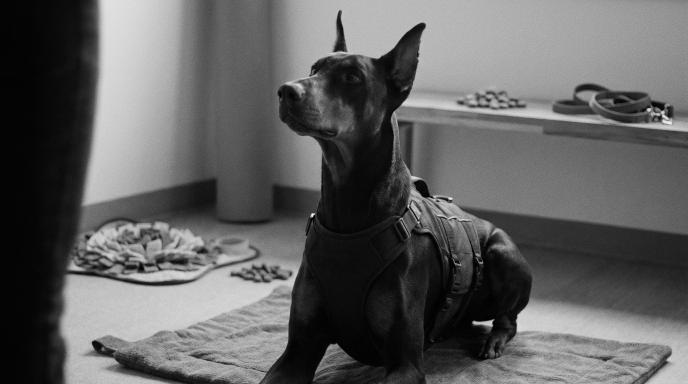
Affiliate Disclosure: Some of the links in this post are affiliate links. This means we may earn a small commission if you make a purchase through these links—at no extra cost to you. We only recommend products and tools that we genuinely believe will help you with your Doberman.
- Why Dobermans Need Calming Tools for Training (And It’s Not What You Think)
- Why Your Doberman Goes From Zero to 100 in 0.5 Seconds
- How Calming Tools Work (The Science Made Simple)
- Physical Tools That Create Instant Calm
- Tire the Mind to Calm the Body
- What to Give Your Doberman Before Training Starts
- Teaching Your Doberman to Self-Soothe
- The Calming Tool “Stack” for Doberman Training
- Real Training Scenarios with Tool Combinations
- When Calming Tools Don’t Work (And What to Do About It)
- Calming Tools on a Budget
- Budget vs. Premium Calming Tools Comparison
- The Best Calming Tools for Dobermans (Tested & Approved)
- Sizing Chart for Dobermans
- Your Next Steps to a Calmer, More Focused Doberman
- Final Encouragement
Why Dobermans Need Calming Tools for Training (And It’s Not What You Think)
Ever tried teaching “sit” to a Doberman who’s bouncing off the walls like they’ve had ten espressos?
Here’s the thing about Dobermans that most training books don’t tell you: they’re wired differently. While other breeds might settle into training mode naturally, Dobermans often exist in a constant state of alert readiness. Their working breed genetics, combined with their intense loyalty and protective instincts, create what I call the “Doberman arousal paradox”—they’re too smart to ignore your commands, but often too excited to actually execute them properly.
That’s where calming tools come in. And no, I’m not talking about sedating your dog or turning them into a couch potato. Calming tools are strategic aids that help your Doberman access the learning zone where their brilliant brain can actually absorb what you’re teaching. Think of them as volume controls for your dog’s internal excitement meter.
In this comprehensive guide, we’ll explore the four categories of calming tools—physical tools, mental enrichment tools, consumable aids, and training protocols—and most importantly, how to integrate them directly into your training sessions for breakthrough results. Whether you’re struggling with a reactive adolescent Doberman who lunges at every distraction, a puppy who can’t sit still for five seconds, or an adult dog who gets overstimulated by high-value treats, this guide will give you practical, breed-specific solutions.
Why Your Doberman Goes From Zero to 100 in 0.5 Seconds
The Doberman Brain: Wired for Alertness
Let’s talk neuroscience for a second—don’t worry, I’ll keep it simple. Dobermans were originally bred in the 1890s by a German tax collector named Karl Friedrich Louis Dobermann, who needed a loyal, alert, and protective companion for his dangerous work collecting money. That breeding purpose created dogs with incredibly sensitive nervous systems designed to notice everything.
Your Doberman’s brain is essentially wired to be on high alert. They have what researchers call heightened dopamine sensitivity, which means they get more excited by stimuli than many other breeds. That squirrel running across the yard? Your Labrador might glance at it. Your Doberman’s entire nervous system lights up like a Christmas tree. This isn’t a flaw—it’s exactly what they were designed to do. The problem is, this same trait that makes them excellent guard dogs and working companions also makes them challenging training students.
There’s also a notable difference between European and American Doberman lines. European Dobermans tend to have higher drive, more intensity, and stronger working instincts, while American Dobermans are often slightly calmer and more suited to companion roles. Regardless of lineage, though, all Dobermans share that fundamental alertness that can derail training sessions in a heartbeat.
The Arousal-Learning Connection
Here’s the critical piece most dog owners don’t understand: dogs cannot learn effectively when they’re over-aroused. Think about it like trying to study for an exam while riding a rollercoaster. Your brain is so flooded with adrenaline and excitement that retaining new information becomes nearly impossible.
When your Doberman is overstimulated, their body releases cortisol (the stress hormone) and adrenaline. These chemicals literally shut down the prefrontal cortex—the part of the brain responsible for decision-making, impulse control, and learning new behaviors. Your dog isn’t being stubborn or defiant; their brain genuinely cannot process your training cues.
The sweet spot for effective training is what trainers call “optimal arousal”—your Doberman should be alert and engaged, but not frantic. They should be able to make eye contact with you, respond to their name, and show interest in rewards without losing their minds. If your dog is panting heavily, unable to take treats gently, spinning, barking, or completely fixated on environmental triggers, they’re over-threshold and learning won’t happen.
Common Training Scenarios That Trigger Over-Arousal
So what pushes Dobermans over the edge during training? Let’s be specific:
The Doorbell Scenario: You’re in the middle of practicing “down-stay” when someone rings the doorbell. Your Doberman instantly transforms into a 75-pound alert system, completely forgetting every command they’ve ever learned.
The Other Dog Scenario: You’re working on loose-leash walking when another dog appears fifty yards away. Your Doberman’s entire body tenses, their focus narrows to laser-intensity on that other dog, and suddenly you might as well be invisible.
The Treat Jackpot Scenario: You pull out hot dogs for high-value training, and your Doberman becomes so obsessed with the treats that they can’t focus on the actual behavior you’re trying to teach. They’re jumping, whining, pawing at you, and their brain has checked out.
The Environmental Distraction Scenario: You’re at the park trying to practice recall, but there are squirrels, kids playing soccer, other dogs, and a food truck. Your Doberman’s sensory system is completely overwhelmed, and they can’t filter out the noise to focus on you.
Sound familiar? Every single one of these scenarios calls for strategic calming tools to bring your Doberman back into the learning zone. Let’s explore exactly which tools to use and when.
How Calming Tools Work (The Science Made Simple)
Before we dive into specific tools, let’s understand the four categories and how they work at a neurological level.
Category 1: Physical Calming Tools
These tools work through something called “deep pressure therapy” or by creating environmental cues that signal “it’s time to relax.” Think compression vests, training mats, and crates. Physical tools provide tactile feedback that helps regulate the nervous system. It’s similar to why weighted blankets help anxious humans—gentle, consistent pressure activates the parasympathetic nervous system (your dog’s “rest and digest” mode) and reduces cortisol levels.
Category 2: Mental Enrichment Tools
These include puzzle feeders, snuffle mats, lick mats, and scent work activities. Mental enrichment tools work by engaging your Doberman’s natural instincts (sniffing, problem-solving, foraging) in ways that promote calm focus rather than explosive energy. When your dog uses their nose to search for treats in a snuffle mat, for example, their brain releases endorphins and serotonin—natural calming chemicals.
Category 3: Consumable Calming Aids
This category includes calming treats with specific ingredients (like L-theanine or melatonin), long-lasting chews, and pheromone products. Consumable aids work through biochemistry—certain amino acids and compounds directly influence neurotransmitter production in your dog’s brain, promoting relaxation without sedation.
Category 4: Training Protocols as Tools
Finally, some “tools” are actually learned behaviors—like the “place” command, Karen Overall’s Relaxation Protocol, or structured decompression walks. These work by teaching your Doberman self-regulation skills. Instead of always relying on external aids, your dog learns to intentionally downshift their arousal level on cue.
Pro Tip: The best results come from combining tools from multiple categories—think of it like a calming “tool stack.” For example: decompression walk (protocol) + calming treat (consumable) + training mat (physical) + snuffle mat warm-up (mental enrichment) = one seriously focused Doberman ready to learn.
Physical Tools That Create Instant Calm
Compression/Anxiety Vests (ThunderShirt, etc.)
The ThunderShirt is probably the most famous anxiety vest, and for good reason—it works surprisingly well for many Dobermans. The concept is simple: gentle, constant pressure around your dog’s torso activates pressure points that trigger calming responses. It’s like giving your dog a continuous hug.
When to use during training: Put the vest on your Doberman 15-20 minutes before your training session starts, especially if you’re working in high-distraction environments. I’ve seen dramatic differences in dogs who wear anxiety vests during group training classes or when practicing obedience near busy streets. The vest won’t magically make your Doberman obedient, but it takes the edge off that frantic energy that prevents learning.
Doberman-Specific Sizing Guide: Most adult Dobermans (60-80 lbs) need a Large or X-Large ThunderShirt. Measure your dog’s chest at the widest point (just behind the front legs). The vest should be snug but not restrictive—you should be able to fit two fingers comfortably between the vest and your dog’s body.
Pros: Non-invasive, reusable, works immediately for many dogs, no side effects.
Cons: Doesn’t work for all dogs (about 20% see no benefit), can get hot in warm weather, may need washing frequently.
Product Recommendations:
- Budget ($25-30): AKC Anti-Anxiety Calming Coat
- Mid-Range ($40-50): ThunderShirt Classic (the original and most tested)
- Premium ($70-90): ThunderShirt Sport (lighter material, better for active training)
Training Mats & Place Boards
A “place” mat or board is one of the most underrated calming tools in dog training. Here’s why it’s brilliant: it creates a portable calm zone that signals to your Doberman, “When you’re on this mat, you relax.”
Teaching “place” as a calming anchor gives you a reset button during training sessions. When your Doberman starts getting too ramped up during heel practice or starts fixating on distractions, you can send them to their place mat for a 30-60 second decompression break. Over time, just seeing the mat triggers calming associations.
Best mat materials for Dobermans: You need something durable and washable—Dobermans are tough on gear. Look for mats made from waterproof, non-slip material. Raised cot-style beds (like the Kuranda dog bed) work exceptionally well because they’re virtually indestructible and provide slight elevation that Dobermans seem to love.
Using mats in different training environments: Start by training “place” at home in a quiet room. Once your Doberman can hold a 5-minute “place” with zero distractions, gradually increase the challenge—practice with the TV on, then with someone walking through the room, then outside in the yard, then at the park. The mat becomes a portable calm zone your dog recognizes anywhere.
DIY Option: How to Make a Weighted Place Board
Want to get fancy? Create a weighted place board that provides slight proprioceptive feedback (awareness of body position):
- Get a 24″ x 36″ piece of plywood
- Cover it with indoor-outdoor carpet or rubberized non-slip material
- Attach four small furniture pads to the bottom corners
- Optional: Add 2-3 lbs of weight underneath by gluing flat weights or sandbags to the underside
The slight weight makes the board stable and gives your Doberman subtle feedback when they step on it. Total cost: $20-30.
Crate as a Calming Tool
I know what you’re thinking—”My Doberman hates their crate!” Many do, especially if crate training was rushed or associated with punishment. But here’s the truth: a properly introduced crate becomes your Doberman’s sanctuary, a place where the world slows down and they can truly decompress.
Crate training for pre/post-training decompression: Consider this routine: 20 minutes before training, give your Doberman a stuffed frozen Kong in their crate. They get mental stimulation from working on the Kong while naturally calming down in the quiet, confined space. After training, another 15-20 minutes of crate rest with a long-lasting chew prevents the post-training zoomies that many Dobermans experience.
Location matters: Where you place the crate dramatically affects its calming power. For pre-training decompression, the crate should be in a quiet area away from household activity. For nighttime rest, many Dobermans prefer being in the bedroom with their owners (remember, they’re Velcro dogs who bond intensely).
Calming crate accessories:
- Crate cover: Blocks visual stimulation and creates a den-like atmosphere
- Heartbeat toy (Snuggle Puppy): Mimics the comfort of littermates
- Pheromone diffuser nearby: Releases dog-appeasing pheromones (DAP)
- Calming music or white noise: Drowns out environmental triggers
Tire the Mind to Calm the Body
Snuffle Mats
If you’ve never seen a snuffle mat in action, you’re missing out. It’s basically a rubber mat with fabric strips attached, creating a shaggy surface where you hide treats. Your Doberman uses their nose to sniff out the hidden goodies, and something magical happens—their entire body language shifts from frantic to focused calm.
Why sniffing calms the nervous system: This isn’t just anecdotal—studies show that sniffing activities lower heart rate and reduce cortisol levels in dogs. When your Doberman engages their olfactory system (sense of smell), it activates the parasympathetic nervous system and releases calming neurochemicals. Five minutes of snuffling can have the same calming effect as a 30-minute walk.
Pre-training warm-up routine with snuffle mat: Here’s my favorite protocol: 10 minutes before training, scatter your dog’s regular kibble or small training treats throughout a snuffle mat. Let them search and sniff at their own pace. Don’t rush them, don’t give commands—just let them sniff. By the time they’re finished, their brain has shifted into calm, focused mode, perfect for training.
Doberman Durability Test: Best Heavy-Duty Options
Let’s be real—Dobermans destroy things. You need a snuffle mat that can withstand some serious abuse:
- Best Overall: PAW5 Wooly Snuffle Mat (thick fleece, machine washable, has lasted 2+ years with my friend’s Doberman)
- Budget Option: Outward Hound Nina Ottosson Puzzle Feeder (technically a puzzle, but works similarly)
- DIY Alternative: Make your own with a rubber sink mat and fleece strips tied through the holes
How to Introduce a Snuffle Mat (Step-by-Step):
- Day 1: Place treats ON TOP of the mat where they’re easily visible. Let your dog eat them. Repeat 3-4 times.
- Day 2: Push treats slightly into the fabric so your dog has to sniff a bit to find them.
- Day 3-4: Hide treats deeper in the mat. Encourage sniffing by saying “go sniff” or “find it.”
- Day 5+: Fully hide treats throughout the mat. Your Doberman should now eagerly engage with sniffing behavior.
Lick Mats
Lick mats are silicone or rubber mats with textured surfaces designed to hold spreadable foods like peanut butter, yogurt, or wet dog food. Your Doberman licks the mat to consume the food, and the repetitive licking action becomes incredibly soothing.
Why licking equals self-soothing behavior: Licking releases endorphins in dogs—it’s a self-calming mechanism similar to how humans might tap their foot or fidget when nervous. The repetitive motion also slows your dog’s heart rate and breathing. This makes lick mats perfect for situations where you need your Doberman to stay calm but occupied.
Best uses during training:
- “Stay” training: Place a lick mat in front of your Doberman during extended stays. They learn to hold position while self-soothing.
- Grooming/nail trims: Stick a lick mat to the wall at nose height during grooming. Your dog focuses on licking instead of struggling.
- Vet visits: Bring a lick mat to the vet’s office and use it during examinations to create positive associations.
Doberman-Safe Lick Mat Recipes (Frozen Options for Longer Lasting):
Recipe 1: Peanut Butter Banana Freeze
- 2 tbsp natural peanut butter (xylitol-free!)
- 1/2 mashed banana
- 1 tbsp plain Greek yogurt Spread on mat and freeze for 2+ hours
Recipe 2: Pumpkin Calm-Down
- 3 tbsp pure pumpkin puree (not pie filling)
- 1 tbsp coconut oil
- Sprinkle of cinnamon Spread and freeze
Recipe 3: Savory Bone Broth
- 4 oz low-sodium bone broth
- Freeze directly on mat
Pro Tip: Freeze lick mats to make them last 15-20 minutes instead of just 5 minutes. This is especially useful for post-training cooldown.
Puzzle Feeders & Slow Feeders
Puzzle feeders require your Doberman to solve problems to access food—sliding pieces, lifting flaps, spinning wheels. This mental effort is exhausting in the best way possible. A 15-minute puzzle feeding session can tire your Doberman as much as a 30-minute walk.
When to use: Puzzle feeders work brilliantly post-walk (before training) or at night before bed. The mental fatigue naturally transitions your dog into calm mode. Avoid using them immediately before training, as some dogs get frustrated and that defeats the purpose.
Doberman-Proof Recommendations (They’re Destructive!):
- Nina Ottosson by Outward Hound Dog Brick: Made from hard plastic, multiple difficulty levels, dishwasher safe
- Kong Wobbler: Nearly indestructible, dispenses kibble as it wobbles, great for food-motivated Dobermans
- Trixie Activity Flip Board: Intermediate difficulty, various puzzle elements, sturdy construction
Slow Feeders (Different from Puzzles):
If puzzle complexity frustrates your Doberman, try a slow feeder bowl instead. These have raised ridges that force your dog to eat slowly, which naturally calms them down through extended, focused eating. The Outward Hound Fun Feeder is virtually indestructible and works great for Dobermans.
Flirt Poles (Pre-Training Exercise Tool)
A flirt pole is essentially a giant cat toy for dogs—a long pole with a rope attached to a lure (usually a toy or fabric). You move the lure in unpredictable patterns while your Doberman chases and catches it. Used correctly, flirt poles provide intense physical exercise AND teach impulse control.
Controlled physical outlet before training: Here’s the key—you use a flirt pole for 10-15 minutes before training to burn off that initial explosive energy that makes training impossible. But you do it with rules: your Doberman must “sit” or “down” before each chase, and they must “drop it” when they catch the lure. This way, you’re burning energy while simultaneously practicing self-control.
Teaching impulse control with flirt pole rules:
- Dog must sit and wait for “get it” cue before chasing
- Chase lasts 20-30 seconds maximum
- When you say “drop it,” lure stops moving and dog must release
- Repeat 8-10 times with breaks between each chase
CAUTION: When NOT to Use Flirt Poles
Do NOT use flirt poles if your Doberman is already over-aroused or reactive. Flirt poles tap into prey drive, which can push an already excited dog completely over threshold. Use them only when your dog is in a relatively calm state at the beginning. And never use them immediately before training—allow at least 15-20 minutes for your dog to come down from the excitement.
What to Give Your Doberman Before Training Starts
Calming Treats & Supplements
Let’s cut through the marketing noise and talk about what actually works. Calming treats contain specific ingredients that influence neurotransmitter production in your dog’s brain, promoting relaxation without sedation.
Key Ingredients That Actually Work:
L-Theanine: An amino acid found in green tea that increases serotonin and dopamine production. Studies show it reduces anxiety without causing drowsiness. Ideal for training because your dog stays mentally sharp but less reactive.
Melatonin: You know this one—it’s what makes you sleepy. In dogs, small doses (1-3mg for Dobermans) promote calmness without full sedation. Great for evening training sessions or for dogs with nighttime anxiety.
Chamomile: An herb with mild sedative properties. It’s gentler than pharmaceutical options but definitely has a calming effect, especially for digestive-related anxiety (some Dobermans get nervous stomachs).
Valerian Root: Acts on GABA receptors in the brain (similar to how anti-anxiety medications work, but much milder). It’s particularly effective for situational anxiety like vet visits or car rides.
Thiamine (Vitamin B1): Supports nervous system function and helps dogs cope with stress. It’s often included in calming formulas as a foundational ingredient.
CBD (Cannabidiol): The research is still emerging, but many owners report noticeable calming effects. Look for products with third-party lab testing and clear CBD content per dose.
How Long Before Training to Administer (Timing is Everything):
This is crucial—most calming treats take 30-60 minutes to reach peak effectiveness. Don’t give them right before training and expect instant results. Here’s the timeline:
- 45-60 minutes before training: Give calming treat
- 30-40 minutes before: Start decompression walk or snuffle mat activity
- 15-20 minutes before: Place command on training mat
- 0 minutes: Begin training session
Doberman Dosage Guide (Weight-Based):
Most calming treats use weight-based dosing. For a typical 70-75 lb adult Doberman:
- VetriScience Composure: 2 chews (one for anxiety, double dose for extra stressful situations)
- Zesty Paws Calming Bites: 2-3 chews
- CBD Oil: 10-15mg CBD per dose (start low and increase gradually)
Always start with the lowest recommended dose and observe effects before increasing.
Product Recommendations:
Best Overall: VetriScience Composure ($25-30 for 30 chews)
- Contains L-theanine, colostrum, thiamine
- NASC quality seal (National Animal Supplement Council)
- Works within 30 minutes for most dogs
- Available in chicken liver or peanut butter flavor
Best for Severe Anxiety: Zesty Paws Advanced Calming Bites ($30-35 for 90 chews)
- Contains melatonin, chamomile, valerian root, L-theanine, hemp
- More potent formula for high-anxiety dogs
- Bacon flavor that even picky Dobermans love
Best Value: Purina Pro Plan Calming Care ($35 for 30-day supply)
- Probiotic-based calming supplement
- Takes 6 weeks to reach full effectiveness (this is a long-term solution)
- Powder form mixed with food
- Vet-recommended
Long-Lasting Chews
Long-lasting chews serve a dual purpose: they occupy your Doberman’s mouth and mind while the physical act of chewing releases endorphins and reduces stress. These are best used AFTER training as part of your cooldown routine.
When to use: Post-Training Cooldown
After a training session, your Doberman’s brain is tired but their body might still have residual excitement. Give them a bully stick or stuffed Kong and let them decompress in their crate or on their place mat for 15-20 minutes. This prevents the post-training “zoomies” and helps solidify the training they just completed (rest is when learning consolidates in the brain).
Best Options:
- Bully Sticks: 6-inch sticks last 20-30 minutes for most Dobermans. Odor-free versions available.
- Yak Chews: Extremely hard, long-lasting (can go 45-60 minutes). Made from yak milk.
- Frozen Stuffed Kongs: Fill with kibble mixed with peanut butter or pumpkin, freeze overnight. Lasts 30-45 minutes.
SAFETY WARNING: Always Supervise Dobermans
Dobermans are aggressive chewers with incredibly powerful jaws. NEVER leave them unsupervised with chews, especially bully sticks or rawhide alternatives. I’ve known Dobermans who broke off large chunks and tried to swallow them whole. Stay in the room, and take the chew away when it gets small enough to be a choking hazard (roughly 2-3 inches).
Pheromone Diffusers & Sprays
Dog-appeasing pheromones (DAP) are synthetic versions of the calming pheromone mother dogs produce when nursing puppies. They’re completely odorless to humans but provide comfort signals to dogs.
Training Applications:
Pheromone Spray on Training Mat: 15-20 minutes before training, spray your dog’s place mat with DAP spray (like Adaptil or ThunderEase). The mat becomes associated with calming scents, enhancing the relaxation effect.
Diffuser in Training Room: If you train primarily in one room (basement, garage, living room), plug in a pheromone diffuser. Each diffuser covers about 700 square feet and lasts 30 days. It creates a subtle calming atmosphere that reduces background stress.
How Long They Last:
- Sprays: 4-5 hours of effectiveness. Reapply before each training session.
- Diffusers: Continuous release for 30 days. Replace refill monthly.
- Collars: Worn continuously, effectiveness lasts 30 days.
Do They Work?
Honestly? Results are mixed. Some Dobermans show noticeable improvement (calmer body language, better focus), while others seem unaffected. The research suggests about 60-70% of dogs respond positively. They’re relatively inexpensive and have zero side effects, so they’re worth trying as part of your calming tool stack.
Product Recommendations:
- ThunderEase Calming Diffuser Kit: $25-30 (diffuser + refill)
- Adaptil Spray: $20 for 60ml bottle
- ThunderEase Calming Collar: $20 (worn continuously for on-the-go calming)
Teaching Your Doberman to Self-Soothe
The “Place” Command
If I could teach every Doberman owner only ONE calming tool, it would be the “place” command. It’s that powerful. “Place” means “go to your mat/bed and stay there until I release you.” It becomes a portable reset button you can use anywhere.
Why it’s the #1 Calming Tool for Dobermans:
Unlike “sit” or “down,” which can still be performed in a stressed state, “place” requires your Doberman to physically move to a specific location and settle. The movement creates a mental reset, and the mat itself becomes a conditioned calming cue. Over time, just seeing the mat triggers relaxation responses.
Step-by-Step Training Guide:
Phase 1: Introducing the Place Board (Week 1)
- Place your training mat on the floor. Have treats ready.
- Toss a treat onto the mat. When your dog steps on it to eat the treat, say “Yes!” and give another treat.
- Repeat 10 times. Session over.
- Do 3-4 sessions daily for 2-3 days.
- By day 3-4, start saying “place” just BEFORE tossing the treat. Your dog begins associating the word with the action.
Phase 2: Adding Duration (Week 2)
- Send your dog to “place.” The moment they step on the mat, wait 2-3 seconds before treating.
- Gradually increase duration: 5 seconds, then 10, then 15, then 30 seconds.
- If your dog breaks position before you release them (use a release word like “okay” or “free”), calmly guide them back without treating. Try again with an easier duration.
- By end of week 2, your Doberman should hold “place” for 60 seconds with you standing next to the mat.
Phase 3: Adding Distractions (Week 3-4)
- Ask for “place” and take one step away. Return, treat, release.
- Gradually increase distance: 2 steps, 5 steps, 10 steps, across the room.
- Add movement: walk past the mat, clap your hands, bounce a ball.
- Add environmental distractions: turn on TV, have someone walk through the room, drop a book on the floor.
Phase 4: Generalizing to New Locations (Week 5+)
- Bring your mat to different rooms in the house. Practice “place” in each location.
- Take the mat to the backyard. Practice there.
- Take the mat to a quiet park. Practice there.
- Take the mat to a busier park or training class. Practice there.
Using Place During Training:
Here’s the game-changer: when your Doberman gets too hyped during heel practice and starts pulling like a freight train or jumping on you, calmly say “place” and point to the mat. Give them 30-60 seconds to decompress, then resume training. It’s a built-in timeout that lowers arousal levels without punishment.
I watched a trainer use this technique with a reactive Doberman in a group class. Every time the dog started fixating on another dog and getting tense, the owner would send him to “place” for 45 seconds. By the end of the 6-week class, the dog could remain calm even with other dogs walking directly past him—because he’d learned to self-regulate using the place command.
Karen Overall’s Relaxation Protocol (Simplified)
This protocol was developed by veterinary behaviorist Dr. Karen Overall to systematically desensitize dogs to movement, noise, and everyday distractions while teaching them to hold a relaxed down-stay. It’s incredibly effective but notoriously long (15 days, multiple steps per day). Here’s a Doberman-adapted version that’s shorter and more practical.
What It Is:
The protocol involves having your dog hold a down-stay on their mat while you perform increasingly distracting activities around them—walking, clapping, leaving the room, opening doors, etc. Each day builds on the previous day’s distractions. The goal is teaching your Doberman that they can remain calm no matter what’s happening around them.
Doberman-Adapted Version (Shorter Sessions, Higher-Value Rewards):
Dobermans get bored easily, so we’re shortening sessions to 10 minutes instead of 20-30 minutes. We’re also using higher-value rewards (chicken, cheese, hot dogs) instead of kibble to keep motivation high.
Week-by-Week Progression:
Week 1 (Days 1-7): Foundation
- Day 1-2: Dog on mat in down-stay. You stand still 3 feet away. Treat every 5 seconds for 2 minutes.
- Day 3-4: Take 1 step to the right, return, treat. Repeat with left, forward, backward. Treat every 10 seconds for 3 minutes.
- Day 5-6: Walk in a circle around your dog (3 feet away). Treat every 15 seconds for 4 minutes.
- Day 7: Combine all movements. Treat every 20 seconds for 5 minutes.
Week 2 (Days 8-14): Adding Sound/Movement
- Day 8-9: Clap hands once. Pause. Treat. Clap twice. Pause. Treat. Continue for 5 minutes.
- Day 10-11: Drop a book on the floor 5 feet away. Pause. Treat. Repeat 8-10 times.
- Day 12-13: Walk to the door, touch the handle, return, treat. Repeat 6-8 times.
- Day 14: Open and close door (don’t leave). Pause. Treat. Repeat 6-8 times.
Week 3 (Days 15-21): Real-World Distractions
- Day 15-16: Leave the room for 3 seconds, return, treat. Gradually increase to 10 seconds.
- Day 17-18: Have someone else walk past the dog (10 feet away). Treat when dog remains calm.
- Day 19-20: Turn on TV. Treat. Increase volume slightly. Treat. Continue for 5 minutes.
- Day 21: Combine everything: walk around, clap, open door, leave room briefly. Reward calm behavior heavily.
Key Rules:
- If your dog breaks the down-stay, don’t scold. Simply reset and try an easier step.
- Always end on success. If your dog struggles, go back to a previous day’s level.
- Practice once daily, same time each day if possible.
Structured Decompression Walks
This is the most underrated calming tool in the entire guide. A decompression walk is different from regular exercise—it’s not about burning energy or practicing obedience. It’s about letting your Doberman decompress mentally through extended sniffing.
Why Arousal Management Starts BEFORE Training:
If you try to train a Doberman who’s been cooped up in the house all day, their baseline arousal level is already too high. They’re wound up, understimulated, and unable to focus. A 20-30 minute decompression walk resets their nervous system and prepares them for learning.
Decompression Walk Rules:
- Long leash: Use a 15-20 foot long line (not a retractable leash). Your dog needs freedom to explore.
- Sniffing encouraged: Let your dog sniff everything—grass, trees, fire hydrants, bushes. Don’t rush them. Sniffing lowers heart rate and activates the parasympathetic nervous system.
- No commands: This isn’t training time. Don’t ask for sits, heels, or anything else. Let your dog’s brain relax.
- Quiet location: Choose a calm trail, quiet neighborhood street, or empty field. Avoid busy areas with lots of triggers.
- Slow pace: You’re not power walking. Mosey. Let your dog set the pace.
Timing: 20-30 Minutes Before Training Session
The protocol looks like this:
- 60 minutes before training: Give calming treat (if using)
- 45 minutes before training: Start decompression walk
- 15 minutes before training: Return home, offer water, 10 minutes of snuffle mat
- 0 minutes: Begin training
Your Doberman will be in a completely different mental state—calm, focused, and ready to learn.
The Calming Tool “Stack” for Doberman Training
Now let’s put it all together. The real magic happens when you combine tools strategically. Here’s exactly how to structure training sessions for maximum focus.
Pre-Training Routine (30 Minutes Before)
Step 1: Calming Treat Administration (60 min before)
- If using supplements, give them now so they have time to take effect
- VetriScience Composure or similar product
Step 2: Decompression Walk (45 min before, 20-30 min duration)
- Long leash, slow pace, sniffing encouraged
- No commands, just mental decompression
Step 3: Snuffle Mat Session (15 min before, 5 min duration)
- Scatter treats in snuffle mat
- Allows continued calming through nose work
Step 4: Place Command on Training Mat (10 min before, 5 min duration)
- Send dog to place mat
- Light petting, calm environment
- Body language should show relaxation: soft eyes, relaxed mouth, slow breathing
During Training Session
Keep Training Mat Present: The place mat stays visible during training. Every 10-15 minutes, or whenever your Doberman shows signs of over-arousal (panting, inability to focus, jumping, whining), send them to “place” for a 30-60 second reset break.
Anxiety Vest IF Environmental Triggers Present: If you’re training in a high-distraction environment (group class, busy park, near traffic), put the ThunderShirt on your Doberman for the session. Don’t use it for every training session or the effect diminishes.
Lick Mat for Impulse Control Exercises: When practicing “stay” or “wait” commands, place a frozen lick mat in front of your Doberman. They learn to control impulses (not breaking the stay) even when something delicious is right there.
Post-Training Cooldown (15 Minutes)
Step 1: Place Command on Mat (5 min) Immediately after training ends, send your Doberman to their place mat. Give them a few minutes to settle and process what they learned. Learning consolidation happens during rest.
Step 2: Long-Lasting Chew (10-15 min) Provide a bully stick, frozen Kong, or yak chew. Let them decompress in their crate or on their mat with the chew. This prevents post-training zoomies and creates a positive association with training (training = treats afterwards!).
Step 3: Quiet Time No more excitement, play, or activity for at least 30-45 minutes after training. This is critical for learning retention. Let your Doberman rest.
Real Training Scenarios with Tool Combinations
Scenario 1: Reactive Doberman in Group Training Class
Problem: Your 2-year-old Doberman is reactive to other dogs. In group classes, he fixates on other dogs, lunges, barks, and can’t focus on training.
Tool Stack:
- 45 min before class: Calming treat (Zesty Paws)
- 30 min before class: Decompression walk in parking lot
- During class: ThunderShirt worn throughout, place mat positioned so your dog faces away from other dogs
- Every 5-10 minutes: “Place” command for 45-second reset when dog stares at other dogs
- During breaks: Lick mat to maintain focus
- Post-class: Frozen Kong in car before driving home
Why it works: You’re managing arousal from multiple angles—biochemical (calming treat), physical (compression vest), behavioral (place command resets), and mental (lick mat distraction). This allows your dog to stay just below threshold where learning can happen.
Scenario 2: Puppy with Impulse Control Issues During Recall Training
Problem: Your 6-month-old Doberman puppy gets so excited by treats during recall training that he can’t focus on coming when called. He jumps, mouths your hands, and spins frantically.
Tool Stack:
- 30 min before training: Flirt pole session (10 min) to burn initial energy, followed by 5 min snuffle mat
- During training: Use place mat as the “target” for recalls. Dog recalls TO the mat, where they must sit and hold position for treat. This adds impulse control to recall.
- Mid-session: When puppy gets too ramped up, switch to lick mat for 3-5 minutes to bring arousal down
- Post-training: Frozen Kong with kibble and pumpkin
Why it works: Flirt pole burns explosive puppy energy while teaching impulse control (sit before chase). Recalling to a place mat adds a self-control element. Lick mat provides mid-session resets. The puppy learns that calm behavior earns rewards, not frantic behavior.
Scenario 3: Adolescent Doberman Over-Aroused by Treats
Problem: Your 14-month-old Doberman is so obsessed with training treats that he can’t focus on the actual behaviors you’re teaching. He whines, paws at you, and jumps constantly.
Tool Stack:
- Before training: Practice “place” command with no treats, just verbal praise and petting. This lowers treat-arousal association.
- During training: Use scatter feeding instead of hand feeding. Toss treats away from you so your dog has to move away to eat them. This prevents the frantic “mugging” behavior.
- Alternative: Use snuffle mat as the reward delivery system. After correct behavior, send dog to snuffle mat where you’ve hidden the treats. They have to sniff and search, which calms them.
- Post-training: Long decompression walk with no treats at all
Why it works: You’re changing the reward delivery pattern to discourage jumping/whining. Scatter feeding and snuffle mat rewards promote calm searching behavior instead of frantic begging.
When Calming Tools Don’t Work (And What to Do About It)
Let’s talk about what happens when you try all these tools and your Doberman is still a hot mess during training. It happens. Here’s how to troubleshoot.
Problem 1: Calming Treats Aren’t Working
Possible Causes:
- Wrong dosage: Most owners under-dose. If you’re giving one chew when the package says 2-3 for your dog’s weight, you won’t see results.
- Administered too late: Giving treats 10 minutes before training means they haven’t kicked in yet. You need 45-60 minutes.
- Low-quality ingredients: Not all supplements are created equal. Some contain insufficient amounts of active ingredients to make a difference.
- Your dog’s anxiety is too severe: Over-the-counter supplements help mild to moderate anxiety. Severe cases need prescription medication.
Solutions:
- Try a different brand: Switch from one ingredient focus (L-theanine only) to a multi-ingredient formula (L-theanine + melatonin + chamomile).
- Adjust timing: Give treats earlier before training.
- Increase dose: If vet-approved, increase to maximum recommended dose.
- Consult your vet: Ask about prescription options like fluoxetine (Prozac) or trazodone for severe cases.
Problem 2: Doberman Destroys Calming Tools
Possible Causes:
- Under-exercised: A physically under-stimulated Doberman will destroy everything in sight. Calming tools don’t replace exercise.
- Tool not durable enough: Dobermans have incredibly powerful jaws. They need tough tools designed for power chewers.
- Separation anxiety: Destructive behavior in your absence indicates anxiety, not just boredom.
Solutions:
- Increase exercise dramatically: Dobermans need 1.5-2 hours of physical activity daily. If yours isn’t getting that, start there.
- Heavy-duty alternatives: Switch to Kuranda beds (indestructible), Kong Extreme (black rubber, strongest version), West Paw Zogoflex toys (have a replacement guarantee).
- Supervision required: Never leave your Doberman alone with tools that can be destroyed. Crate them with only truly indestructible items.
- Address underlying anxiety: If destruction happens when you’re gone, work on separation anxiety training separately.
Problem 3: Over-Reliance on Tools (Training Isn’t Improving)
Possible Causes:
- Using tools as a Band-Aid: Calming tools help manage arousal, but they don’t replace good training technique.
- Unrealistic expectations: You expect tools to magically make your dog obedient without putting in training reps.
- Not addressing root issues: Your dog is reactive/over-aroused due to lack of socialization, poor leadership, or traumatic experiences. Tools can’t fix these alone.
Solutions:
- Consult a professional trainer: Invest in at least 4-6 sessions with a certified dog trainer (CPDT-KA or IAABC certified) to improve your training technique.
- Assess your training methods: Are you using positive reinforcement consistently? Are your cues clear? Is your timing good?
- Reduce tool dependency gradually: As your dog improves, slowly fade out tools. Start with removing one tool from the stack, then another, until your dog can train with minimal aids.
Problem 4: Negative Association With Tools
Possible Causes:
- Forced use: You forced your dog into a ThunderShirt or onto a place mat, creating a negative association.
- Poor introduction: You didn’t properly condition tools with positive experiences first.
- Tool discomfort: The anxiety vest is too tight, the mat is slippery, the crate is too small.
Solutions:
- Re-introduce slowly: Go back to basics. For ThunderShirt, put it on your dog for 30 seconds with high-value treats, then take it off. Repeat 5 times daily for a week, gradually increasing duration.
- Check sizing/fit: Measure your dog properly. Most anxiety issues with physical tools come from incorrect sizing.
- Never force: If your dog resists, slow down. Make the tool irresistibly rewarding through classical conditioning (tool appears = amazing things happen).
When to Seek Professional Help
Some situations are beyond the scope of calming tools. Here’s when to call in experts:
Signs of Severe Anxiety:
- Your Doberman pants excessively, drools, or trembles during training despite all calming interventions
- They refuse to eat treats even after pre-training protocols
- They show displacement behaviors like excessive licking, yawning, or pacing
- They can’t settle even after 60+ minutes of calming activities
Aggression During Training:
- Your dog snaps, growls, or bites during training sessions
- They show “hard eyes” (whale eye, stiff body, frozen stare)
- They redirect frustration onto you or other dogs
No Improvement After 4-6 Weeks:
- You’ve consistently implemented calming tool protocols for 4-6 weeks with zero improvement
- Your Doberman’s reactivity or over-arousal is getting worse, not better
Resources for Professional Help:
- Veterinary Behaviorists (DACVB): Board-certified specialists in behavior disorders. Can prescribe medication. Find one at dacvb.org
- Certified Professional Dog Trainers (CPDT-KA): Credentialed trainers who’ve passed rigorous testing. Find one at ccpdt.org
- International Association of Animal Behavior Consultants (IAABC): Certified behavior consultants. Find one at iaabc.org
Don’t wait until things get dangerous. If you’re overwhelmed or your dog’s behavior is worsening, reach out for professional support.
Calming Tools on a Budget
Not everyone can afford $100+ in calming tools. Here are DIY alternatives that work just as well.
DIY Snuffle Mat
Materials:
- Rubber sink mat with holes ($3 at dollar store)
- 2 yards of fleece fabric cut into 1″ x 8″ strips ($5)
Instructions:
- Cut fleece into strips
- Tie each strip through holes in the mat, knotting securely
- Continue until entire mat is covered in fleece strips
- Hide treats throughout the strips
Total cost: $8
DIY Lick Mat
Materials:
- Silicone trivet or pot holder with textured surface ($2-3 at dollar store)
- Peanut butter, pumpkin, or yogurt
Instructions:
- Spread spreadable food across textured surface
- Freeze for 2+ hours
- Let your dog lick
Total cost: $3
DIY Place Board
Materials:
- Non-slip yoga mat ($8-10) OR rubber-backed bath mat ($5)
Instructions: That’s it. Designate it as the place mat. Train your dog to go to it on cue.
Total cost: $5-10
Homemade Calming Treats
Recipe:
- 2 cups oat flour (blend oats in food processor)
- 1/2 cup peanut butter (xylitol-free)
- 2 eggs
- 2 tablespoons dried chamomile (buy in bulk at health food store)
- 1 tablespoon coconut oil
Instructions:
- Mix all ingredients into dough
- Roll out and cut into small squares
- Bake at 350°F for 15-20 minutes
- Store in airtight container for up to 2 weeks
Total cost: $6-8 (makes 100+ treats)
Budget Compression Solution
Alternative to ThunderShirt:
- Find a snug-fitting dog t-shirt or tank top
- Put it on your dog and secure with a single wrap of elastic bandage (not too tight) around their chest
- Not as effective as a real anxiety vest, but provides some compression
Total cost: $5-10
Budget vs. Premium Calming Tools Comparison
| Tool Type | Budget Option ($) | Premium Option ($$) | DIY Alternative (¢) |
|---|---|---|---|
| Anxiety Vest | AKC Calming Coat ($25) | ThunderShirt Sport ($70) | Snug t-shirt + elastic ($5) |
| Place Mat | Rubber bath mat ($5) | Kuranda elevated bed ($100) | Yoga mat ($8) |
| Snuffle Mat | Outward Hound ($15) | PAW5 Wooly Mat ($40) | DIY fleece mat ($8) |
| Lick Mat | Generic silicone ($8) | LickiMat Buddy ($15) | Silicone trivet ($3) |
| Calming Treats | Homemade recipe ($8) | VetriScience Composure ($30) | Chamomile tea in food ($2) |
| Long Chew | Carrots/frozen Kongs ($5) | Yak chews 3-pack ($25) | Frozen broth cubes (free) |
Total Budget Stack: ~$70
Total Premium Stack: ~$300
Total DIY Stack: ~$30
The Best Calming Tools for Dobermans (Tested & Approved)
Let me give you my final recommendations based on life stage and specific issues.
Best for Puppies (4-10 months):
Tool Stack:
- Snuggle Puppy heartbeat toy ($40) – Simulates littermate comfort
- Snuffle mat ($15-20) – Teaches calm nose work early
- Small lick mat ($8) – For crate training and vet visits
- Calming music playlist (free on Spotify – search “Through a Dog’s Ear”)
Why these: Puppies need gentle introduction to calming activities. Start with comfort items (heartbeat toy), low-intensity mental stimulation (snuffle mat), and positive associations with confinement (lick mat in crate).
Best for Adolescents (10-24 months):
Tool Stack:
- VetriScience Composure treats ($28)
- Flirt pole ($25) for pre-training energy burn
- Heavy-duty place mat/board ($40)
- Karen Overall’s Relaxation Protocol (free PDF online)
Why these: Adolescence is the HARDEST phase for Dobermans. They’re at peak energy and impulsiveness. Calming treats help biochemically, flirt pole burns energy while teaching control, place mat provides resets, and relaxation protocol teaches self-regulation.
Best for Reactive Dobermans:
Tool Stack:
- ThunderShirt Classic ($45)
- Calming treat with CBD ($35-40) – Try Honest Paws or King Kanine
- Adaptil pheromone spray ($20)
- Long line (20 ft) ($15) for decompression walks
- Professional training ($300-600 for package) – Non-negotiable for reactivity
Why these: Reactivity requires multi-layered intervention. Compression vest for immediate calming, CBD for neurological regulation, pheromones for environmental comfort, decompression walks to lower baseline arousal, and professional guidance because reactivity can escalate dangerously without proper technique.
Best Overall Value Combination:
If I had to choose just 3 tools with a $100 budget:
- Place mat training ($10-40 depending on mat quality) – Most versatile tool, used in every training session
- Snuffle mat ($15-20) – Pre-training warm-up, works for all ages
- VetriScience Composure treats ($28) – Proven ingredients, NASC quality seal
Total: $53-88
These three cover physical (place mat), mental (snuffle mat), and consumable (calming treats) categories. You can add DIY options and free training protocols (relaxation protocol, decompression walks) for a complete system under $100.
Sizing Chart for Dobermans
ThunderShirt:
- Female Dobermans (60-70 lbs): Size Large (chest 24-32″)
- Male Dobermans (75-90 lbs): Size X-Large (chest 32-42″)
- Larger males (90-100 lbs): Size XX-Large
How to measure: Measure the widest part of your dog’s chest (right behind front legs) with a flexible tape measure. The vest should fit snugly but allow you to slip two fingers underneath.
Place Mat:
- Minimum size: 24″ x 36″
- Ideal size: 30″ x 40″ or larger
- Material: At least 1/2″ thick for comfort
Dobermans are big dogs who like to sprawl. Go bigger than you think you need.
Snuffle Mat:
- Minimum size: 18″ x 18″
- Ideal size: 24″ x 24″ or larger
- Material: Heavy-duty fleece or canvas for durability
Calming Treat Dosage by Weight:
60-70 lb Doberman:
- VetriScience Composure: 2 chews
- Zesty Paws: 2 chews
- CBD Oil: 12-15mg
75-90 lb Doberman:
- VetriScience Composure: 2-3 chews
- Zesty Paws: 3 chews
- CBD Oil: 15-18mg
Always start with lower dose and increase gradually. Consult your vet before starting any supplement regimen.
Your Next Steps to a Calmer, More Focused Doberman
We’ve covered a LOT in this guide—four categories of calming tools, specific training protocols, troubleshooting strategies, and real-world scenarios. If you’re feeling overwhelmed, take a breath. You don’t need to implement everything at once.
Here’s exactly what to do next:
Week 1: Pick ONE Tool from Each Category
Start simple:
- Physical: Designate a place mat and start teaching the “place” command
- Mental: Buy or make a snuffle mat
- Consumable: Try one brand of calming treats
- Protocol: Start 20-minute decompression walks before training
Week 2-4: Build the Pre-Training Routine
Implement the full pre-training stack:
- 60 min before training: Give calming treat
- 45 min before training: Decompression walk (20-30 min)
- 15 min before training: Snuffle mat session (5 min)
- 10 min before training: Place command (5 min)
- 0 min: Begin training
Week 5-8: Add Mid-Training Resets
During training sessions, use “place” command every 10-15 minutes as a reset when your Doberman shows signs of over-arousal.
Month 3+: Evaluate and Adjust
Track your progress. Use your phone to video your dog before implementing calming tools and again after 4-6 weeks. Compare body language, focus duration, and responsiveness to commands. Adjust your tool stack based on what’s working.
Be Patient: 2-4 Weeks for Noticeable Improvement
Calming tools aren’t magic pills. It takes time for your Doberman’s nervous system to recalibrate. Biochemical changes from supplements take 2-3 weeks to reach full effectiveness. Behavioral conditioning (place command, relaxation protocol) requires hundreds of repetitions. Stay consistent, and trust the process.
Track Your Progress
Keep a simple training journal. Rate your dog’s arousal level (1-10 scale) before and after each training session. Note which tools you used. After a month, review your notes. You’ll see patterns—certain tool combinations that work better, specific triggers that need more work, and overall improvement trends.
Sample Journal Entry:
Date: Feb 15
Training Focus: Loose-leash walking
Pre-Training Arousal Level: 8/10 (very excited)
Tools Used: Calming treat (60 min before), decompression walk (30 min), snuffle mat (5 min), place command (5 min)
Post-Protocol Arousal Level: 4/10 (alert but focused)
Training Duration: 20 minutes
Notes: Able to walk past 3 dogs with only mild reactivity (vs. lunging last week). “Place” resets worked great when he started pulling. Need to try ThunderShirt next time for extra help.
Final Encouragement
Your Doberman’s brilliance is already there—you don’t need to create it, you just need to help them access it. Calming tools are the key that unlocks their incredible intelligence by managing the arousal that blocks learning.
I’ve watched countless Dobermans transform from bouncing, unfocused disasters into focused, attentive training partners using these exact tools and protocols. The reactive dog who couldn’t be in the same room as other dogs eventually earned their CGC (Canine Good Citizen) certification. The adolescent who destroyed every training session with frantic energy became a competition obedience dog. The puppy who couldn’t hold a sit for 3 seconds grew into an adult with rock-solid impulse control.
It’s not about changing who your Doberman is—they’ll always be alert, intense, and passionate. It’s about giving them the tools to regulate themselves so their brilliance can shine through.
Trust the process. Stay consistent with your calming tool protocols. Be patient during setbacks (they’re normal and temporary). And celebrate every small win—the first time your Doberman holds “place” for 60 seconds, the first training session where they don’t fixate on distractions, the first walk where they don’t pull your arm off.
Your journey to a calmer, more focused Doberman starts right now. You’ve got this. And more importantly, so does your dog.
Now go implement what you’ve learned, and watch your training transform.