Affiliate Disclosure: Some of the links in this post are affiliate links. This means we may earn a small commission if you make a purchase through these links—at no extra cost to you. We only recommend products and tools that we genuinely believe will help you with your Doberman.
- Why Nosework is Perfect for Dobermans
- Understanding Nosework Basics
- Essential Supplies & Setup
- Week-by-Week Training Timeline
- Understanding Your Doberman’s Search Behavior
- Training Methods That Work for Dobermans
- Common Problems & Solutions
- Progressing Toward Competition
- Advanced Tips for Doberman Success
- Your Nosework Journey Starts Now
- Final Encouragement
Why Nosework is Perfect for Dobermans
Have you ever watched your Doberman’s nose twitch when they catch an interesting scent on a walk? That incredible sense of smell isn’t just for show—it’s a superpower waiting to be unleashed through nosework training.
Nosework, also called scent work, is a dog sport that taps into your Doberman’s natural hunting instincts. Think of it as a treasure hunt where your dog uses their nose to find hidden scents. And here’s the beautiful part: Dobermans are absolutely born for this game.
The Doberman’s Natural Scenting Ability
Your Doberman’s nose contains over 220 million scent receptors. To put that in perspective, humans have only about 5 million. That means your dog experiences the world through smell in ways we can barely imagine.
The breed was originally developed as a working dog by Louis Dobermann in Germany. He needed a versatile animal with intelligence, courage, and yes—a great nose. Today’s Doberman carries that same genetic heritage. Whether your dog comes from working lines or show lines, that scenting ability is still there, just waiting to be developed.
Mental & Physical Benefits for the Breed
Does your Doberman sometimes seem like they have energy to burn? Do they get bored easily? That’s because Dobermans are smart, driven dogs who need a job to do.
Nosework is the perfect solution. Here’s why:
Mental Exercise: A 15-minute nosework session can tire out your Doberman more than a 30-minute walk. Why? Because they’re using their brain intensely, problem-solving and making decisions independently.
Confidence Building: Shy or anxious Dobermans absolutely blossom in nosework. When they successfully find a hide, they’re making their own choices and getting rewarded for it. That builds confidence fast.
Reduces Destructive Behaviors: A mentally tired Doberman is a happy Doberman. When their brain gets a proper workout, they’re less likely to chew your furniture or dig up the backyard.
Low-Impact Exercise: Unlike agility or protection work, nosework is gentle on joints. Senior Dobermans, dogs recovering from injuries, and even puppies as young as six months can participate safely.
Why Dobermans Excel at This Sport
Let me be honest with you: not every breed is naturally suited for nosework. But Dobermans? They’re naturals.
Intelligence Meets Trainability: Dobermans consistently rank in the top 5 smartest dog breeds. They learn quickly and retain what they’ve learned. In nosework, that means they understand the game fast.
Natural Hunt Drive: Watch your Doberman chase a squirrel or track a scent trail during walks. That’s prey drive and hunt drive in action. Nosework channels that instinct into a structured, rewarding activity.
Independent Problem-Solving: Here’s what makes nosework special for Dobermans: unlike obedience, where they follow commands, nosework requires them to think independently. They have to figure out where the scent is coming from and solve the puzzle themselves. Dobermans love that challenge.
Desire to Work: Dobermans were bred to be working partners. They crave having a purpose. Nosework gives them exactly that—a job they can excel at.
Is Your Doberman Ready? Quick Assessment
Before you start, let’s make sure your Doberman is ready for nosework training.
Age Check:
- 6-12 months: Perfect time to start foundation work (food searches only)
- 1-7 years: Prime nosework years—full training possible
- 7+ years: Great for maintaining mental sharpness—adjust intensity
Basic Temperament:
- Can your dog focus for at least 2-3 minutes?
- Do they show interest in food or toys?
- Are they comfortable in new environments (eventually)?
Health Considerations:
- Any breathing issues? (Important for scent work)
- Joint problems? (Nosework is low-impact, but mobility matters)
- Recent DCM diagnosis? (Consult your vet about exercise intensity)
Working Line vs. Show Line: If you have a working line Doberman, expect higher drive and intensity—you’ll need to manage that energy. Show line Dobermans often have a steadier temperament but may need more motivation building initially. Both can excel!
Understanding Nosework Basics
Let’s break down exactly what nosework is and how it works.
What Exactly is Nosework?
Nosework is a sport that mimics professional detection dog work. Think drug-sniffing dogs at airports or search-and-rescue dogs finding missing people. Your Doberman learns the same foundational skills—just for fun and competition instead of real-world detection.
Here’s how it works: You teach your dog to recognize specific scents (essential oils). Then you hide those scents in boxes, rooms, outdoor areas, or even vehicles. Your dog searches, finds the scent, and alerts you to its location. They get rewarded, and everyone’s happy.
How It’s Different from Tracking: Tracking involves following a scent trail on the ground (like following footsteps). Nosework involves finding the source of an airborne scent. Your Doberman uses air currents and scent cones to locate the hide.
The Three Competition Target Odors
In nosework competitions, dogs search for three specific essential oils:
Birch (Betula lenta): This is typically the first odor introduced. It has a wintergreen-like smell. Most dogs find it highly detectable and interesting.
Anise (Pimpinella anisum): Smells like black licorice. This is usually introduced second, once your dog understands the birch odor game.
Clove (Eugenia caryophyllata): Has a warm, spicy scent. Typically the third odor introduced.
When to Introduce Each: Start with birch only. Don’t introduce anise until your dog is reliably finding birch (usually 6-8 weeks of training). Add clove last, after both birch and anise are solid (around 3-4 months into training).
Competition Organizations Overview
Three main organizations host nosework competitions:
NACSW (National Association of Canine Scent Work): The original nosework organization. Levels include NW1, NW2, NW3, and Elite. You must pass an Odor Recognition Test (ORT) before competing.
AKC Scent Work: Offered by the American Kennel Club. Levels include Novice, Advanced, Excellent, and Master across four elements. More trials available nationwide.
UKC Nosework: United Kennel Club’s version. Similar structure to AKC but with some rule differences.
All three are legitimate and fun. Many handlers compete in multiple organizations.
Key Nosework Terminology
Let’s get you speaking the language:
- Hide: Where the scent is located
- Source: The exact spot where the odor emanates from
- Alert: When your dog shows you they’ve found the scent
- Indication: Your dog’s trained behavior to communicate they found the hide (sit, paw, nose touch, etc.)
- Search Area: Container, interior, exterior, or vehicle
- Blank: A search area with no odor present
- Fringe: The outer edge of a scent cone
Essential Supplies & Setup
Good news: nosework doesn’t require expensive equipment. Here’s everything you need to get started.
Your Complete Shopping List
Essential Oils (The Scents):
- Birch essential oil (Betula lenta)—100% pure, therapeutic grade
- Anise essential oil (Pimpinella anisum)—add later
- Clove essential oil (Eugenia caryophyllata)—add last
- Cost: $10-15 per oil, lasts months
Scent Storage & Prep:
- Cotton swabs (cut in half)—for applying oil
- Small glass jars with lids (3-4)—to store scented swabs
- Tweezers—to handle scented swabs (never use fingers!)
- Disposable gloves—for preparing scents
- Cost: $10-15 total
Search Containers:
- Metal tins with magnetic lids (6-12)—for holding scented swabs
- Cardboard boxes (6-12)—various sizes for beginning training
- Cost: $15-25
Training Rewards:
- High-value treats—small, soft, smelly (hot dogs, cheese, freeze-dried liver)
- Cost: $10-15
Optional but Helpful:
- Plastic storage bins (2-3)—to keep equipment separate
- 6-foot leash—for handler control during searches
- Video camera—to review your sessions
Total Budget: $40-80 to start
You can find complete nosework kits online (search “AKC scent work kit” or “nosework starter kit”) that include oils, tins, and swabs. They cost around $50-70.
Setting Up Your Training Space
You’ll need two areas:
Scent Prep Area: A separate room or space away from where you’ll train. This keeps the scent novel and prevents your dog from getting desensitized. A bathroom, garage, or spare room works perfectly. Store all your scent materials here.
Training Space: Start with a quiet room free of distractions. As your Doberman progresses, you’ll expand to multiple rooms, outdoor areas, and different environments. For now, a living room or bedroom works great.
Key Rule: Never prepare scent in the same area where you’ll train. Keep them completely separate.
Safety & Handling Protocols
Essential oils are concentrated. Follow these rules:
For Your Dog’s Safety:
- Never apply essential oil directly to your dog
- Use only 2-3 drops per cotton swab
- Store oils away from your dog’s reach
- If your dog shows sneezing or irritation, reduce oil amount
Preventing Odor Contamination:
- Always wear gloves when handling scented swabs
- Use tweezers to move scented items
- Never touch scent with bare hands
- Store scented items in sealed containers
Proper Disposal:
- Place used gloves in sealed plastic bags
- Dispose of them in outdoor trash immediately
- This keeps training scents novel and uncontaminated
Keeping Scents Novel: The goal is for your Doberman to encounter the training scent ONLY during training sessions. If birch essential oil smells are all over your house, the scent loses its special meaning.
Week-by-Week Training Timeline
Here’s your complete 12-week roadmap to nosework success. Don’t rush! Follow this timeline, and your Doberman will build solid skills.
WEEK 1-2: Building Food Drive (The Foundation)
The Goal: Teach your Doberman that searching boxes equals finding food rewards.
What You’ll Do:
Start without any essential oils. You heard that right—no scent yet! Here’s why: you want your dog absolutely obsessed with the searching game before adding odor.
Your First Session:
- Take your Doberman out of the training room
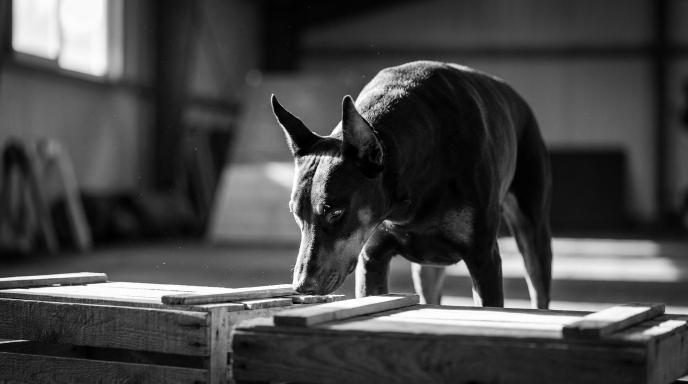
- Set out 6-8 cardboard boxes in a scattered pattern
- Drop 2-3 high-value treats in at least half the boxes (leave boxes open)
- Bring your dog in on leash
- Let them discover the treats and self-reward by eating them
- Say “Yes!” or “Good!” as they eat (but don’t distract them)
- After 2-3 minutes, remove your dog for a short break
Session Structure:
- Duration: 2-3 minutes per round
- Rounds per session: 3-5 rounds with 2-minute breaks between
- Sessions per day: 1-2 maximum
- Week frequency: 4-5 days per week
Doberman-Specific Tip: Your Doberman might get VERY excited. They may bark, spin, or pull toward the boxes. That’s okay! This is exactly the enthusiasm you want. Just keep them on leash for safety, and let them drag you to the boxes. We’ll refine manners later. Right now, we want pure, joyful hunting drive.
What Success Looks Like: By the end of Week 2, your Doberman should eagerly search every box the moment they enter the room. They should be checking boxes independently without needing encouragement from you.
WEEK 3-4: Increasing Difficulty
The Goal: Make your Doberman work harder to find the food.
What You’ll Do:
Partially Close Boxes: Fold the flaps down so your dog has to push with their nose to get inside. This builds persistence.
Add Height Variations: Place some boxes on chairs, ottomans, or low tables. Your Doberman needs to search vertically, not just at ground level.
Extend the Search Area: Spread boxes farther apart. Use multiple rooms if possible.
Reduce the Number of Baited Boxes: Start having some boxes empty. Your dog learns that not every box contains food—they have to actually search.
Doberman-Specific Tip: Working line Dobermans might get frustrated with empty boxes initially. If your dog gives up or gets stressed, add food back to more boxes temporarily. Show line Dobermans might need extra encouragement to check higher boxes—make those extra rewarding at first.
What Success Looks Like: Your Doberman should persistently check all boxes, including closed ones and those at different heights. They shouldn’t give up easily.
WEEK 5-6: Introducing Birch Odor (The Game Changer)
The Goal: Pair the birch scent with food rewards so your dog learns: birch smell = food reward.
What You’ll Do:
This is the most important training phase. Get this right, and everything else falls into place.
Preparing Your First Scented Tin:
- In your scent prep area (separate from training), put on gloves
- Use tweezers to pick up a cotton swab
- Apply 2 drops of birch essential oil to the swab
- Place the scented swab in a metal tin
- Close the tin
- Remove gloves, seal them in a bag, dispose outside
Your First Odor Session:
- Place the scented tin (with birch) in ONE box along with several treats
- Scatter 5-7 other unscented, empty boxes around
- Bring your Doberman in and let them search
- When they find the birch-scented box: JACKPOT!
- Drop 5-10 treats directly into that box while they sniff the tin
- Let them eat all the treats right at the source of the odor
Why “Feeding at Source” is Critical: This teaches your Doberman that the scent itself is where rewards happen. Later, when you remove the food from the tin, they’ll still go to the source expecting a reward (which you’ll then deliver by hand).
Session Structure:
- Only use birch in ONE box per round
- Do 3-4 rounds per session
- Keep rounds short (2 minutes each)
- Your dog should succeed every single time
Doberman Alert: Your Doberman’s intensity might SPIKE when they first smell birch. Some Dobermans get so excited they start barking, digging at the box, or spinning. This is normal! The scent is highly stimulating. Stay calm, keep rewarding at the source, and their behavior will settle as they understand the game.
What Success Looks Like: By the end of Week 6, your Doberman should race to the birch-scented box, ignoring unscented boxes. They should stay at the source while eating.
WEEK 7-8: Building Independence
The Goal: Remove food from the tin so your dog searches for odor alone.
What You’ll Do:
This is a gradual transition:
Days 1-3: Birch-scented tin + 5 treats inside the box Days 4-6: Birch-scented tin + 2 treats inside the box Days 7-9: Birch-scented tin, NO treats in the box, but you hand-deliver treats to your dog at the source Days 10+: Birch-scented tin only—you reward after they indicate
Teaching Indication Behavior:
Now that your dog is finding odor alone, you need a clear way for them to tell you “I found it!”
Some Dobermans naturally offer behaviors like:
- Staring intently at the source
- Pawing or scratching
- Sitting near the source
- Nose touch (touching nose to the hide)
Pick ONE behavior and reward it consistently. Many handlers choose a sit or down because it’s clear and calm. Others prefer a passive nose touch.
Handler Distance:
Start standing farther away from the boxes. Let your Doberman search off-leash (in a safe, enclosed space) or on a long line. You want them working independently, not checking in with you constantly.
Doberman-Specific Tip: Dobermans are handler-focused dogs. They might keep looking at you instead of searching. If this happens, turn your back, look away, or even leave the room briefly. Reward them only when they’re actively searching, not when they’re looking at you.
What Success Looks Like: Your Doberman searches independently, finds the birch hide, shows a clear indication, and waits for their reward from you.
WEEK 9-10: Expanding Search Environments
The Goal: Teach your Doberman that nosework happens everywhere—not just with boxes.
What You’ll Do:
Interior Searches: Hide the scented tin (in a small box, container, or clipped to furniture) around real rooms:
- Under chair legs
- Inside cabinets (door cracked open)
- Behind couch cushions
- On bookshelves
- Under tables
Exterior Searches: Move outside! Hide the tin:
- In bushes or plants
- Under deck stairs
- In outdoor furniture
- Clipped to fence posts
- In wheel wells
Vehicle Searches: This is trickier. Hide the tin:
- Under bumpers
- In wheel wells
- Inside the engine bay (when cool)
- Clipped under side mirrors
Doberman-Specific Tip: Dobermans can be sensitive to new environments. If your dog seems overwhelmed outside, start in your familiar backyard. If they’re hesitant around vehicles, let them explore the car while it’s stationary before asking them to search.
What Success Looks Like: Your Doberman confidently searches any environment you present, finds the hide, and gives a clear indication regardless of location.
WEEK 11-12: Refining Skills
The Goal: Prepare for competition-level challenges.
What You’ll Do:
Blank Searches: Set up boxes or a search area with NO odor present. Your Doberman should search, find nothing, and look at you as if to say “There’s nothing here.” This teaches them not to guess or false alert. Reward them for finishing the search without alerting.
Multiple Hide Introductions: Place 2-3 hides in one search area. Your dog finds one, gets rewarded, then continues searching for more. This is advanced!
Competition Simulation: Set up searches that mimic trial conditions:
- Time limits (though don’t stress about this yet)
- Unfamiliar locations
- Distractions (toys, food bowls nearby)
- Have a friend or family member act as a “judge”
Handler Error Correction: Video yourself! Watch for common mistakes:
- Are you leading your dog to the hide?
- Are you talking too much?
- Are you blocking areas with your body?
- Are you rewarding uncertain behavior?
What Success Looks Like: Your Doberman searches methodically, finds all hides in an area, distinguishes blank searches from odor searches, and works independently of handler influence.
Understanding Your Doberman’s Search Behavior
Learning to read your Doberman during nosework is like learning a new language. Here’s what to watch for.
Reading Doberman Body Language
Active Searching vs. Wandering:
When your Doberman is truly searching, you’ll see:
- Nose down or tilted up (depending on scent height)
- Purposeful movement
- Ignoring you completely
- Quick, choppy breathing (processing scent)
When they’re just wandering (not searching):
- Loose, unfocused movement
- Looking at you frequently
- Slow, normal breathing
- Easily distracted
Scent Cone Behavior:
When your Doberman enters a scent cone (the area where scent particles are traveling), watch for:
- Sudden head snap toward the source
- Faster movement toward the odor
- Body orientation locking onto one spot
- Intensity increase
Alert Signals:
Every Doberman alerts differently, but common signs include:
- Freeze: They stop completely at the source
- Intense Sniffing: Rapid sniffing directly at the hide
- Pawing: Some Dobermans naturally paw at the source
- Stare: They lock eyes on the hide location
- Trained Indication: Sit, down, or nose touch if you’ve taught it
Intensity Indicators:
High drive Dobermans might show:
- Whining or vocalization
- Frantic digging or scratching
- Jumping at elevated hides
- Body vibrating with excitement
If you see this, it’s drive—but you may need to shape calmer indication behavior over time.
Managing High Drive
Dobermans bring intense energy to nosework. That’s usually an advantage, but sometimes it needs management.
When Excitement Helps: High drive means your dog is motivated, focused, and persistent. They won’t give up easily on challenging hides.
When Excitement Hurts: Too much arousal can cause:
- False alerts (guessing because they’re frantic)
- Inability to focus or think clearly
- Stress behaviors (barking, spinning)
- Frustration if they can’t find the hide quickly
Arousal Management Techniques:
- Pre-Search Calm Protocol: Before searching, have your dog do 2-3 minutes of calm behaviors—sit, down, wait. This downshifts their energy.
- Shorter Sessions: If your Doberman is getting manic, shorten sessions to 1 minute rounds.
- Energy Drain First: Take a 20-minute walk or play fetch before nosework to burn physical energy.
- Reward Calm: Only reward when your dog is showing controlled behavior at the hide. If they’re frantically pawing, wait for them to settle, then reward.
- Environmental Control: Train in boring, familiar locations first. Exciting new places spike arousal.
The “Calm Search” Concept: The goal isn’t to eliminate drive—it’s to channel it into focused, controlled searching. Think of it like a laser beam instead of a flashlight.
Building Confidence in Sensitive Dogs
Not every Doberman is a confident go-getter. Some are anxious, cautious, or environmentally sensitive. That’s okay!
Starting Small:
- Use tiny, non-threatening search areas (a bathroom, a hallway)
- Keep hides easy and obvious
- Reward heavily for any searching effort
- Never force a scared dog to search
Success Stacking:
- String together many easy, successful searches in a row
- Build confidence slowly over weeks
- Celebrate every tiny win
Environmental Desensitization:
- Introduce new locations gradually
- Let your dog explore first before asking them to search
- Pair scary environments with high-value rewards
Patience Timeline:
- Anxious Dobermans might need 2-3 times longer to build confidence
- Don’t compare them to other dogs
- Progress isn’t linear—expect setbacks
With patience, even the most nervous Doberman can become a confident nosework dog. The independence of nosework actually helps shy dogs bloom.
Training Methods That Work for Dobermans
Let’s dive into specific techniques that work beautifully with the Doberman temperament.
Food Pairing vs. Toy Pairing
Most nosework training starts with food pairing (what we covered above), but some dogs are more toy-motivated.
Food Pairing (Recommended for Most Dobermans):
- Pros: Easy, immediate reward, works for 90% of dogs
- Cons: Less useful for food-disinterested dogs
- Best for: Dobermans who love treats, puppies, beginners
Toy Pairing:
- Pros: Builds intense drive for high-prey-drive dogs
- Cons: More complex, requires toy obsession
- Best for: Working line Dobermans, sport dogs, toy-crazy individuals
Combination Approach: Some handlers use food initially, then transition to toy rewards once the dog understands the odor game. This combines the best of both worlds.
Transitioning Strategy:
- Start with food pairing (Weeks 1-8)
- Introduce toy rewards alongside food (Weeks 9-10)
- Gradually phase out food, make toy the primary reward
- Reserve toy play for the BEST searches only
Developing a Clear Indication
Your Doberman needs a reliable way to tell you “I found it!” Here’s how to build it.
Natural Alerts (Working With What Your Dog Offers):
Watch what your dog naturally does at the hide:
- Do they sit?
- Do they paw?
- Do they stare?
- Do they lie down?
Pick the behavior they offer most consistently and reward it heavily. This is the easiest path.
Trained Indications (Teaching a Specific Behavior):
If your dog doesn’t offer a clear natural alert, teach one:
For Sit Indication:
- When your dog finds the hide, say “Sit”
- Reward the sit at the source
- Repeat 20-30 times over multiple sessions
- Fade the verbal cue—wait for them to sit automatically
For Nose Touch:
- Hold your hand at the hide
- When your dog sniffs your hand, mark with “Yes!” and reward
- Move your hand closer to the actual hide
- Fade your hand presence over time
Why Consistency Matters:
In competition, you must “call alert” (tell the judge your dog found it). If your dog’s indication is vague or changes constantly, you’ll struggle to know when to call it. Consistency makes you a confident handler.
Teaching the “Show Me” Cue:
Some handlers teach their dog to return to the hide after the initial alert. This is advanced but useful:
- After your dog alerts, step away
- Say “Show me” and point toward the hide
- When your dog returns to the source, jackpot reward
- This helps you confirm the location if you’re uncertain
Building Duration at Source
The Stickiness Concept:
“Stickiness” means your dog stays at the hide location, waiting for you to reward them, rather than running back to you immediately after finding it.
This is critical in competition. If your dog alerts then leaves the source, you might not be able to confirm the exact location.
Rewarding Persistence:
When your dog finds the hide:
- Don’t rush over immediately
- Wait 2-3 seconds while they stay at the source
- Then move to them and reward AT the hide
- Over time, increase the wait duration to 5-10 seconds
Your dog learns: “I stay here, and the reward comes to me.”
Avoiding False Alerts:
Never reward your dog if they alert in the wrong location. If they sit at an empty box, ignore them. Walk past, wait for them to keep searching.
Only reward correct alerts. Your dog will quickly learn to be certain before committing to an indication.
Handler Skills Development
Nosework isn’t just about your dog—you have a job too.
The Less Is More Philosophy:
The best handlers do almost nothing. They let the dog work.
Common Handler Mistakes:
- Talking constantly (“Good boy! Keep looking! Check that box!”)
- Leading the dog to the hide with body position
- Hovering over the hide
- Getting anxious and transmitting tension through the leash
Reading Your Dog:
Instead of telling your dog what to do, watch and learn their search pattern:
- Where do they always check first?
- What’s their body language when they’re onto odor?
- How do they move when confident vs. uncertain?
The more you understand your dog, the better partner you become.
Leash Management:
In searches, the leash should be loose and passive. You’re not steering your dog—you’re following them. Let the leash drape, and move with your dog rather than directing them.
Avoiding Handler Interference:
If you’re standing directly between your dog and a hide, move! Your body blocks scent and creates confusion. Position yourself out of the search path, and let your dog have access to all areas freely.
Common Problems & Solutions
Every nosework team hits bumps in the road. Here’s how to troubleshoot the most common issues.
“My Doberman Won’t Search”
This is frustrating, but fixable.
Possible Causes:
- Stress or Anxiety: New environment is overwhelming
- Confusion: Dog doesn’t understand the game yet
- Wrong Motivation: Food/toys you’re using aren’t exciting enough
- Pushed Too Fast: You skipped foundation steps
Solutions:
- Go Back to Food-Only: Remove odor completely. Make sure your dog is obsessed with the box game before reintroducing scent.
- Use Better Rewards: Upgrade to the BEST treats—real chicken, steak, cheese. Make it irresistible.
- Shorten Sessions: Try 30-second rounds. Remove all pressure.
- Change Environment: Maybe the room is too big or too distracting. Start in a tiny bathroom with just 3 boxes.
- Take a Break: Sometimes a week off resets your dog’s enthusiasm.
Rebuilding Drive Techniques:
Play “find it” games at home outside of formal training:
- Hide treats around the house and let your dog hunt
- Play treat toss and let them sniff to find it
- Make sniffing fun and rewarding in everyday life
Over-Arousal and Manic Searching
Your Doberman is TOO excited—spinning, barking, can’t think clearly.
Possible Causes:
- Too much energy going into training
- Training sessions too long
- Reward value too high
- Lack of impulse control training
Solutions:
- Calm Protocol Before Searches: Spend 5 minutes doing calm behaviors (sit-stays, down-stays, relaxation) before starting nosework. This downshifts arousal.
- Shorter Sessions: Cut sessions to 1-minute rounds maximum.
- Energy Drain First: Exercise your dog before training. A tired Doberman thinks better.
- Lower Reward Value: Use boring kibble instead of hot dogs. This might seem counterintuitive, but sometimes high-value food creates frenzy.
- Reward Calm Only: If your dog is manic at the hide, wait. Don’t reward until they settle into a calmer state.
False Alerts & Guessing
Your dog is alerting in places where there’s no odor.
Possible Causes:
- Unclear criteria (you rewarded uncertain behavior before)
- Handler pressure (your dog feels they “should” find something)
- Odor contamination (old odor residue from previous searches)
- Stress or confusion
Solutions:
- Cleaner Training: Use brand new boxes/containers each session to eliminate odor contamination.
- Ignore Non-Productive Behavior: If your dog alerts at an empty box, don’t react. Don’t say “no,” don’t reward. Just wait and let them keep searching.
- Blank Searches: Regularly practice searches with no odor. Reward your dog for finishing the search without alerting.
- Reset Training: Go back to easier hides where your dog has 100% success, then build back up slowly.
Handler Dependency Issues
Your Doberman keeps looking at you instead of searching independently.
Possible Causes:
- Over-training in obedience first (they’re too handler-focused)
- You’ve been too helpful (talking, pointing, leading them)
- Lack of confidence
Solutions:
- Distance Work: Stand far away from the search area. Turn your back. Even leave the room if needed. Your dog must learn to work without your input.
- Stop Talking: Completely. Don’t say a word during searches.
- Trust Your Dog: When they’re searching, let them. Don’t interfere, don’t help.
- Reward Independence: Heavily reward any moment your dog works independently—even if they don’t find the hide.
Loss of Interest/Plateau
Your Doberman was enthusiastic, but now seems bored or frustrated.
Possible Causes:
- Repetition (same location, same setup every time)
- Difficulty spike (hides got too hard too fast)
- Health issues (always rule this out first)
- Burnout from too-frequent training
Solutions:
- Change Locations: Train somewhere completely new and exciting.
- Make Hides Easier: Go back to obvious, easy hides. Rebuild success and fun.
- Vet Check: Rule out pain, DCM, or other health issues affecting energy.
- Take a Break: A week or two off can renew enthusiasm.
- Add Variety: Try different containers, outdoor searches, or vehicle searches.
Multi-Dog Household Challenges
You have multiple dogs, and they’re interfering with each other’s training.
Solutions:
- Train Separately: Each dog gets their own private session. Remove other dogs completely.
- Prevent Copying: If Dog A watches Dog B search, Dog A learns where the hides are. Use separate rooms or crate dogs out of sight during others’ sessions.
- Manage Competition: Some dogs get competitive or stressed when another dog is “working.” Keep them separated to avoid conflict.
Progressing Toward Competition
Ready to take your skills to the trial level? Here’s what you need to know.
Is Competition Right for You?
First, ask yourself why you want to compete:
- For titles and recognition? Great!
- To challenge yourself and your dog? Perfect!
- Just for fun and community? Awesome!
There’s no wrong reason. But understand that competition requires:
- Time: Trials are often full-day events
- Money: Entry fees ($25-60 per trial), travel, possibly hotel
- Stress Management: Both you and your dog will feel trial nerves
Doberman Success Factors:
Dobermans who excel in competition typically have:
- Solid foundation training (6+ months)
- Clear indication behavior
- Confidence in new environments
- Handler independence
- Controlled arousal levels
If you’re still working on these, keep training! There’s no rush.
Understanding Competition Levels
Let’s break down the three major organizations:
NACSW (National Association of Canine Scent Work):
- ORT (Odor Recognition Test): You must pass this before competing. Your dog must correctly identify birch, anise, and clove in separate tests.
- NW1: Container, interior, exterior searches. One odor (birch) only.
- NW2: All elements. Two odors (birch and anise). Increased difficulty.
- NW3: All elements. Three odors (birch, anise, clove). Unknown number of hides. Blank searches possible.
- Elite: For dogs who’ve titled at NW3. High-level challenges.
AKC Scent Work:
- Four elements: Container, Interior, Exterior, Buried
- Four levels: Novice, Advanced, Excellent, Master
- Handler Discrimination (searching for handler’s scent)
- Detective classes available
UKC Nosework:
- Similar structure to AKC
- Slightly different rules
- Pre-trials required before competing at each level
All three organizations are legitimate and fun. Many teams compete in multiple venues.
Preparing for Your First Trial
Finding Trials:
- Check NACSW.net, AKC.org, or UKCDogs.com for trial calendars
- Join local nosework Facebook groups
- Ask your instructor for recommendations
Pre-Trial Training Checklist:
✅ Dog reliably finds hides in unfamiliar locations ✅ Clear, consistent indication behavior ✅ Comfortable searching around strangers ✅ Calm in new environments ✅ You can read your dog’s search behavior ✅ You know when to call alert vs. keep searching
What to Expect:
- You’ll arrive, check in, and get a run order
- Your dog may wait in the car between searches (bring water, shade, comfort)
- You’ll be briefed before each search
- A judge observes while your dog searches
- You call “Alert” when your dog finds the hide
- Judge tells you if you’re correct or incorrect
- You get immediate feedback
Managing Nerves (Yours and Your Dog’s):
- Your Nerves: Breathe deeply. Remember, this is supposed to be fun. Your dog feels your anxiety, so stay calm.
- Your Dog’s Nerves: Arrive early to let them acclimate. Do calming exercises. Keep pre-search routines consistent.
Finding Classes and Instructors
NACSW Certified Instructors:
Visit NACSW.net and use the instructor search tool. Certified instructors have completed rigorous training and understand the sport deeply.
Online Training Options:
- Fenzi Dog Sports Academy: Offers excellent online nosework classes
- Scent Work University: Webinars and resources
- YouTube Channels: K9 Nose Work, Baebea’s Dog Training
Practice Group Benefits:
Join or form a local practice group! Training with others gives you:
- Access to new locations
- Different hiding styles
- Social support
- Feedback from experienced handlers
Advanced Tips for Doberman Success
Let’s talk about some breed-specific nuances that will help your Doberman excel.
Working Line vs. Show Line Considerations
Working Line Dobermans:
These dogs typically have:
- Higher drive and intensity
- More independence
- Greater stamina
- Sometimes harder temperament
Training Adaptations Needed:
- More focus on arousal management
- Calm protocols before searches
- Reward calm, methodical searching
- Longer physical exercise before training
Show Line Dobermans:
These dogs typically have:
- Steadier, calmer temperament
- More handler-focus
- Slightly less drive (but still plenty!)
- Easier to manage in new environments
Training Adaptations Needed:
- More motivation-building initially
- Higher-value rewards
- Confidence-building in new places
- Encouraging independence from handler
Realistic Expectations:
Both types can excel! Working line dogs might title faster due to intensity. Show line dogs might be easier for beginner handlers. Neither is better—just different.
Age-Specific Strategies
Puppies (6-12 Months):
- Foundation only—food searches in boxes
- Super short sessions (1-2 minutes)
- No odor yet, or only birch
- Focus on fun, not precision
- Avoid competition pressure
Adults (1-7 Years):
- Prime nosework years
- Full training curriculum possible
- Can handle competition stress
- Build all skills: indication, independence, multiple odors
Seniors (7+ Years):
- Maintain existing skills
- Reduce physical demands (no jumping for hides)
- Shorter sessions to prevent fatigue
- Focus on enjoyment, not titles
- Watch for health changes affecting scenting ability
Health Considerations
DCM (Dilated Cardiomyopathy) Awareness:
DCM is a concern in Dobermans. If your dog has been diagnosed:
- Consult your vet about appropriate exercise levels
- Nosework is low-intensity, but monitor your dog for fatigue
- Shorten sessions
- Avoid hot weather training
- Watch for coughing, lethargy, or breathing changes
Heat Management:
Dobermans have short coats and can overheat:
- Train during cooler parts of the day
- Provide water breaks
- Watch for panting, drooling, or reluctance to search
- Indoor or shaded outdoor training in summer
Conditioning Appropriately:
Nosework is low-impact, but your dog still needs fitness:
- Regular walks maintain stamina
- Core strength helps with duration at source
- Joint health ensures comfortable searching positions
Building a Training Community
Nosework is more fun with friends!
Finding Training Partners:
- Join local nosework Facebook groups
- Attend workshops or seminars
- Connect with people at trials
- Start a practice group
Doberman-Specific Groups:
- Doberman sport groups on Facebook
- DPCA (Doberman Pinscher Club of America) members
- Local Doberman clubs
Online Forums and Resources:
- Doberman Talk forums
- NACSW forums
- Reddit r/nosework community
Benefits of Community:
- Share training locations
- Get feedback on your handling
- Find support during plateaus
- Celebrate successes together
Your Nosework Journey Starts Now
You’ve learned everything you need to start nosework with your Doberman. Now it’s time to take action.
Realistic Expectations
Timeline to Proficiency:
- 3 months: Solid foundation, reliable birch searches
- 6 months: Ready for competition introduction (Novice/NW1)
- 12 months: Confident at multiple levels, multiple odors
- 18+ months: Advanced competition skills
But remember—every dog is different. Some Dobermans progress faster, others need more time. Don’t compare your journey to anyone else’s.
Individual Variation:
Your Doberman’s personality, drive, history, and age all affect training speed. Be patient. Trust the process.
Celebrating Small Wins:
- First successful box search
- First time finding odor independently
- First clear indication
- First blank search correctly identified
- First trial (regardless of results!)
Every step forward deserves celebration.
Keeping Training Fun
The moment nosework becomes a chore, you’ve lost the magic.
Variety is Key:
- Change locations frequently
- Use different containers
- Try new environments
- Mix up your reward strategy
Reading Your Dog’s Enthusiasm:
Watch your dog’s body language:
- Do they pull toward the training area?
- Do their eyes light up when you get the search supplies?
- Do they search eagerly or reluctantly?
If enthusiasm drops, adjust! Make it easier, more rewarding, or take a break.
Taking Breaks When Needed:
It’s okay to take days, weeks, or even months off. Life happens. Dogs need rest. When you return, your Doberman will remember the skills. Sometimes breaks actually improve performance!
Resources for Continued Learning
Recommended Books:
- “K9 Nose Work” by Jill Marie O’Brien
- “Scent Training for Dogs” by Jeff Schettler
- “Detector Dogs and the Science of Scent” by various authors
Online Courses:
- Fenzi Dog Sports Academy (FDSA) nosework classes
- Scent Work University webinars
- NACSW online workshops
YouTube Channels:
- K9 Nose Work official channel
- Baebea’s Dog Training
- Scent Work University
Doberman-Specific Resources:
- DPCA (dpca.org) versatility section
- Doberman Talk forums (nosework threads)
- Doberman sport Facebook groups
Your 30-Day Quick-Start Action Plan
Days 1-7:
- Order supplies (oils, tins, boxes)
- Set up training space
- Start food-only box searches
Days 8-14:
- Continue food searches
- Increase difficulty (close boxes, add height)
- Build enthusiasm
Days 15-21:
- Introduce birch odor (paired with food)
- Feed heavily at source
- Keep sessions short and successful
Days 22-30:
- Begin removing food from tin
- Hand-deliver treats at source
- Work on clear indication
- Celebrate progress!
Final Encouragement
You and your Doberman are about to embark on an incredible journey. Nosework isn’t just a sport—it’s a language you’ll learn together, a bond you’ll strengthen, and a joy you’ll share.
Your Doberman was born with an extraordinary nose and a brilliant mind. Nosework lets them use both in the most fulfilling way possible.
Will there be challenges? Absolutely. Will you feel frustrated sometimes? Of course. But will you look back a year from now and smile at how far you’ve both come? Without a doubt.
Remember: every world-class nosework team started exactly where you are right now—with a curious dog, a willingness to learn, and a handful of boxes.
So take a deep breath. Grab those supplies. Set out your first boxes.
Your Doberman’s nose is ready.
Are you?
Happy sniffing!