Affiliate Disclosure: Some of the links in this post are affiliate links. This means we may earn a small commission if you make a purchase through these links—at no extra cost to you. We only recommend products and tools that we genuinely believe will help you with your Doberman.
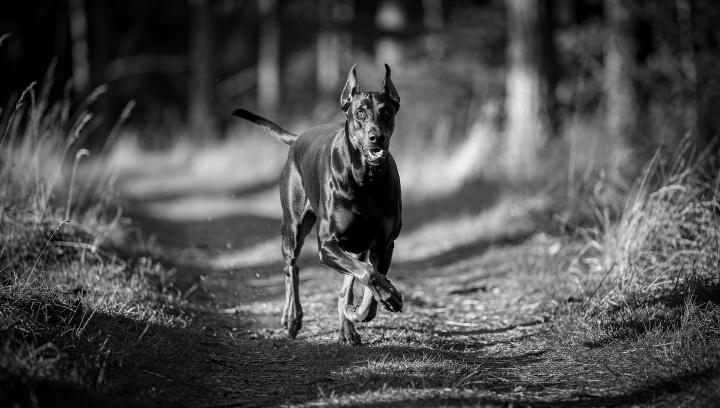
Picture this: You’re hiking through a beautiful forest trail. Your Doberman is trotting ahead, ears perked, taking in all the sights and smells. You call his name once. He immediately spins around, locks eyes with you, and comes running back with a huge doggy grin on his face. You clip the leash on as another hiker approaches, then release him again to continue exploring. This is the dream, right?
Now picture this: You accidentally leave the front door open for just a second. Your Doberman bolts out, sprinting down the street. You’re yelling his name, but he doesn’t even look back. Your heart is pounding. Cars are coming. He’s gone.
Both scenarios are real. Both happen to Doberman owners every single day. The difference? Training. Lots and lots of training.
Off-leash freedom for your Doberman isn’t just about convenience—it’s about giving your high-energy, intelligent companion the mental and physical exercise they desperately need. But it’s also about safety. A Doberman without a reliable recall is a lawsuit waiting to happen, or worse, a tragedy.
This guide will walk you through everything you need to know about training your Doberman for safe off-leash activities. We’ll cover the prerequisites you absolutely must have first, a proven 7-stage training system, troubleshooting for common problems, and realistic safety guidelines. By the end, you’ll know exactly how to give your Doberman the freedom they crave while keeping them—and everyone around them—safe.
Let’s be honest up front: Not every Doberman can be trusted off-leash in every situation. Some dogs have prey drives so high that no amount of training will override the sight of a running squirrel. Some environments are simply too dangerous, no matter how well-trained your dog is. This guide will help you figure out where your Doberman fits and how to maximize their safe off-leash opportunities.
- Understanding Off-Leash Training for Dobermans
- Prerequisites: Foundation Skills You MUST Have First
- The 7-Stage Progressive System: Your Roadmap to Off-Leash Freedom
- Troubleshooting: When Things Go Wrong
- Safety Rules: Non-Negotiable Guidelines
- FAQ: Your Most Common Questions Answered
- Conclusion: The Journey to Off-Leash Freedom
Understanding Off-Leash Training for Dobermans
Why Dobermans Are Actually Great Off-Leash Dogs
Here’s something most people don’t realize: Dobermans were literally bred to stay close to their owners. Unlike hounds that were bred to run off and chase game for miles, or terriers bred to disappear down holes after rats, Dobermans were created to be personal protection dogs. Their entire job was to stick by their human’s side and respond instantly to commands.
This “velcro dog” personality is your biggest advantage. Most Dobermans naturally don’t want to wander far from their owners. They want to check in with you constantly. They want to know where you are and what you’re doing. This natural tendency makes them excellent candidates for off-leash training—IF you harness it correctly.
Their high intelligence is another huge plus. Dobermans consistently rank in the top five smartest dog breeds. They learn new commands lightning-fast, often in just 5-10 repetitions. Compare that to some breeds that need 40-80 repetitions to learn a single command. Your Doberman’s brain is working for you here.
They also have a natural desire to please their owners. When you’re happy, your Doberman is happy. This emotional connection means training isn’t a battle of wills—it’s a partnership. Your Doberman actually wants to do what you ask, as long as they understand what that is.
The Unique Challenges Dobermans Face Off-Leash
But it’s not all sunshine and tail wags. Dobermans come with specific challenges that you need to understand and work around.
High prey drive is the first one. That squirrel or rabbit doesn’t stand a chance if your Doberman decides it’s worth chasing. Some Dobermans have moderate prey drive and can be trained to resist. Others have prey drive so intense that off-leash near wildlife is simply off the table. You need to honestly assess your individual dog.
Guardian instinct can override recall commands in a heartbeat. If your Doberman thinks you’re being threatened—by an approaching person, another dog, or even just someone who looks suspicious—their protective programming kicks in. Suddenly, your recall command takes a back seat to their job of keeping you safe. This is especially challenging with male Dobermans who tend to be more territorial.
Overexcitement around other dogs and people is another Doberman specialty. They’re social dogs, and when they see a potential new friend (whether canine or human), their excitement level can skyrocket. An overstimulated Doberman stops thinking clearly. Your commands sound like background noise compared to the exciting new thing in front of them.
Adolescent regression hits Dobermans particularly hard between 6-18 months. One day your puppy has perfect recall. The next week, they act like they’ve never heard the word “come” in their entire life. Hormones, independence testing, and brain development all conspire to make this the most frustrating phase of training. Just know it’s coming and don’t give up.
When Your Doberman Should NOT Be Off-Leash
Let’s get real for a minute. There are situations where even a perfectly trained Doberman should never be off-leash. Safety isn’t negotiable, and being honest about limitations will keep your dog alive.
Never off-leash near roads. I don’t care if your Doberman has a 100% recall rate. I don’t care if the road is a quiet rural road with one car per hour. All it takes is one deer running across that road with your Doberman chasing it for everything to go horribly wrong. Roads and off-leash dogs don’t mix. Period.
Unfenced dog parks are a liability nightmare. Even if your Doberman is friendly, not every dog at the park is. If a fight breaks out and your Doberman is involved (whether they started it or not), you could be looking at vet bills, lawsuits, and potentially having your dog labeled as dangerous. Fenced dog parks where you can at least contain the situation are marginally better, but still risky.
During hunting season in rural areas, off-leash hiking becomes dangerous. Hunters might mistake your black and tan Doberman for wildlife. Even with a bright vest, accidents happen.
Areas with leash laws aren’t optional. If signs say dogs must be leashed, that applies to you too. “But my dog is under voice control” doesn’t hold up legally when someone reports you or, worse, your dog causes an incident.
Prerequisites: Foundation Skills You MUST Have First
Here’s where most people fail at off-leash training: They skip the foundation and jump straight to letting their dog loose. Then they wonder why their Doberman won’t come back.
Think of off-leash training like building a house. You can’t put up walls before you pour the foundation. These prerequisite skills ARE your foundation. Without them, everything else will crumble.
Essential Commands Your Doberman Must Know
1. Sit – 100% Reliable
Your Doberman should sit immediately when you give the command, regardless of distractions. Not “eventually sit” or “sit after I repeat it five times.” Immediate sit. If your dog doesn’t have this mastered, you’re not ready for off-leash training.
2. Stay – At Least 30 Seconds with Distractions
Your dog should hold a stay position while you walk 20-30 feet away, even with mild distractions present. If they break the stay before you release them, they’re not ready.
3. Come – Perfect in Controlled Indoor Environment
This is the big one. Your Doberman should come to you every single time you call them when you’re inside your home, even when they’re doing something else they enjoy. If you can’t get reliable indoor recall, outdoor recall is impossible.
4. Leave It – Tested with Food and Toys
Can your dog walk past a piece of food on the floor without taking it? Can they resist grabbing a toy you’ve placed in front of them? This impulse control is critical for off-leash safety.
5. Release Command
Your Doberman needs to understand that commands have a beginning and an end. Pick a word like “okay” or “free” that tells your dog they’re released from the previous command. This prevents confusion about when they’re allowed to move.
Critical Foundation Skills Beyond Basic Commands
The “Name Game” – Attention on Demand
This is simpler than it sounds but incredibly powerful. Your Doberman’s name should mean “stop what you’re doing and look at me RIGHT NOW.” Not just glance in your general direction. Full attention, eye contact, waiting for the next instruction.
Practice this constantly. Say your dog’s name in a happy voice. The instant they look at you, reward with a treat or praise. Do this 20 times a day in different situations. Your dog’s name becomes a superpower that captures their focus no matter what’s happening around them.
Collar Grab Conditioning
Here’s a scenario that happens all the time: Your dog comes when called, you reach for their collar, and they dart away like you’re trying to end their fun. Now you’re chasing your dog, which they think is a hilarious game.
Prevent this by conditioning your dog to love collar grabs. Practice grabbing your dog’s collar gently, then immediately releasing a treat. Grab collar, treat, release. Do this 10-15 times daily until your dog actively presents their collar to you for grabbing. This tiny skill prevents huge frustrations later.
Threshold Training – Waiting at Doors
Your Doberman should never go through a doorway until you give permission. Not the front door, not the back door, not the car door, not the crate door. Every single doorway is a training opportunity.
Why does this matter for off-leash training? Because it teaches impulse control and deference to you. A dog that bolts through every open door will bolt away from you off-leash. A dog that waits for permission at doorways will check in with you before making decisions off-leash.
Is Your Doberman Ready? The Readiness Assessment
Before you start actual off-leash training, run through this checklist honestly. If you can’t check every box, you’re not ready. And that’s okay—it just means you have more foundation work to do first.
Age Consideration: Is your Doberman at least 6-8 months old? Better yet, 12+ months? Younger puppies don’t have the impulse control or attention span for off-leash training. You can work on foundation skills, but actual off-leash work should wait.
Indoor Recall Test: Can you call your dog from across your house when they’re eating, playing with a toy, or napping? Try 10 times. If they come all 10 times with enthusiasm, pass. If they come 8/10 times or come reluctantly, you’re not ready.
Stay Test: Ask your dog to stay, then walk 20 feet away. Wait 60 seconds. Walk around them in a circle. If they hold the stay until you release them, pass. If they break early, keep training.
Leave It Test: Place five treats on the floor in a line. Walk your dog past them on a leash. If they can walk past all five without lunging for them, pass. If they struggle or grab one, more impulse control training is needed.
Collar Grab Test: Approach your dog and reach for their collar five times in a row. Do they allow you to grab it without moving away? Do they present their collar willingly? Pass. Do they dodge or run away? Not ready.
If you passed all these tests, congratulations! You’re ready to begin the 7-stage progressive system.
The 7-Stage Progressive System: Your Roadmap to Off-Leash Freedom
This system takes most Dobermans 12-16 weeks to complete, sometimes longer depending on age, temperament, and consistency. Don’t rush it. Every stage builds on the previous one. Skipping ahead is the number one reason people fail at off-leash training.
STAGE 1: Indoor Foundation (Week 1-2)
Start in the most boring, distraction-free room in your house. A bathroom works great. No toys on the floor. No other people. No TV. Just you, your Doberman, and your training treats.
Call your dog from 5 feet away using your chosen recall command (use ONE word: “Come” or “Here” – not both). The instant they start moving toward you, mark the moment with “yes!” or a clicker, then reward when they reach you.
Do this 10-15 times per session. Do 3-5 sessions per day. Yes, that’s 30-75 practice recalls in a single day. This builds the habit fast.
Make yourself exciting. Don’t just stand there like a statue calling your dog. Squat down. Pat your legs. Make kissing noises. Clap your hands. Run backward. Whatever gets your dog excited to race toward you.
Success benchmark: Your Doberman comes to you 100% of the time in this boring room with zero hesitation.
Common mistakes: Calling your dog when they’re already coming to you (this doesn’t teach anything), repeating the command multiple times (teaches them they don’t have to come the first time), or using a boring tone of voice.
STAGE 2: Indoor with Distractions (Week 2-3)
Now you’re going to slowly add distractions while staying indoors. This is where you find out if your foundation is solid or shaky.
Start with mild distractions. Have a family member walk through the room. Turn on the TV at low volume. Scatter a few toys on the floor. Call your dog. Do they come immediately or do they hesitate?
If they come immediately every time, increase the distraction. Have someone ring the doorbell. Drop a toy on the floor. Practice right before dinner when your dog is hungry and can smell their food.
The goal isn’t to trick your dog or set them up to fail. The goal is to systematically teach them that “come” means “come right now, no matter what else is happening.”
Success benchmark: 90% success rate with moderate household distractions (doorbell, people walking by, toys present).
What to do if they fail: You moved too fast. Go back to Stage 1 for a few more days, then add distractions more gradually.
STAGE 3: Fenced Backyard (Week 3-5)
This is your first outdoor environment, and it’s going to feel completely different to your dog. New smells, sounds, birds, bugs—everything is more interesting than you.
Start by using a 20-foot long line. This isn’t to pull your dog toward you. It’s insurance. If your dog ignores your recall, you can prevent them from learning that ignoring you is an option.
Let your dog sniff around for 30 seconds to a minute, then call them. Make it exciting. Run backward. Wave a toy. Do whatever it takes to get them to come to you.
When they arrive, reward BIG. Treats, praise, excitement. Then release them to go sniff again. This teaches them that coming to you doesn’t mean the fun ends—it means they get a reward and then more fun.
Practice 5-10 recalls per session. Do 2-3 sessions per day. Never call your dog just once and then end the session. That teaches them that coming when called means the session is over.
Success benchmark: Immediate recall from 30 feet away in your yard with mild outdoor distractions (birds, wind, yard smells).
Common mistakes: Only calling your dog at the very end of yard time (they learn recall means end of fun), not being exciting enough, or using the long line to reel them in like a fish (this doesn’t teach anything).
STAGE 4: Long-Line Training (Week 5-8)
Now you’re going to systematically increase distance. Get yourself a 30-foot long line, a 50-foot line, and eventually a 100-foot line. You can find these at pet stores or online.
Take your dog to your fenced yard or a fenced baseball field (when it’s empty). Attach the long line and let them drag it. Don’t hold it. Just let it trail behind them.
Let your dog wander away from you. When they’re focused on sniffing something interesting, call them. If they come, jackpot reward—multiple treats, tons of praise, release to play again. If they ignore you, calmly walk over (don’t yell or chase), pick up the line, and bring them to where you were standing when you called. No reward, no punishment. Just a reset.
Try again in 2-3 minutes. This teaches them that ignoring recall doesn’t work—they end up where you wanted them anyway, just without the reward.
Progress from 30 feet to 50 feet to 100 feet over several weeks. Only move to the next distance when your dog is coming 95% of the time at the current distance.
Success benchmark: 95% recall success at 100 feet distance in a controlled environment.
Troubleshooting: If your dog consistently ignores you at 50 feet but was great at 30 feet, you moved too fast. Drop back to 30 feet for another week.
STAGE 5: Controlled Off-Leash (Week 8-12)
This is the first time your dog will be completely off-leash—no trailing line, nothing. But you’re going to do it in the safest possible environment: a completely fenced area like a tennis court, baseball field, or empty fenced dog park.
Before you unclip the leash, tire your dog out a bit. Play fetch for 10 minutes. A slightly tired dog has better impulse control than a wound-up one.
The moment you unclip, immediately call your dog. This first recall of every session is critical. It tells your dog what kind of reward they’ll get for coming that day. Make it the biggest, most exciting reward of the entire session.
During a 30-minute session, practice 8-12 recalls. Not all at the end. Spread them out. This prevents your dog from learning that recall means the session is over.
Vary your rewards. Sometimes treats. Sometimes their favorite toy. Sometimes release to play again. Sometimes just enthusiastic praise. This variable reward schedule is incredibly powerful for building long-term reliability.
Success benchmark: 10 out of 10 successful recalls in a controlled, fenced environment with mild distractions.
Red flag: If your dog only comes 7 or 8 out of 10 times in this controlled setting, you’re absolutely not ready for real-world off-leash. Go back to Stage 4 and rebuild.
STAGE 6: Increasing Distractions (Week 12-16)
Now you’re going to intentionally add bigger distractions while still in a safe, fenced environment.
Invite a friend with a calm, friendly dog. Practice recalls while the other dog is present but not playing with yours. Can your dog tear themselves away from a potential playmate to come to you?
Practice with wildlife at a distance. If there are squirrels across the field, can you call your dog when they spot one? You’re not setting them up to fail by calling them when they’re in full chase mode. You’re calling them when they’ve noticed the squirrel but haven’t committed to the chase yet.
Add training buddies. Have 2-3 friends stand in the field with you. Each person calls the dog in turn. This “round robin” game teaches your dog that coming when called is fun and might come from anyone, not just you.
Success benchmark: Consistent recall even with controlled distractions like other calm dogs, people, and distant wildlife.
What if they fail? If your dog ignores recalls during this stage, the distractions are too intense. Scale back and build up more gradually.
STAGE 7: Real-World Off-Leash (Week 16+)
You’ve finally arrived. Your Doberman is ready for real-world off-leash activities. But start conservatively. Don’t go straight to the busiest hiking trail in town.
Start with less-popular trails during off-peak hours. Early morning weekdays are perfect. Fewer people, fewer dogs, fewer distractions.
Keep sessions shorter initially. Your dog has never had this much freedom and stimulation before. Thirty minutes is plenty for the first few real-world outings.
Always, always, ALWAYS carry a leash. When you see other hikers, dogs, or anything that might be too distracting, leash your dog before you get close. This isn’t a failure—it’s smart management.
Practice recalls every 5-10 minutes, not just when you need them. This prevents your dog from learning that recall only happens when fun is over.
Success benchmark: Consistent recall in varied environments including hiking trails, beaches (during off-season), and open fields.
Lifetime maintenance: You never stop training recall. Even a dog with 100% reliability needs practice recalls 2-3 times per week minimum. Use them during walks, in the yard, anywhere. A recall that isn’t maintained will degrade over time.
Troubleshooting: When Things Go Wrong
Even with perfect training, you’ll hit bumps in the road. Here’s how to handle the most common problems.
“My Doberman Won’t Come When Distracted”
This is the number one complaint. Your dog has perfect recall at home, then you get outside and suddenly they’re deaf.
What’s happening: The distractions outside are more valuable to your dog than your rewards. You progressed too fast through the stages.
The fix: Go back two full stages. If you’re failing at Stage 6, go back to Stage 4 for two weeks. Rebuild the foundation. Also, upgrade your rewards dramatically. If you’re using kibble, switch to real chicken or hot dogs. Make yourself more valuable than the environment.
“My Dog Comes Halfway Then Stops”
Your Doberman starts running toward you, then halfway there they stop and sniff something, or just stand there looking at you.
What’s happening: They’re uncertain about what happens when they reach you. Maybe you’ve accidentally punished recall by immediately leashing them to leave. Maybe your reward wasn’t exciting enough.
The fix: Never, ever call your dog to do something unpleasant (give a bath, leave the park, go in their crate). If you need to do those things, go get your dog rather than calling them. Make arrival always positive. When they do reach you, jackpot reward, then release them to go play again.
“My Dog Only Comes for Treats, Not Praise”
You’ve been using treats for months, and now your dog won’t come unless they see food in your hand.
What’s happening: You transitioned away from treats too quickly, or you never built enough value in praise and play.
The fix: Go back to using treats for every single recall for two weeks. Then start a variable reward schedule: treat every time, treat every time, praise only, treat, treat, toy play, treat, praise only, treat, treat, praise only. This intermittent reinforcement is actually more powerful than constant treats. Over months, you’ll naturally fade treats to only occasional use, but praise and play should always remain.
“My Adolescent Doberman Suddenly Won’t Recall”
Your 8-month-old used to have perfect recall. Now at 11 months, they act like they’ve never heard the command before.
What’s happening: Welcome to adolescence. Hormones are surging. Your dog is testing independence. This is completely normal and temporary, usually peaking between 9-12 months and improving by 18 months.
The fix: Return to long-line training immediately. Don’t try to push through adolescence off-leash—you’ll just build bad habits. Go back to Stage 4, use the long line for safety, and maintain consistency. Don’t give up. This phase passes. The owners who quit during adolescence end up with adult dogs that never learned reliable recall.
“My Dog Ignores Recall When Playing with Other Dogs”
Your Doberman is romping with a friend’s dog. You call. Nothing. You call again. Still nothing. They’re having too much fun.
What’s happening: Social play is the ultimate distraction for many Dobermans. Coming to you means ending play, which makes your recall command compete with the most valuable thing in your dog’s life.
The fix: Practice recalls during play, but reward by releasing them to play again. Call your dog, give a treat when they arrive, then say “go play!” and let them return to their friend. Do this 4-5 times during a play session. They learn that coming doesn’t end fun—it just pauses it briefly for a reward.
Safety Rules: Non-Negotiable Guidelines
These rules aren’t suggestions. They’re the difference between safe off-leash activities and tragedy.
1. Never off-leash near roads. Even rural roads. Even roads with minimal traffic. One car is enough.
2. Always carry a leash and slip lead. A slip lead can go over your dog’s head in emergencies when you can’t get to their collar.
3. Practice recalls before you need them. Don’t only call your dog when you’re leaving or when there’s danger. Practice 5-10 “just because” recalls every off-leash session.
4. Have a GPS tracker on their collar. Fi, Whistle, and Garmin make excellent dog GPS trackers. If your dog does bolt, you can track them.
5. Current ID tags and microchip. Both. If your dog gets lost, you want every possible way for them to be returned to you.
6. Know the law in your area. Leash laws exist. Follow them. “My dog is under voice control” is not a legal defense.
7. Have liability insurance. If your dog causes injury or property damage, homeowner’s or renter’s insurance may cover you. Check your policy.
8. Never off-leash when your dog is sick or injured. Pain and illness affect behavior and judgment.
9. Be aware of wildlife hazards. Coyotes, snakes, porcupines, and other wildlife can injure or kill your dog.
10. Have recall proofed to 95%+ before real-world use. If your dog comes 8 out of 10 times in a fenced field, they’re not ready for the real world.
What to Do If Your Doberman Bolts
Despite your best training, emergencies happen. Here’s your emergency protocol:
DO NOT chase your dog. Chasing triggers their prey drive and makes it a game. You will not catch a running Doberman.
Run in the opposite direction. This sometimes triggers your dog to chase YOU instead. Squat down and call excitedly.
Drop to the ground. Curiosity may bring them back to investigate why you fell.
Use your emergency recall if you’ve trained one. This is a separate, special command reserved only for life-threatening situations, trained with the highest value rewards.
Don’t yell or sound angry. An angry owner is an owner dogs avoid. Sound happy and exciting even if you’re terrified inside.
Call local animal control. Give them your dog’s description, your contact info, and location last seen.
Have a recent photo on your phone. Show it to people in the area and ask them to call if they see your dog.
FAQ: Your Most Common Questions Answered
At what age can I start off-leash training with my Doberman?
You can start foundation skills (recall, name game, collar grabs) as early as 8 weeks old. But actual off-leash training where your dog has freedom shouldn’t start until at least 6-8 months old, and 12+ months is better. Younger puppies don’t have the impulse control or judgment needed for safe off-leash activities. Focus on building rock-solid foundation skills during puppyhood, then progress to off-leash training when they’re physically and mentally mature.
Can all Dobermans be trusted off-leash?
Honestly? No. Some Dobermans have prey drive so intense that no amount of training will override the sight of running wildlife. Some have reactivity issues toward other dogs that make off-leash dangerous. Some have medical or behavioral issues that limit their reliability. Most Dobermans CAN be trained for off-leash in controlled environments, but not all can be trusted in every situation. Assess your individual dog honestly.
How long does it take to train a reliable off-leash recall?
For most Dobermans with consistent training, the 7-stage system takes 12-16 weeks. Some dogs progress faster (8-10 weeks) and some take longer (20-24 weeks). Adolescent dogs often take longer because of regression phases. Adult rescue Dobermans might take longer if they have gaps in foundation training. Don’t rush it. A reliable recall is worth the time investment.
Should I use an e-collar for off-leash training?
This is personal choice and depends on your dog and situation. Many Dobermans can be trained to reliable off-leash recall without an e-collar using positive reinforcement methods. However, e-collars can provide an extra safety backup for dogs with extremely high prey drive or for owners who need that security. If you choose to use one, work with a professional trainer to introduce it properly. Never use an e-collar as punishment or as a shortcut to skip foundation training.
What if my Doberman has high prey drive?
High prey drive doesn’t automatically disqualify your dog from off-leash activities, but it does mean you need realistic expectations. Focus on environments with minimal wildlife. Practice the “leave it” command extensively. Consider keeping off-leash activities to fenced areas only. Some high prey drive dogs simply cannot be trusted off-leash near wildlife, and that’s okay—long-line hiking gives them freedom with safety.
Is it safe to let my Doberman off-leash at dog parks?
Unfenced dog parks are generally not recommended for Dobermans. Fenced dog parks are marginally safer but still risky. Dobermans can be protective, and fights do happen. If another dog attacks your Doberman (or vice versa), being off-leash makes it nearly impossible to immediately separate them. If you do use dog parks, visit during off-peak hours when fewer dogs are present, keep sessions short, and leash your dog at the first sign of tension.
How do I know when my Doberman is ready for off-leash?
Use the readiness assessment in this article. Your dog should have 100% indoor recall, 95%+ recall in your fenced yard at 100 feet, solid foundation commands (sit, stay, leave it), and be able to resist moderate distractions. Age matters too—under 12 months is risky regardless of training level. If you’re not confident in your dog’s recall, they’re not ready. Better to wait another month than rush and build bad habits.
What’s the difference between regular recall and emergency recall?
Regular recall is your everyday “come” command. Emergency recall is a separate, special command (like “NOW!” or “STOP!”) that you ONLY use in genuine life-threatening emergencies—your dog is running toward traffic, approaching an aggressive dog, or about to eat something poisonous. Because you only use it in emergencies and always pair it with the highest value rewards, it has extra power. Train it separately and use it sparingly so it never loses its impact.
Can I train off-leash recall if I adopted an adult Doberman?
Absolutely! Adult dogs can learn recall just like puppies. You’ll need to assess what foundation skills they already have and fill in any gaps. Some adult rescues learn faster because they have better impulse control than puppies. Others take longer if they have behavioral issues or trauma history. Follow the same 7-stage system, just be patient and adjust your timeline as needed. Many rescue Dobermans become excellent off-leash dogs with proper training.
What should I do if my Doberman gets into a fight while off-leash?
First, never try to separate fighting dogs with your hands—you will get bitten. If possible, throw water on them or make a loud noise (air horn, banging metal). If you can safely grab your dog’s back legs and pull backward while someone else does the same with the other dog, that can work. Once separated, leash your dog immediately and leave the area. Check for injuries. Even if your dog didn’t start the fight, legally you may be liable if your dog was off-leash in an area requiring leashes. This is why off-leash should only happen in appropriate locations.
Conclusion: The Journey to Off-Leash Freedom
Training your Doberman for safe off-leash activities isn’t a weekend project. It’s a months-long commitment that requires consistency, patience, and realistic expectations. But the payoff is absolutely worth it.
Imagine hiking through forests with your best friend by your side, exploring together without the constraint of a leash. Imagine the mental and physical exercise your high-energy Doberman gets from safely running and playing in open spaces. Imagine the bond you build through trust and communication.
That’s the dream. And it’s achievable for most Dobermans with proper training.
Remember the key principles: Build a rock-solid foundation first. Progress slowly through the 7 stages without skipping ahead. Practice in safe, controlled environments before attempting real-world off-leash. Maintain training throughout your dog’s life. And always prioritize safety over freedom.
Not every Doberman will be reliable off-leash in every situation. That’s okay. Some dogs will only be safe off-leash in fenced areas. Some will excel on hiking trails but struggle at dog parks. Some will be perfect off-leash until they see a squirrel. Know your individual dog and set them up for success.
Start today with foundation skills. Work through the stages systematically. Troubleshoot problems as they arise. Celebrate small victories along the way. In 3-4 months, you’ll have a Doberman who can enjoy safe off-leash freedom—and that changes everything.
Your Doberman is smart, loyal, and eager to please. Give them the training they need, and they’ll give you a lifetime of adventures together.