Affiliate Disclosure: Some of the links in this post are affiliate links. This means we may earn a small commission if you make a purchase through these links—at no extra cost to you. We only recommend products and tools that we genuinely believe will help you with your Doberman.
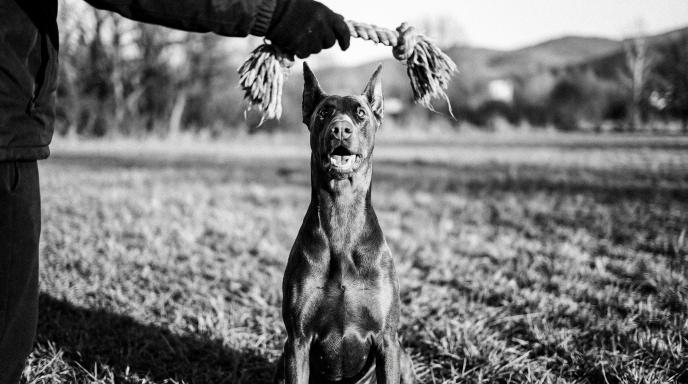
Struggling to get your Doberman to focus during training? Treats not cutting it anymore? You’re missing the secret weapon that professional trainers use: the right training toys. Unlike regular chew toys, training toys are specifically designed to build focus, motivation, and obedience in your intelligent Doberman.
From the game-changing “Owner’s Toy” concept that creates unbreakable focus to puzzle toys that teach impulse control, this guide reveals exactly which toys work for which training goals—and how to use them effectively. Whether you’re teaching recall, building focus, or perfecting obedience commands, toy-based training taps into your Doberman’s natural play drive in ways that treats simply can’t match.
Ready to transform your training sessions from frustrating to fun? Let’s discover the toys that will take your Doberman’s training to the next level.
- Why Training Toys Are Different Than Regular Chew Toys
- The “Owner’s Toy” Concept—Your Secret Training Weapon
- Training Toy Categories by Purpose
- Top 10 Training Toy Recommendations for Dobermans
- How to Use Toys in Training (Step-by-Step Protocols)
- Toy Rewards vs Treat Rewards (When to Use Each)
- Building Toy Drive in Unmotivated Dobermans
- Common Training Toy Mistakes to Avoid
- Frequently Asked Questions
- Conclusion & Action Steps
Why Training Toys Are Different Than Regular Chew Toys
Have you ever wondered why your Doberman gets excited about some toys but ignores others during training? The answer is simple: not all toys serve the same purpose.
The Purpose Divide: Training vs Entertainment
Think of it this way. A chew toy is like a stress ball for your Doberman—something to occupy their mouth and mind when they’re alone or bored. It’s entertainment. It keeps them from destroying your furniture. That’s important, but it’s not training.
A training toy, on the other hand, is a tool. It’s like the difference between a television and a textbook. One entertains, one teaches. Training toys are specifically designed to reward good behavior, build motivation, and create focus. They’re not left out for your dog to access whenever they want. YOU control them. And that control is what makes them powerful.
When you confuse the two purposes, training fails. If your dog can grab their “training toy” off the floor anytime they want, it stops being special. It becomes just another thing to chew on. The motivation disappears.
What Makes a Toy “Training-Ready”
So what separates a training toy from a regular toy? Let me break it down for you.
Size and portability matter. A good training toy fits in your pocket or training bag. You need to produce it quickly when your Doberman does something right. A giant stuffed animal doesn’t work. A tennis ball-sized rubber toy does.
Quick reward delivery is essential. Training is all about timing. When your Doberman sits on command, you have about half a second to reward them before they forget what they did right. A training toy needs to be instantly engaging—something they can grab, tug, or chase immediately.
High visibility helps. Bright colors work best. Your training toy should stand out from everything else in your house. When you pull out that orange tug or bright blue ball, your Doberman should know instantly that training time is happening.
Controlled access is non-negotiable. This is the big one. Training toys NEVER stay out. After every training session, they go back into storage. Your closet, your training bag, somewhere your dog cannot access. This creates scarcity, and scarcity creates value.
Durability for repetitive use. Training toys take abuse. You’ll use them multiple times every single day. They need to survive thousands of tugs, throws, and chomps without falling apart. Cheap toys don’t cut it here.
The Toy Drive Advantage: Why Smart Dobermans Respond Better
Here’s something interesting about Dobermans. They weren’t bred to be food-obsessed. They were bred to work alongside humans, to guard, to protect, to engage. That means their natural motivation often comes from play and interaction—not just treats.
When you use toys in training, you’re tapping into your Doberman’s prey drive and play instinct. These are deep, powerful motivations. A Doberman who’s toy-motivated will work for hours without losing interest. A Doberman who’s only treat-motivated? Their stomach fills up after twenty minutes, and training is over.
Toys also create a stronger bond between you and your dog. Why? Because toy play is interactive. When you reward with a treat, you hand it over and it’s gone. When you reward with a toy, you play together. You tug. You throw. You engage. Your Doberman learns that working with you leads to fun WITH you.
Plus, there are no calorie concerns. You can train as long as you want without worrying about upset stomachs or weight gain. That’s a game-changer for serious training.
Key Takeaway: Training toys aren’t about chewing—they’re about EARNING. The toy becomes a symbol of success, a reward your Doberman craves because YOU control it.
The “Owner’s Toy” Concept—Your Secret Training Weapon
Let me tell you about the single most powerful training tool I’ve ever used with Dobermans. It’s called the “Owner’s Toy,” and it will change everything about how your dog responds to you.
What Is an “Owner’s Toy”?
An Owner’s Toy is a special toy that ONLY you control. Not your spouse. Not your kids. Not anyone else. Just you.
This toy never gets left out. Your Doberman never sees it except during training sessions with you. It doesn’t sit in the toy basket. It doesn’t get tossed around the living room. It appears like magic when your dog does something exceptional, and then it disappears just as quickly.
Why does this work? Because exclusivity creates value. Think about it. The things we want most are often the things we can’t have all the time. The same principle applies to dogs. When your Doberman only gets access to this special toy through you, during training, it becomes the most valuable thing in their world.
I’ve seen Dobermans who completely ignore treats work their tails off for a chance to play with their Owner’s Toy. That’s the power of exclusivity.
How to Choose Your Owner’s Toy
Not just any toy will work here. Your Owner’s Toy needs specific qualities.
It should be tug-friendly. Why? Because tug play is interactive. You’re both engaged, both pulling, both having fun. A ball you just throw doesn’t create the same connection.
It needs to be durable. This toy is going to see daily use. If it falls apart after a week, you’ll lose the “special” status when you have to replace it.
It should be easy for both of you to grab. A toy with a handle or rope attachment works great. You want something your Doberman can grab with their teeth while you hold the other end.
And it needs a distinct appearance. Pick a color or style that’s completely different from any other toy your dog has access to. When they see it, they should instantly know: training time.
Recommended options: A rubber tug with handle (like Goughnuts Tug), a ball on rope (easy to control and throw), or a specific colored toy that stands out (bright orange or blue works well).
NOT recommended: Plush toys (they fall apart), squeaky toys (annoying and break easily), or anything that resembles toys your dog already has access to.
Size matters: For adult Dobermans, aim for 10-12 inches in length. It should be easy for you to grip while your dog tugs on the other end.
Building Value in the Owner’s Toy (Step-by-Step)
You can’t just buy a toy, call it the Owner’s Toy, and expect magic. You have to build value intentionally. Here’s how.
Week 1: Show but don’t give. Let your Doberman see the toy. Hold it. Move it around. But don’t let them have it. This creates curiosity. They’ll start wondering what that special toy is all about.
Week 2: Brief play sessions only. After your dog does something right—sits on command, comes when called—give them 2-3 minutes of play with the Owner’s Toy. Then take it away. Put it back in storage. Leave them wanting more.
Week 3: Require simple commands. Now your dog knows the toy is amazing. Start requiring them to earn it. Sit? They get the toy. Down? They get the toy. Come? They get the toy. Make the connection clear: good behavior = Owner’s Toy.
Week 4: Increase command difficulty. Now that the foundation is solid, make them work a little harder. A longer stay. A faster recall. More focus during heel work. The better they perform, the longer they get to play.
Result after one month: Your Doberman will work harder for that toy than for any treat you’ve ever offered. That’s not an exaggeration. I’ve seen it happen over and over.
Owner’s Toy Rules (Non-Negotiable)
If you want this to work, you need to follow the rules. No exceptions.
YOU initiate all play sessions. Your Doberman never demands the Owner’s Toy. They don’t paw at you, whine, or stare until you give in. You decide when play happens, based on their performance.
YOU decide when play ends. After 2-3 minutes of play, you take the toy back. Your dog doesn’t get to keep playing until they’re bored. You end on a high note, while they still want more.
Store it out of sight and reach. If your Doberman can see the Owner’s Toy sitting on a shelf, it’s on their mind all day. That’s not what we want. Keep it completely hidden. A closet, a locked drawer, your car trunk—somewhere they’ll never stumble across it.
Never allow other dogs to use it. If you have multiple dogs, each should have their own Owner’s Toy, controlled by their own primary handler. Sharing destroys the exclusive value.
Replace if damaged. The second that toy shows serious wear—tears, chunks missing, structural weakness—replace it with an identical one. You’re maintaining the “special” status, and a beat-up toy doesn’t feel special.
Pro Tip: The power of the Owner’s Toy comes from scarcity and exclusivity. The second it becomes “just another toy,” you lose the training magic.
Training Toy Categories by Purpose
Now that you understand the Owner’s Toy concept, let’s talk about the different types of training toys and when to use each one.
Tug Toys: For Obedience & Impulse Control
Tug toys are perfect for teaching obedience commands. Why? Because tug play is highly engaging but also requires control.
Purpose: You use tug toys to reward commands like sit, down, stay, and heel. The dog performs the behavior, you mark it (“yes!”), and then you produce the tug toy for a quick play session.
Top picks: Goughnuts Tug (nearly indestructible, lifetime warranty), West Paw Bumi (flexible, gentle on teeth), Tug-E-Nuff fleece tugs (popular in competition training).
How to use them: Your Doberman sits on command. You immediately say “yes!” and pull out the tug toy. You play tug for 10-15 seconds. You say “out” or “drop,” your dog releases, and you either give the toy back or store it, depending on the session.
Size recommendation: 12-16 inches works well for Dobermans. You need enough length for both of you to grip comfortably without your hands being too close to their teeth.
When NOT to use them: If your dog is possessive or won’t release toys, you need to teach “out” first. Tug training without a reliable release command creates problems.
Fetch Toys: For Recall & Exercise Training
Fetch toys are your best friend when teaching reliable recall. Most Dobermans love to chase, and you can use that drive to build a rock-solid “come” command.
Purpose: You’re training your dog to come when called, even with distractions. The fetch toy becomes the ultimate reward for returning to you.
Top picks: Chuck-It Ultra Ball X-Large (durable rubber, bounces well, bright color), KONG Flyer (rubber frisbee that won’t hurt teeth), Jolly Ball (originally made for horses, super tough).
How to use them: You call your dog. They run to you. The instant they arrive, you throw the fetch toy. They get to chase and retrieve. Repeat until recall is automatic.
Size matters: X-Large size (3.5+ inches diameter) prevents choking. Never use regular tennis balls with Dobermans—they split in half easily and the fabric covering causes intestinal blockages.
Training protocol: Always require your dog to return to you before throwing again. If they drop the toy halfway back, don’t throw. They must bring it all the way to you. This builds a complete recall.
Puzzle Toys: For Impulse Control & Mental Stimulation
Puzzle toys are different. They’re not about high energy play—they’re about thinking, problem-solving, and staying calm.
Purpose: You use puzzle toys to teach “wait,” “settle,” and “place” commands. Your dog learns that calm behavior and impulse control earn rewards.
Top picks: West Paw Qwizl (treat-stuffable, durable), Nina Ottosson puzzles Level 2-3 (adjustable difficulty), Buster Cube (rolls to dispense food).
How to use them: Your dog is in a “down” or “place” position. You show them the puzzle toy stuffed with treats. You give a “wait” command. After holding the position for 10-30 seconds, you release them to work the puzzle.
Difficulty progression: Start with Level 1-2 puzzles for beginners. As your Doberman masters them, move to Level 3-4. The mental challenge keeps them engaged.
Benefits: Mental exhaustion is just as valuable as physical exhaustion. A Doberman who’s worked their brain through puzzle toys is calmer and more focused for the rest of your training session.
Interactive Toys: For Focus & Engagement Training
Interactive toys are tools for building attention and focus. You control the movement, and your dog has to watch YOU to engage with the toy.
Purpose: These toys teach eye contact, “watch me” commands, and sustained focus. Your dog learns that paying attention to you leads to fun.
Top picks: Ball on rope (you control movement, dog can’t grab it without permission), flirt pole (long pole with toy attached to string), training dummies on string (great for retrieval work).
How to use them: You move the toy around. Your dog’s eyes follow it. The moment they make eye contact with YOU instead of just staring at the toy, you mark it and let them engage briefly. This teaches focus on the handler, not just the toy.
Movement is key: YOU control everything. The toy moves when you move it. It stops when you stop it. Your Doberman learns that watching you and responding to your cues controls their access to fun.
Energy release: These toys are excellent pre-training warm-ups. Five minutes of flirt pole work before an obedience session helps burn off excess energy so your Doberman can focus.
Marker Training Tools: For Precision Training
Markers aren’t toys themselves, but they pair with toy rewards to create precision in training.
Purpose: A marker (clicker or verbal “yes!”) tells your dog the exact moment they did something right. Then the toy reward reinforces that behavior.
Top picks: Standard dog clicker (consistent sound), verbal marker like “yes!” (always available), whistle (long-distance work).
How to use them: Your dog performs a behavior. The instant they do it correctly, you click or say “yes!” Then you immediately follow with toy play. This creates a clear chain: behavior → mark → toy reward.
Why better than treats for toy training: When you pair a marker with treat rewards, the treat is consumed in two seconds. When you pair it with toy rewards, the play session lasts 10-20 seconds. That extended reward creates stronger associations and more excitement.
Charging the marker: Before using markers in training, you need to “charge” them. Click/say “yes!” and immediately give toy access. Repeat 20 times. Your dog learns: marker sound = toy fun.
Comparison Table:
| Toy Type | Training Purpose | Best For | When to Use | Example |
|---|---|---|---|---|
| Tug Toy | Obedience, impulse control | Commands: sit, down, out | After correct command | Goughnuts Tug |
| Fetch Toy | Recall, exercise | Distance work, coming when called | Recall training | Chuck-It Ball |
| Puzzle Toy | Impulse control, calmness | Wait, settle, place commands | After holding position | Nina Ottosson |
| Interactive Toy | Focus, attention | Eye contact, watch me | Pre-training warm-up | Ball on rope |
| Marker Tool | Precision timing | All behaviors | During active training | Clicker + toy |
Top 10 Training Toy Recommendations for Dobermans
Let me walk you through my top picks for training toys, with specific recommendations for how to use each one.
#1: Goughnuts Tug Toy (Best for Obedience Training)
Price: $18-$22
Best training use: Tug reward for obedience commands—sit, down, stay, heel
This is my go-to tug toy for serious training. Goughnuts makes nearly indestructible toys with a lifetime warranty, and their tug is no exception.
Durability: 9/10. This thing survives daily tug sessions with aggressive Dobermans. The rubber is tough but not tooth-breaking hard.
Pros: It’s dishwasher-safe (keeps it clean for frequent use), it floats (great for water training), and the grip is comfortable for your hands during long training sessions. The lifetime warranty means if your Doberman ever chews through to the red inner layer, Goughnuts replaces it free.
Cons: The design is plain—just a rubber stick shape. Some dogs find it less exciting at first compared to toys with more texture or movement. You also MUST teach “out” before using this for tug training, or your dog won’t release.
Best for: Adult Dobermans (1+ years), intermediate to advanced training levels
Why it works: Tug sessions create high drive. When your Doberman learns that obeying commands leads to tug time, their motivation skyrockets.
#2: Chuck-It Ultra Ball X-Large (Best for Recall Training)
Price: $12-$15
Best training use: Fetch reward for reliable recall (“come” command)
If you’re working on recall, this is your weapon of choice. The Chuck-It Ultra Ball is solid rubber all the way through—no fabric covering like tennis balls.
Durability: 8/10. It holds up to daily fetch sessions for months.
Pros: Bright color makes it easy to find in grass. Bounces unpredictably, which makes fetch more exciting. Compatible with Chuck-It ball launchers for distance throwing. Floats in water for swimming dogs.
Cons: Not designed for unsupervised chewing. If your dog gets it and decides to go to town gnawing on it, it will eventually show wear. Use it for fetch training only, then store it.
Best for: All ages (size accordingly—Medium for puppies, X-Large for adults), recall training, exercise sessions
Training protocol: Dog comes when called → arrives at your feet → you throw ball immediately as reward → dog retrieves → repeat. The key is that the throw only happens when they come all the way to you.
#3: West Paw Zogoflex Qwizl (Best for Impulse Control)
Price: $15-$18
Best training use: Puzzle toy reward for “wait,” “stay,” “settle” commands
This is a treat-dispensing toy that’s perfect for teaching patience and impulse control.
Durability: 7/10. It’s tough but not indestructible for power chewers.
Pros: The hollow center holds treats or peanut butter. It’s dishwasher-safe for easy cleaning. Made in USA with guaranteed safety standards. It floats for water play.
Cons: Aggressive unsupervised chewers can damage it over time. It’s better as a training reward than a free-access chew toy.
Best for: All ages, impulse control training, rewarding calm behavior
How to use it: Dog holds a “stay” position. You place the stuffed Qwizl on the ground in front of them. They must wait until you give the release command. Then they get to work the puzzle and earn the treats inside.
Progressive training: Start with 10-second waits. Gradually increase to 30 seconds, then a minute, then longer. Add distractions as your dog improves.
#4: Flirt Pole (Best for Drive Building)
Price: $25-$35
Best training use: Build prey drive, practice impulse control, teach “out” command
A flirt pole is a long pole with a rope attached, and a toy at the end of the rope. Think of it like a giant cat teaser for dogs.
Durability: 8/10 (quality varies by brand)
Pros: Excellent exercise tool—your Doberman gets a full workout while you barely move. Teaches impulse control (dog must wait for permission to chase). Builds prey drive in low-motivation dogs. Great for practicing “out” and “drop” commands.
Cons: Requires space (at least 15-20 feet). You need to teach rules before using it, or your dog can get overstimulated and lose control.
Best for: Juveniles to adults (6 months+), high-energy dogs, dogs with low toy motivation
Safety note: Only use this with dogs who already know “out” and “drop it” commands. The high drive it creates can make dogs reluctant to release. Start with short sessions (5-10 minutes) to avoid joint strain.
Rules to teach: Dog must sit and wait before chase. When you say “stop,” dog must freeze. When you say “out,” dog must release the toy.
#5: Ball on Rope Training Toy (Best for Focus Training)
Price: $8-$15
Best training use: Focus and attention training, “watch me” command, pre-training warm-up
This simple tool—a rubber ball attached to a rope handle—is incredibly versatile for building focus.
Durability: 6/10. The rope can fray over time, so inspect regularly and replace when needed.
Pros: Affordable. Portable (fits in training bag). High engagement because YOU control movement. Great for teaching dogs to focus on the handler instead of just the toy.
Cons: Supervise only—rope toys can be a swallowing hazard if strings come loose. Not appropriate for unsupervised play.
Best for: All ages, focus training, building handler engagement
Training protocol: Hold the ball on rope. Move it slightly. Your dog’s eyes track it (natural). The moment your dog looks at YOUR face instead of just the toy, mark (“yes!”) and let them grab it briefly. Repeat. This teaches them that eye contact with you = access to fun.
Pre-training warm-up: Before an obedience session, spend 3-5 minutes with ball-on-rope play. This burns off excess energy so your dog can focus during training.
#6: Nina Ottosson Dog Puzzle Level 2 (Best Beginner Puzzle)
Price: $15-$25
Best training use: Mental stimulation, teaching problem-solving, calm behavior rewards
Nina Ottosson puzzles are the gold standard for canine enrichment.
Durability: 7/10. Hard plastic construction holds up well but can crack if thrown or stepped on.
Pros: Adjustable difficulty (Level 1-4). Dishwasher-safe. Keeps dogs mentally engaged for 15-30 minutes. Teaches problem-solving skills that transfer to training.
Cons: Some dogs figure them out quickly and get bored. You’ll need to progress to harder levels or rotate different puzzle styles.
Best for: All ages, beginners to Level 2 puzzles, dogs who need mental challenges
How to use it: Hide treats in the puzzle compartments. Show your dog the puzzle. Let them figure out how to access the treats (sliding pieces, lifting flaps, rotating sections).
Training integration: After your dog holds a “place” or “settle” command for 30 seconds, reward them with access to the puzzle.
#7: Clicker + Tug Toy Combo (Best for Marker Training)
Price: $5 (clicker) + $15-20 (tug toy) = $20-25 total
Best training use: Precision timing, teaching new behaviors, pairing markers with toy rewards
This isn’t one product—it’s a training system. You pair a clicker with your favorite tug toy.
How it works: Behavior happens → click → immediate tug session. The click marks the exact moment your dog did something right.
Why it’s powerful: Timing in training is everything. The clicker creates a clear communication: “That specific thing you just did? That’s what earned you this reward.”
Charging the clicker: Before using it in training, pair the click sound with rewards. Click → tug play. Click → tug play. Repeat 20 times. Your dog learns: click = fun is coming.
Best for: All skill levels, teaching new complex behaviors, precision work
#8: KONG Wobbler (Best for Calm Feeding)
Price: $18-$25
Best training use: Slow feeding, teaching patience, mental stimulation
The KONG Wobbler is a food-dispensing toy that wobbles and releases kibble as your dog pushes it around.
Durability: 8/10. Heavy-duty plastic stands up to daily use.
Pros: Slows down fast eaters. Provides mental stimulation during meal times. Teaches problem-solving. Dishwasher-safe.
Cons: Loud on hard floors (tile, hardwood). Some dogs knock it around aggressively at first.
Best for: All ages, dogs who eat too fast, mental enrichment
Training use: After a successful training session, fill the Wobbler with your dog’s meal. They get to “work” for their food as a final reward.
#9: Tug-E-Nuff Fleece Tug (Best for Soft-Mouth Training)
Price: $12-$20
Best training use: Tug training for younger dogs, building toy motivation, competition training
Tug-E-Nuff makes professional-grade fleece tugs used in competition obedience and agility.
Durability: 7/10. Fleece is tough but will eventually fray with heavy use.
Pros: Softer on puppy teeth than rubber tugs. Lightweight and easy to carry. Multiple grip points for different training scenarios. Machine washable.
Cons: Not as durable as rubber tugs like Goughnuts. Requires regular washing to prevent bacteria buildup.
Best for: Puppies to adults, competition training, building initial tug drive
#10: Training Dummy (Best for Retrieval Training)
Price: $10-$18
Best training use: Teaching retrieval, fetch, delivery to hand, competition prep
Training dummies are canvas or rubber cylinders used for teaching formal retrieval.
Durability: 8/10. Canvas versions last longest.
Pros: Teaches proper delivery (dog brings it directly to hand). Prepares dogs for competition obedience. Available in different sizes and weights.
Cons: Less exciting than balls or tugs for some dogs. Requires teaching retrieval before using.
Best for: Adult dogs, competition preparation, formal retrieval training
Quick Reference Chart:
| Rank | Toy Name | Best Training Use | Price | Durability | Best Age |
|---|---|---|---|---|---|
| 1 | Goughnuts Tug | Obedience | $18-$22 | 9/10 | Adult |
| 2 | Chuck-It Ball XL | Recall | $12-$15 | 8/10 | All ages |
| 3 | West Paw Qwizl | Impulse control | $15-$18 | 7/10 | All ages |
| 4 | Flirt Pole | Drive building | $25-$35 | 8/10 | 6+ months |
| 5 | Ball on Rope | Focus training | $8-$15 | 6/10 | All ages |
| 6 | Nina Ottosson Puzzle | Mental stimulation | $15-$25 | 7/10 | All ages |
| 7 | Clicker + Tug | Marker training | $20-$25 | Varies | All levels |
| 8 | KONG Wobbler | Calm feeding | $18-$25 | 8/10 | All ages |
| 9 | Tug-E-Nuff Fleece | Soft-mouth training | $12-$20 | 7/10 | Puppy-Adult |
| 10 | Training Dummy | Retrieval | $10-$18 | 8/10 | Adult |
How to Use Toys in Training (Step-by-Step Protocols)
Knowing which toys to buy is only half the battle. Now let’s talk about HOW to use them effectively.
Tug Training Protocol: Teaching Obedience
Tug toys are perfect for obedience work, but you need to follow a specific sequence.
Step 1: Get your tug toy and keep it hidden in your pocket or training bag. Don’t show it yet.
Step 2: Give your obedience command. “Sit.” “Down.” “Stay.” Pick one behavior to work on.
Step 3: The instant your dog complies correctly, mark it. Say “yes!” or click your clicker.
Step 4: Immediately produce the tug toy. Your dog gets to grab it and tug with you for 10-15 seconds.
Step 5: Say “out” or “drop it.” Your dog must release the toy.
Step 6: The moment they release, you either give the toy back for another round OR store it and repeat the cycle (command → compliance → tug).
Critical rule: YOU always win the final tug. When the training session ends, you keep the toy. This establishes that you control access.
Common mistake: Never let your dog “steal” the toy from your pocket. They must earn it through correct behavior.
Fetch Training Protocol: Building Reliable Recall
Fetch toys are the secret to bombproof recall. Here’s exactly how to use them.
Step 1: Start with your dog on a 20-foot long line (safety first—never trust recall before it’s trained).
Step 2: Show the fetch toy. Build excitement. Let your dog see you have it.
Step 3: Call your dog’s name followed by “come!” Use an excited, happy voice.
Step 4: As your dog runs toward you, mark the behavior. “Yes!” or click.
Step 5: The instant your dog reaches you—not three feet away, not when they slow down, but when they actually arrive—throw the toy.
Step 6: Let them chase and retrieve. When they bring it back (or you retrieve it yourself if they don’t return yet), repeat the whole sequence.
Progressive training: Start in a boring environment (inside your house). Once successful, move to the backyard. Then a quiet park. Then a busier park. Gradually increase distractions.
Pro tip: Never call your dog if you think they won’t come. Every failed recall teaches them that “come” is optional. Set them up for success by starting easy.
Puzzle Toy Protocol: Teaching Impulse Control
Puzzle toys teach your Doberman that calm, patient behavior earns rewards.
Step 1: Get your dog into a “down” or “place” position. They should be relaxed, not alert and ready to pounce.
Step 2: Show them the puzzle toy stuffed with treats. Let them see and smell it.
Step 3: Give your “wait” or “stay” command clearly and firmly.
Step 4: Place the puzzle toy on the ground, just out of easy reach. Your dog must remain in position.
Step 5: Count silently. Start with 10 seconds for beginners. Hold them in position while the puzzle toy sits there, tempting them.
Step 6: After the wait period, give your release command (“okay!” or “free!”). Now they get to engage with the puzzle.
Progression: Start at 10 seconds. Increase to 20, then 30, then 60. Add distractions—walk around them, clap your hands, bounce a ball. The puzzle toy remains the reward for maintaining control despite distractions.
Marker + Toy Reward: Precision Training
Markers create precision. Your dog learns exactly which behavior earned the reward.
Charging the marker (do this first): Click or say “yes!” Then immediately give toy access. Play for 10 seconds. Repeat 20 times over 2-3 days. Your dog learns: marker sound = toy fun incoming.
In actual training: Your dog performs a behavior. The instant they do it correctly—not before, not after, but at that exact moment—you mark it. Then you immediately follow with a toy reward (tug session or throw).
Why this works: Dogs have short memory windows. If you wait even two seconds to reward, they forget what they did to earn it. The marker “captures” the correct moment, and the toy reinforces it.
Timing practice: Start with simple behaviors like sit. Dog’s bottom touches ground → mark → toy. The faster you mark, the clearer the communication.
Toy Rewards vs Treat Rewards (When to Use Each)
Should you always use toys? Or are treats still valuable? The answer: it depends on what you’re training.
When Toys Are Better Than Treats
Use toy rewards when you’re working on:
Building high drive and motivation. Toys create excitement. They tap into play drive and prey drive. A Doberman who’s toy-motivated will give you 110% effort.
Long training sessions. Treats fill up your dog’s stomach. After 20-30 treats, many dogs lose interest because they’re full. Toys never fill them up. You can train for an hour with toy rewards without the physical limitation.
Recall training. Coming when called needs to be THE most exciting thing your dog can do. A toy you throw as a reward creates way more excitement than a treat you hand over.
Dogs losing interest in food rewards. Some Dobermans become bored with treats. They’ve seen every treat a thousand times. A toy, especially an Owner’s Toy, stays exciting because it’s scarce.
Creating an exclusive owner bond. Toy play is interactive. You and your dog are engaged together. This strengthens your relationship in ways treats can’t match.
When Treats Are Better Than Toys
Use treat rewards when you’re working on:
Teaching brand new behaviors. When you’re teaching something your dog has never done before, you need rapid-fire repetitions. Treats allow you to reward 20 times in five minutes. Toys slow that process down.
Precision work requiring many quick repetitions. If you’re teaching a complex behavior that needs 50 repetitions in one session, treats are more practical than toys.
Calm, focused training. Sometimes you need your dog calm and focused, not amped up. Treats keep energy levels moderate. Toys increase excitement, which isn’t always what you want.
Food-motivated dogs. Some dogs simply prefer food. If your Doberman is highly food-motivated and treats work great, there’s no reason to force toy training.
Convenience. Treats fit in your pocket. You can train anywhere, anytime, with a handful of treats. Toys require more planning and space.
Combining Both for Maximum Effect
The best trainers use both strategically:
Treats for the learning phase. When teaching a new behavior, use treats for fast repetitions.
Toys for the proofing phase. Once your dog understands the behavior, switch to toys for working around distractions.
Jackpot strategy. When your dog does something exceptionally well, give them a treat AND a toy reward. This creates massive reinforcement for outstanding performance.
Variety prevents boredom. Mix it up. Some sessions use treats. Some use toys. Some use both. Your Doberman never knows what’s coming, so they stay engaged.
Comparison Table:
| Factor | Toy Rewards | Treat Rewards |
|---|---|---|
| Motivation Level | Very High (play drive) | Moderate-High (food drive) |
| Training Duration | Long (no calorie limit) | Short (stomach fills) |
| Best For | Recall, obedience, focus | New behaviors, precision work |
| Excitement Level | High energy | Calm, focused |
| Portability | Moderate (carry toy) | High (pocket treats) |
| Bonding Effect | Strong (interactive play) | Moderate (transactional) |
| Setup Time | Need space to play | Instant delivery |
| Cost Over Time | Moderate (replace toys) | Ongoing (constant purchases) |
Building Toy Drive in Unmotivated Dobermans
What if your Doberman doesn’t care about toys? Don’t worry—you can build toy motivation from scratch.
Problem: My Doberman Ignores Toys
This is more common than you think. Some Dobermans have never learned that toys are fun. Maybe they had unlimited access to toys as puppies, so nothing feels special. Maybe previous owners only used food rewards. Whatever the reason, you can fix it.
Common causes:
- Too many free toys (everything loses value when it’s always available)
- Never taught to play (some dogs need explicit teaching)
- Low energy or anxiety (underlying issues affecting motivation)
- Negative associations (maybe someone used toys to tease or frustrate them)
The solution: Toy deprivation combined with strategic reintroduction.
The Toy Deprivation Method
This sounds harsh, but it works incredibly well. You’re going to remove ALL toys from your dog’s access for one full week.
Week 1: Complete toy removal. Pick up every single toy in your house. Chew toys, balls, stuffed animals—everything. Store them where your dog can’t see, smell, or access them. For seven days, your Doberman has zero toy access.
Why does this work? Scarcity creates value. When something is always available, we don’t appreciate it. When it’s gone, we miss it.
Week 2: Introduce ONE special toy. Choose the toy you want to be highest value (probably your Owner’s Toy). For 2-3 minutes, twice per day, bring out that toy. Play with your dog. Tug, throw, engage. Then take it away again.
Week 3: Make dog earn toy access. Now your dog knows the toy is amazing. Start requiring simple behaviors. Sit? They get the toy. Down? They get the toy. Eye contact? They get the toy. Connect good behavior to toy access.
Week 4: Gradually add variety. Introduce one more toy. Maybe a fetch toy or puzzle toy. Keep them separate. Keep access controlled. Never leave toys out freely.
Result after one month: Your Doberman will show interest in toys because they’ve learned that toys are rare, valuable, and connected to positive interaction with you.
Movement Creates Drive
Some dogs need to see toys in motion before their prey drive kicks in.
Try a flirt pole or ball on rope. Move it along the ground quickly. Drag it away from your dog. Most Dobermans can’t resist chasing something that moves fast.
Tease but don’t give. Let your dog almost catch it, then pull it away. This builds frustration, which converts to motivation. After 30 seconds of teasing, let them “win” by catching it briefly.
Never force play. If your dog truly shows zero interest even after movement, don’t push it. Some dogs need more time. Come back to it the next day. Forcing play creates negative associations.
Transitioning from Treats to Toys
If your dog is highly treat-motivated, you can gradually shift to toy motivation.
Phase 1: Reward with treat + show toy simultaneously. They get the treat in their mouth while seeing the toy in your hand.
Phase 2: Give treat, immediately follow with 5 seconds of toy play.
Phase 3: Give treat, follow with 10 seconds toy play.
Phase 4: Reduce treat value (switch to less exciting treats), increase toy play time.
Phase 5: Eventually eliminate treats, use toys exclusively.
This gradual transition helps dogs associate toys with the same positive feelings they had for treats.
Common Training Toy Mistakes to Avoid
Even with the right toys and good intentions, people make mistakes that sabotage training. Let me help you avoid them.
Mistake #1: Leaving Training Toys Out 24/7
This is the biggest mistake I see. Someone buys a great training toy, leaves it in the toy basket with all the other toys, and wonders why it doesn’t motivate their dog during training.
The problem: When your dog can grab their “training toy” whenever they want, it stops being special. It becomes just another thing to chew on. The motivation disappears.
The fix: Store ALL training toys between sessions. Closet, drawer, garage, car trunk—anywhere your dog cannot access them. Training toys should only appear during training, controlled by you.
Mistake #2: Using Damaged or Unsafe Toys
Training toys take abuse. After weeks of daily use, they show wear. Some people keep using them anyway.
The problem: Damaged toys create safety hazards. A torn tug toy can have strings that cause intestinal blockages. A cracked ball can break into sharp pieces. Plus, a beat-up toy doesn’t feel “special” anymore.
The fix: Inspect your training toys before every session. Look for tears, cracks, loose pieces, or significant wear. Replace immediately when you see damage. It’s cheaper than a vet bill for intestinal surgery.
Mistake #3: Not Teaching “Out” or “Drop” First
Some people jump straight into tug training before teaching the release command.
The problem: Your dog grabs the tug toy and won’t let go. Training stalls because you can’t get the toy back to start the next repetition. Or worse, your dog becomes possessive and aggressive about keeping the toy.
The fix: Before introducing any tug training, teach “out” or “drop it” as a separate skill. Hold a high-value treat near your dog’s nose while they’re holding a toy. Say “out.” When they release, give the treat AND give the toy back. Repeat until reliable.
Mistake #4: Letting Your Dog Win Every Tug Session
Some trainers think dogs should always “win” at tug to build confidence.
The problem: If your dog wins every single time, they learn that THEY control the game, not you. This undermines your leadership position.
The fix: During training sessions, let your dog win most tugs (it keeps motivation high). But YOU always win the final tug before storing the toy. When training ends, you have possession. This subtle leadership message matters.
Mistake #5: Using Toys as Bribes Instead of Rewards
There’s a critical difference between bribes and rewards.
The problem: You hold up the toy, your dog sees it, THEN you give the command. Your dog only responds because they see what they’ll get. Remove the toy from sight, and they ignore you.
The fix: Hide the toy. Give the command. Wait for compliance. THEN produce the toy as a reward. Your dog learns to trust that good behavior earns rewards, even when they can’t see what’s coming.
Mistake #6: Inconsistent Access to Owner’s Toy
Your spouse or kids give your dog access to the Owner’s Toy when you’re not around.
The problem: The exclusive value drops immediately. If anyone can give access to that special toy, it’s no longer YOUR special toy.
The fix: Have a family meeting. Explain that ONE specific toy is off-limits to everyone except the primary trainer. Store it where others can’t “accidentally” give it to the dog. Be consistent.
Frequently Asked Questions
Let me answer the questions I hear most often about training toys.
1. What’s the difference between a training toy and a chew toy?
Training toys are controlled-access tools used to reward and motivate during training sessions. YOU decide when your dog gets them, and they never stay out freely. Chew toys are free-access items your dog can grab anytime for entertainment and dental health. Training toys build motivation through scarcity. Chew toys provide ongoing mental stimulation.
2. How do I know if my Doberman is toy-motivated?
Try the movement test. Drag a toy on the ground away from your dog. If they chase it, they have toy drive. If not, try the toy deprivation method—remove all toys for one week, then reintroduce one special toy for short sessions. Most Dobermans respond well to this approach and become toy-motivated.
3. Can I use the same toy for training and regular playtime?
No. Training toys need to maintain their special status. If you use the same toy for random playtime, it loses motivational value. Keep training toys completely separate from chew toys and free-play toys. Your Doberman should only see training toys during structured training sessions with you.
4. What’s an “Owner’s Toy” and why is it important?
An Owner’s Toy is a special toy that ONLY you control. It never stays out, appears only during training, and becomes the highest-value reward your Doberman can earn. It works because exclusivity creates value. When something is rare and only accessed through you, it becomes incredibly motivating.
5. My Doberman won’t release the tug toy. What should I do?
Teach “out” or “drop” as a separate skill before using tug rewards. Hold a treat near your dog’s nose while they’re holding a toy. Say “out.” When they release, immediately give the treat AND return the toy. Repeat 20-30 times. Once reliable, you can use tug toys in training without release problems.
6. How long should a toy training session last?
Puppies: 5-10 minutes. Juveniles: 15-20 minutes. Adults: 20-30 minutes. Always end on a successful repetition, before your dog loses interest or gets tired. Multiple short sessions throughout the day work better than one long session. Stop while your dog still wants more.
7. Are rope toys safe for Doberman training?
Only with supervision. Rope toys can fray, and if your Doberman swallows strings, they can cause life-threatening intestinal blockages. Use heavy-duty rubber tug toys (like Goughnuts or West Paw Bumi) instead. These provide the tug experience without the swallowing hazard.
8. When should I switch from treat rewards to toy rewards?
Use treats when teaching brand new behaviors (faster delivery allows more repetitions). Switch to toys when proofing behaviors, working on recall, or building high motivation. Many trainers use both: treats for precision learning, toys for excitement and drive. Choose based on your training goal.
9. What if my Doberman prefers toys over treats?
That’s actually a good thing! Toy-motivated dogs often excel in training because toy play is interactive and bonding. Use toys as your primary reward. Keep some treats handy for teaching new behaviors that require many quick repetitions, but lean into your dog’s natural preference for toys.
10. How many training toys should I have?
Minimum setup: 1 Owner’s Toy (exclusive), 1-2 tug toys (for obedience), 1-2 fetch toys (for recall), 1-2 puzzle toys (for impulse control). Total: 5-7 training toys. Rotate them to prevent boredom, but remember—these are separate from your dog’s free-access chew toys.
Conclusion & Action Steps
Training your Doberman with toys instead of relying only on treats opens up a whole new world of motivation, excitement, and results. When you understand the difference between training toys and chew toys, implement the game-changing “Owner’s Toy” concept, and match the right toy to each training goal, you’ll see transformation in your dog’s focus and responsiveness.
Toys tap into your Doberman’s natural drives—prey drive, play drive, working drive. These are powerful motivators that treats simply can’t match for many dogs. Plus, toy-based training creates stronger bonds because it’s interactive. You’re not just dispensing food—you’re playing together, working together, celebrating success together.
Your Action Plan:
Step 1: Choose your Owner’s Toy. Pick one special toy—ideally a tug or ball on rope. This becomes YOUR exclusive training tool.
Step 2: Remove free toy access for 7 days. Store all toys where your dog can’t access them. Build scarcity and value.
Step 3: Start with simple commands. Require “sit” or “down,” then reward with brief Owner’s Toy play (2-3 minutes).
Step 4: Add fetch for recall training. Use a Chuck-It ball. Call your dog, reward their arrival with an immediate throw.
Step 5: Introduce puzzle toys for impulse control. Use a West Paw Qwizl or Nina Ottosson puzzle as a reward for “wait” and “settle” commands.
Step 6: Never leave training toys out. After every session, store them. Maintain the exclusive, controlled-access status that makes them motivating.
Step 7: Combine with treats strategically. Use treats for teaching new behaviors, toys for building drive and excitement.
Remember: The toy isn’t just a reward—it’s a celebration. It’s your way of saying “You did something amazing, and I’m so excited about it that I want to play with you!” That emotional connection, that shared joy, is what transforms training from a chore into a partnership.
Your Doberman was bred to work alongside humans. They crave engagement, purpose, and interaction. Toy-based training gives them all three. It honors their heritage while building the obedience, focus, and reliability you need in everyday life.
Now get out there and start training. Your Doberman is waiting to show you what they can do when properly motivated!